
Alaya AI (AGT) is a Web3 AI data platform designed to help developers collect and label training data through a distributed network of contributors. Instead of relying on a single annotation team, developers can submit custom data requests and set up reward pools for contributors who complete the work. Alaya AI’s website displayed roughly 2.69 million registered users and 243,500 daily active users on November 12, 2026. These figures are reported by the project, which did not specify the period they cover.
AGT is Alaya AI’s utility and governance token. Contributors can earn AGT by completing tasks, use it for certain NFT upgrades, and stake it to qualify for advanced work such as checking labels and correcting inconsistencies. The platform combines task matching, automated labeling, and human review to help developers turn raw samples into usable training data. This guide explains how Alaya AI works, how AGT tokenomics are structured, the main risks to consider, and how to trade AGT on BingX.
What Is Alaya AI (AGT)?
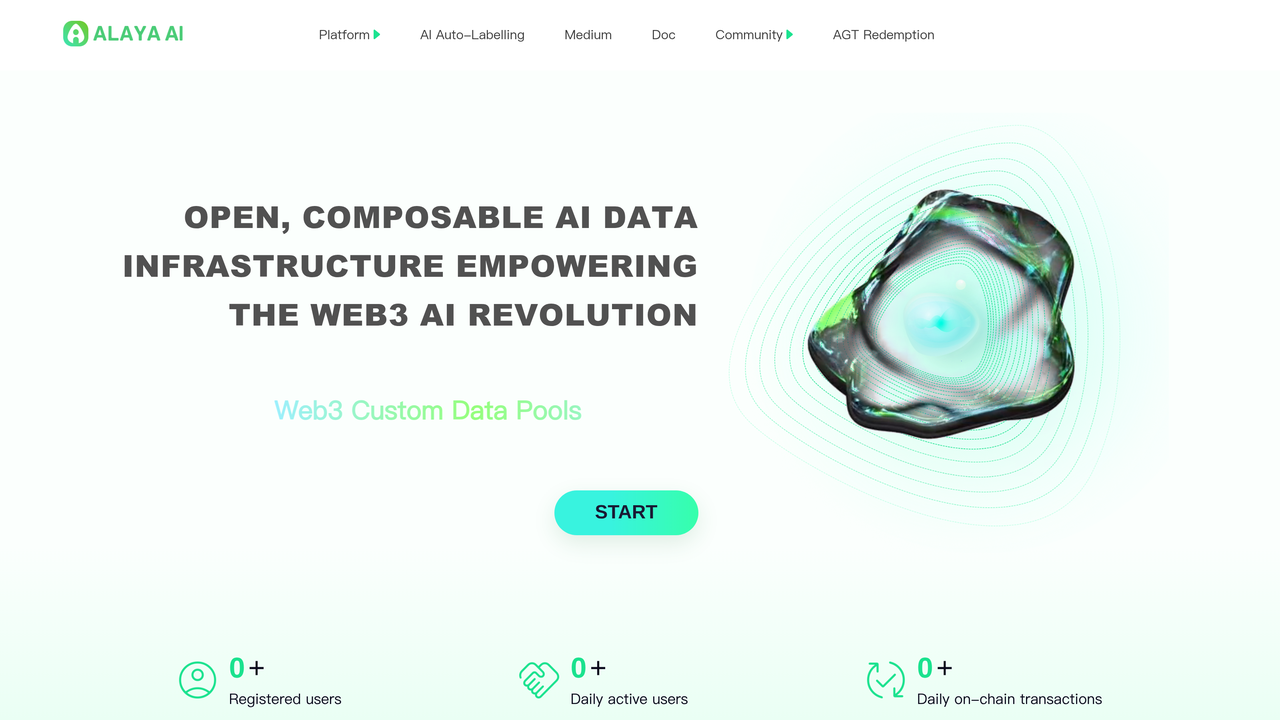
Alaya AI is a Web3 data platform that helps developers collect and label datasets for AI training. Developers can submit custom requests for data such as images, audio, or text and fund reward pools for contributors who complete the work. The platform matches tasks with contributors based on their experience and uses human feedback to check and refine automated labels.
AGT is Alaya AI’s utility and governance token, issued on BNB Smart Chain. Contributors can earn AGT by completing training tasks and use it for certain NFT upgrades. Advanced contributors stake AGT to qualify for data validation and calibration tasks, where they review and refine labels used to train AI models. Alaya AI’s token design also calls for participants to stake AGT to vote on governance proposals.
Key components of the Alaya AI ecosystem include the following.
- Distributed contributor network matches data collection and labeling tasks with contributors who have relevant experience.
- Open data platform lets AI developers specify what data they need and create custom reward pools for contributors.
- Automated labeling tools combine machine-generated labels with human review to prepare datasets for AI training.
How Does Alaya AI Work?
Alaya AI turns requests from AI developers into data collection and labeling tasks. The platform matches each task with contributors who have relevant experience, combines human feedback with automated labeling, and checks the finished data against the developer’s requirements.
- Developers define the dataset they need. A developer specifies the type of data to collect or label and the expected output. For example, an image classification project might ask contributors to tag photos using a predefined set of categories.
- Alaya AI matches tasks with contributors. The platform uses contributors’ past work and verified expertise to assign tasks that fit their skills.
- Contributors label samples and refine automated results. Contributors annotate data, review machine-generated labels, and provide feedback that can help improve Alaya AI’s labeling models.
- The platform checks the data before delivery. Automated preprocessing checks whether the submitted data meets the developer’s specifications before the dataset is delivered.
- Contributors earn rewards for completing tasks. Eligible work can earn AGT, and developers can fund custom reward pools for specific data requests. Under Alaya AI’s documented token design, contributors stake AGT to qualify for advanced validation and calibration tasks.
Alaya AI vs. Vana: What's the Difference in AI Data Collection and Access?
Alaya AI and Vana offer two different approaches to accessing data for AI development. Alaya AI helps developers build labeled training datasets through crowdsourced data collection, annotation, and validation tasks. Vana focuses on user-controlled data access, allowing applications to use existing personal data, such as listening history or fitness records, through permissions granted by users.
|
Comparison |
Alaya AI |
Vana |
|
Core model |
Crowdsourced data collection and labeling |
User-controlled data access and portability |
|
Data source |
Data collected or labeled for developer requests |
Existing personal data connected to users' Personal Servers |
|
User role |
Complete collection, labeling, or validation tasks |
Grant or revoke access to selected personal data |
|
Developer workflow |
Request datasets, fund rewards, and receive labeled data |
Integrate with Vana and request permission to access user data |
|
Main use case |
Build labeled datasets for AI training or evaluation |
Personalize AI applications using existing user data |
|
Main tradeoff |
Data quality depends on contributor work and validation |
Data availability depends on connected sources and user permissions |
For example, a team developing an image classifier could use Alaya AI to collect and label photos across specific categories. In contrast, a team building a fitness assistant could use Vana to access a user's existing activity or recovery data with their permission.
What Are the Alaya AI (AGT) Tokenomics?
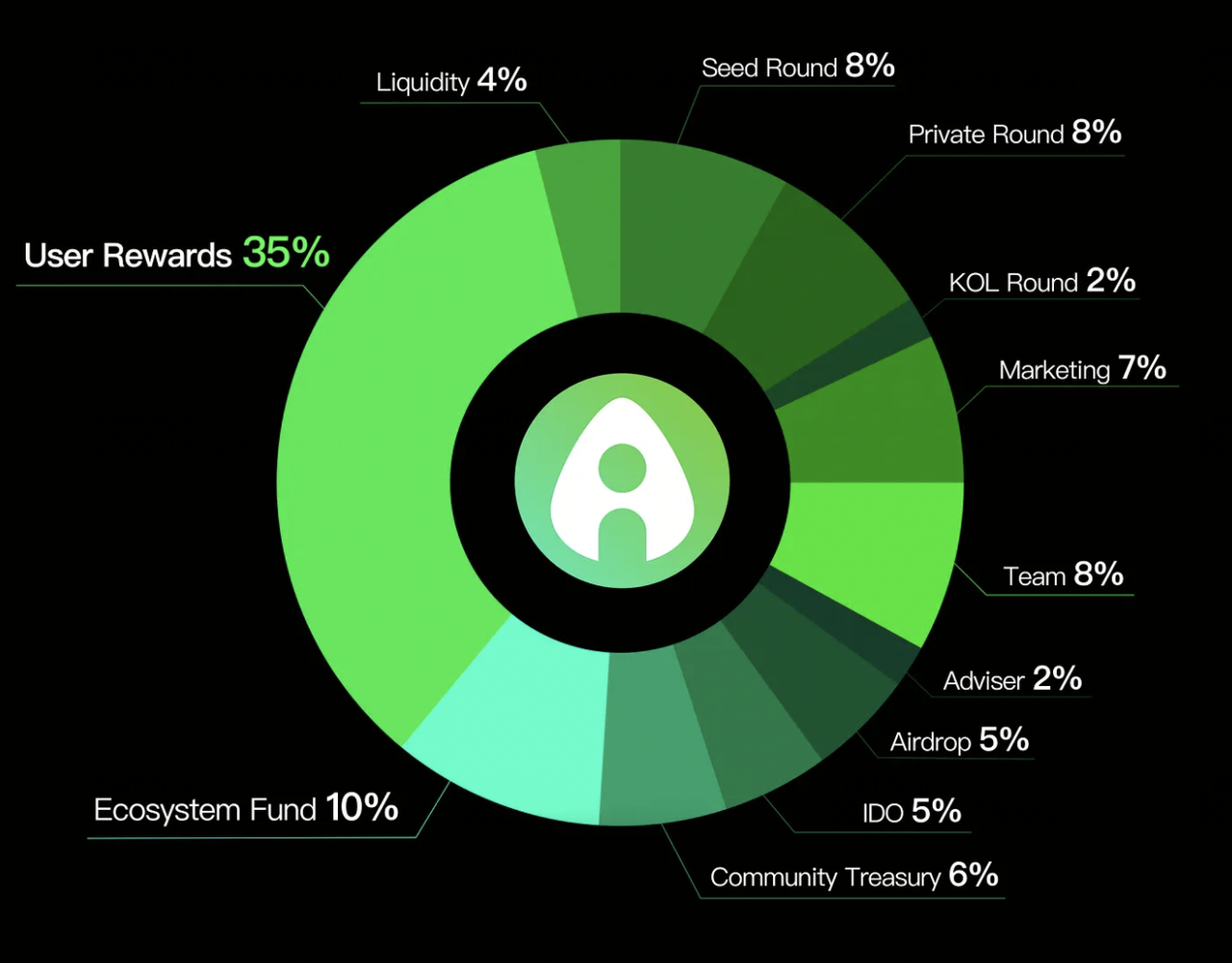
Alaya AI (AGT) tokenomics center on contributor rewards, ecosystem development, governance, and AI data services. AGT has a maximum supply of 5 billion tokens, with user rewards receiving the largest individual allocation at 35%. Following the May 2025 token generation event (TGE), the disclosed distribution covers community incentives, investors, core contributors, and ecosystem funding, with different vesting schedules determining when tokens become available.
AGT Token Utility and Supply Mechanisms
- Task rewards: Contributors earn AGT by completing AI training tasks, reaching milestones, or participating in eligible platform events.
- Staking for advanced tasks: Users stake AGT to access data validation, calibration, and AI model development tasks. Certain activities also require Medallion NFTs. Staking alone does not generate passive income; rewards depend on completing eligible work.
- NFT upgrades: AGT is required to upgrade certain Alaya AI NFTs at specified levels, supporting access to advanced tasks and platform features.
- Custom data requests: Developers use AGT reward pools to fund specific dataset collection and labeling requests. The platform also supports rewards in other project tokens.
- Governance: AGT staking allows eligible participants to vote on community proposals, including automated labeling model features and platform development decisions.
AGT Token Allocation
Source: Alaya Medium
According to Alaya AI's official TGE announcement, the 5 billion AGT supply is distributed across 12 allocation pools, grouped into five main categories:
- Community incentives: 57%. User rewards account for 35%, the Ecosystem Fund 10%, marketing 7%, and airdrops 5%. The allocation supports contributor participation, platform development, and community growth. User rewards began with a 20% TGE unlock, followed by scheduled vesting.
- Private investors: 18%. Seed Round and Private Round investors each receive 8%, while key opinion leaders (KOLs) receive 2%. Seed and private allocations have a 12-month cliff followed by 18 months of vesting, while KOL allocations follow a separate schedule.
- Team and advisors: 10%. The team receives 8%, with a 12-month cliff followed by 36 months of vesting. Advisors receive 2%, subject to a 12-month cliff and 24-month vesting schedule.
- Community Treasury and liquidity: 10%. The Community Treasury receives 6% to support ecosystem operations, with a 6-month cliff and 36-month vesting period. The remaining 4% supports market liquidity and was fully unlocked at TGE.
- Public investors: 5%. The Initial DEX Offering (IDO) allocation accounts for 250 million AGT, fully unlocked at TGE to support public token distribution.
By 2026, AGT supply dynamics depend on scheduled token releases, particularly allocations for investors, the team, and ecosystem development, with vesting extending into 2029. Investors should monitor token unlocks and circulating supply when assessing potential selling pressure. Alaya AI also plans to use platform revenue to repurchase AGT and redistribute it through contributor reward pools, although the implementation status of this mechanism remains unconfirmed.
How to Trade Alaya AI (AGT) on BingX
You can buy and sell Alaya AI (AGT) on BingX through the AGT/USDT spot market. When a buy order fills, the AGT you purchased appears in your Spot Account.
Spot Trading: Buy and Own AGT Directly
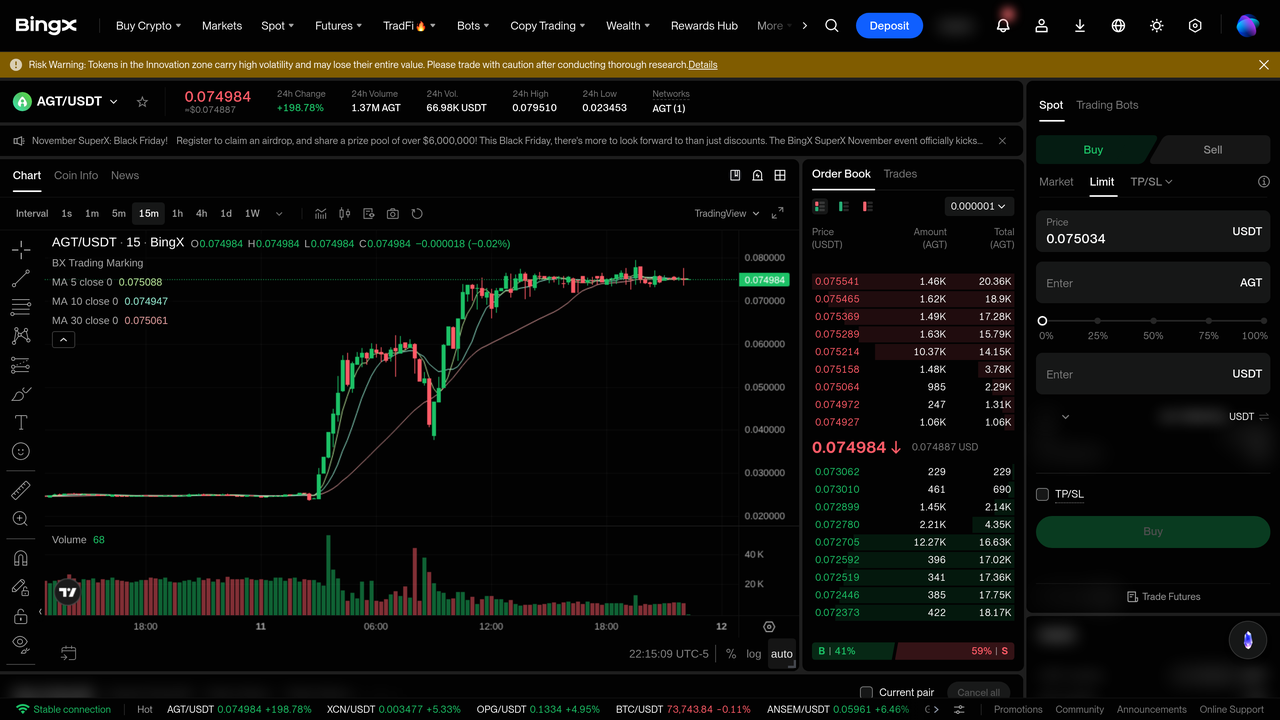
Step 1: Account setup and security. Sign up and log into BingX, complete the identity verification (KYC) required in your region, and enable two-factor authentication.
Step 2: Fund your spot account. Deposit USDT or another supported asset into the spot account. Where available, supported fiat on-ramp options may also be used.
Step 3: Open the spot market. Search for the AGT/USDT pair.
Step 4: Choose an order type. Use a market order to buy AGT at the available market price, or a limit order to set a target purchase price.
Step 5: Manage your AGT. After the order fills, AGT appears in the spot account. It can remain on BingX or be withdrawn to a BNB Smart Chain-compatible self-custody wallet if withdrawals are supported on the relevant network.
Futures Trading: Trade AGT Price Movements
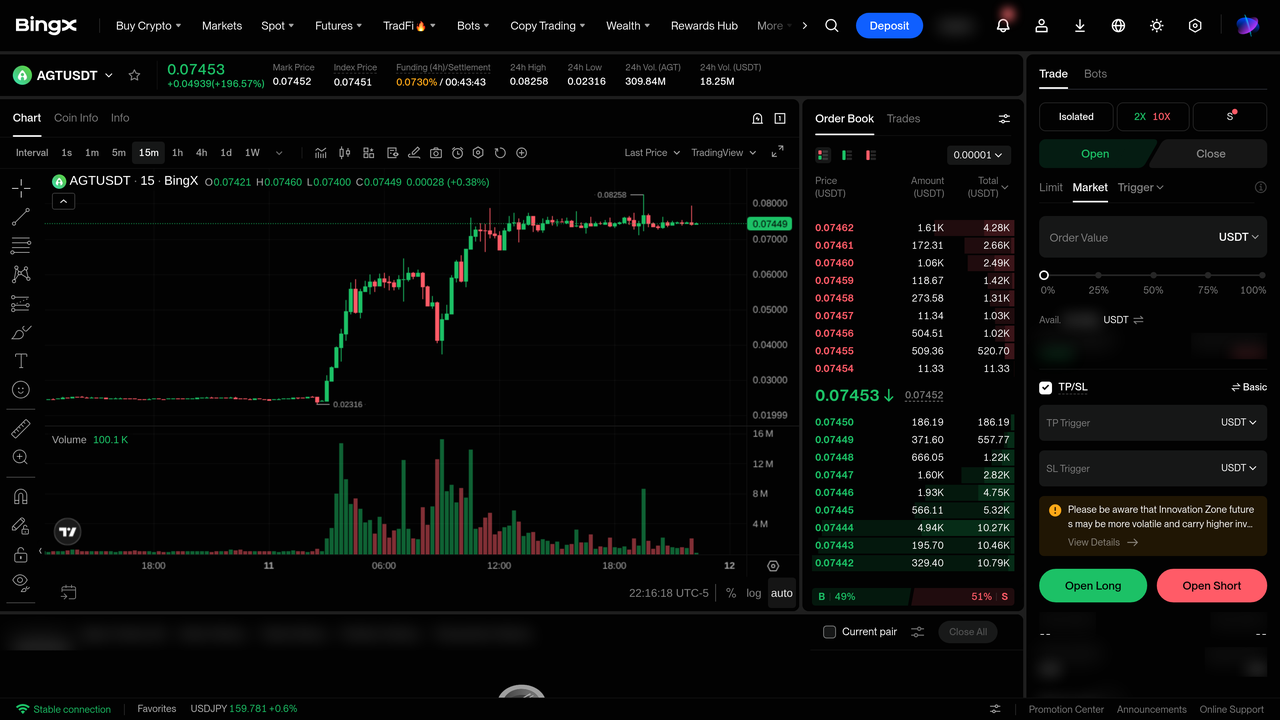
BingX lists a USDT-margined AGT perpetual. Because leverage can amplify both gains and losses, futures are intended for traders who understand liquidation and have a defined risk plan.
Step 1: Transfer collateral. Move USDT from the spot account to the futures account, where it is used as margin.
Step 2: Select the contract. Open the AGT-USDT perpetual.
Step 3: Set direction and leverage. Open long or short based on the trading thesis. Select leverage and position size within the defined risk limit.
Step 4: Execute the trade. Enter the order amount and use a market or limit order according to the trading plan.
Step 5: Manage risk. Set stop-loss and take-profit controls before or immediately after entry. Profit and loss settle dynamically in USDT.
Risks and Considerations Before Investing in Alaya AI (AGT)
Alaya AI's outlook depends on whether developers consistently pay for labeled datasets and how much of that activity translates into demand for AGT.
- User activity may outpace paying demand: Registrations and task participation demonstrate contributor interest, but repeat orders from developers provide a clearer indication of demand for Alaya AI's data services.
- Dataset quality can vary: Inconsistent labels or errors that pass quality checks can reduce a dataset's usefulness for AI training, potentially requiring customers to perform additional reviews.
- Data rights and privacy matter: Developers must ensure contributors have permission to share data and that collected datasets can legally be used for their intended purposes.
- Platform usage may generate limited AGT demand: Developers can fund custom data requests using other tokens, while contributors receiving AGT rewards may sell their holdings. This could increase selling pressure if token demand remains weak.
- Scheduled token unlocks may increase selling pressure: AGT has a maximum supply of 5 billion tokens, with allocations for investors, the team, and ecosystem development subject to vesting schedules extending into 2029. Future releases could increase available supply, particularly if demand fails to keep pace.
Final Thoughts: Should You Invest in Alaya AI (AGT) in 2026?
Alaya AI gives developers access to labeled training datasets through a distributed network of contributors. AGT rewards eligible tasks and provides access to advanced activities through staking. However, developers can also fund custom requests using other tokens, meaning growth in demand for Alaya AI's services may not translate directly into stronger AGT demand.
The investment case for AGT could strengthen if developers return for additional datasets and fund a growing share of requests using AGT. Investors should monitor repeat customer activity, AGT-funded reward pools, circulating supply, and scheduled token unlocks. These indicators can help determine whether demand for AGT is growing sufficiently to support its expanding available supply.
Risk Reminder: AGT trading involves price volatility, liquidity risks, and potential loss of principal. Token unlocks and market conditions may affect its value. This article is for informational purposes only and does not constitute investment advice.
Related Reading
- What Is Tagger (TAG)? A Beginner’s Guide to AI Data and Decentralized Labeling in 2026
- What Are the Top 10 AI Crypto Projects to Watch in 2026?
- What Are the Top 10 AI Agent Crypto Projects of 2026?
- What Are the Top 10 DePIN Crypto Projects to Know in 2026?
- How to Connect MetaMask to BNB Smart Chain (BSC)
FAQs About Alaya AI (AGT)
1. What makes Alaya AI different from other AI data platforms?
Alaya AI combines crowdsourced data collection, automated labeling, and human review in one workflow. Developers can specify the dataset they need and fund a custom reward pool for contributors who complete the work.
2. What blockchain is AGT on?
AGT is a BEP-20 token on BNB Smart Chain. Before transferring AGT, confirm that the sending and receiving platforms both support the selected network and that you’re using the correct token contract.
3. What is the maximum supply of AGT?
Alaya AI lists a maximum supply of 5 billion AGT. The circulating supply counts the tokens already in circulation and can change as more tokens are released.
4. Which wallets support AGT?
Self-custody wallets that support BNB Smart Chain, such as MetaMask and Trust Wallet, can hold BEP-20 AGT. Select BNB Smart Chain in your wallet and, if AGT doesn’t appear automatically, import it using the verified token contract.
