

GRVT (GRVT), pronounced “gravity,” is a self-custodial hybrid exchange that combines the speed of an off-chain order book with on-chain settlement. Users keep control of their assets while trading, and GRVT’s one-balance system allows the same deposit to earn yield and serve as trading margin.
Founded in 2022, GRVT launched its native token in July 2026 after two community reward seasons. The platform supports crypto and real-world asset perpetuals, runs on a custom ZKsync Validium Layer 2, and holds a digital asset business license from the Bermuda Monetary Authority. This guide covers how GRVT works, GRVT tokenomics, key considerations, and how to trade GRVT on BingX.
What Is GRVT (GRVT)?
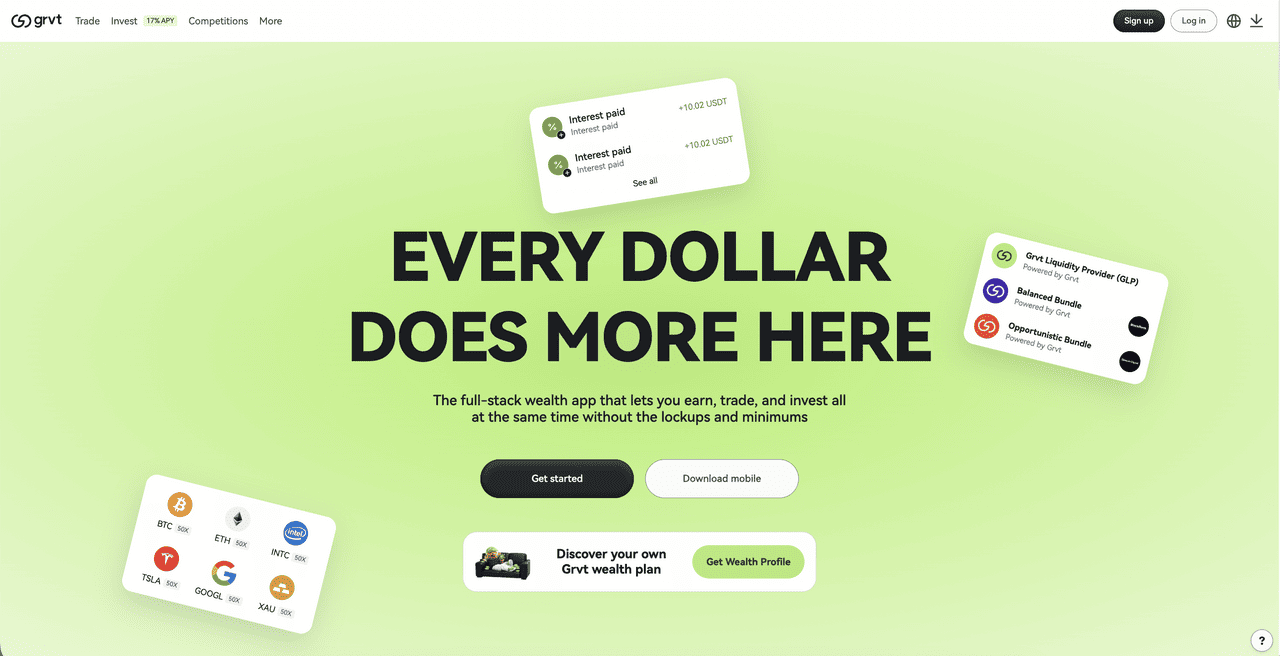
GRVT (GRVT) is a self-custodial on-chain wealth platform that unifies yield-bearing savings, institutional-grade investment products, and spot and perpetual trading within a single user-controlled balance. It runs on a custom Layer 2 built with the ZKsync stack in Validium mode, where transaction validity is proven with zero-knowledge proofs and settled on Ethereum while transaction data remains off-chain to preserve trade-flow confidentiality. Users retain custody of their assets throughout, which distinguishes GRVT from traditional centralized exchanges where the platform holds user funds.
What makes GRVT distinct is its combination of a hybrid trading model and a broad market set. Orders are matched off-chain for centralized-exchange-grade speed, while settlement happens on-chain to preserve self-custody. The exchange lists a large number of perpetual markets spanning crypto assets alongside real-world assets such as gold, oil, and tokenized equities, letting traders access diverse instruments from one account. GRVT is the token that coordinates membership benefits and aligns user activity with platform growth.
The core idea behind GRVT is that decentralized finance should deliver practical advantages beyond what traditional brokerages and exchanges offer, centered on a one-balance system that maximizes how productively capital is used. GRVT is the coordination asset that routes the benefits of this capital efficiency back to users.
Key components of the GRVT ecosystem include:
- GRVT token: The utility and membership token that unlocks trading fee benefits, yield allocations, and priority access to products.
- One-balance system: A unified account where a single deposit can earn yield, serve as trading margin, and hold spot exposure at the same time.
- Earn, Invest, and Trade verticals: Three integrated product lines covering base yield on deposits, curated investment products, and spot and perpetual trading.
- ZKsync Validium Layer 2: The custom appchain that proves trades on Ethereum while keeping transaction data off-chain.
- Real-world asset perpetuals: Perpetual markets on commodities such as gold and oil and on tokenized equities, alongside crypto.
How Does GRVT Work?
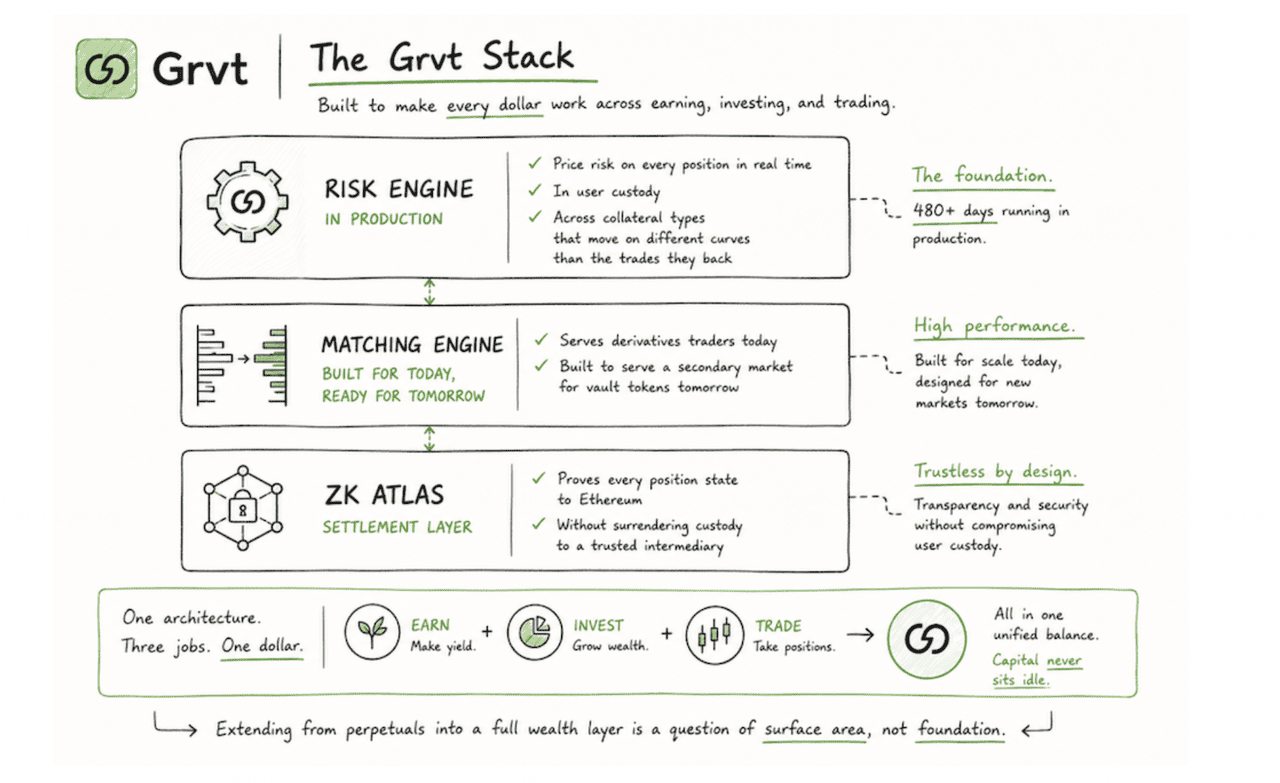
Source: GRVT Blog
GRVT works as a self-custodial hybrid exchange whose trading, yield, and membership are coordinated by a one-balance system, a ZKsync Validium appchain, and the GRVT token. The platform combines off-chain matching with on-chain settlement so users keep custody while trading at high speed.
- A single balance powers multiple functions: Every deposit can automatically earn a base yield while remaining available as margin and spot exposure, so users do not need to move assets between separate products.
- Off-chain matching, on-chain settlement: Orders are matched off-chain for centralized-exchange-grade speed, while trades settle on-chain to preserve self-custody and transparency.
- Zero-knowledge proofs secure the system: The ZKsync Validium proves transaction validity on Ethereum while keeping transaction data off-chain, combining Ethereum-anchored security with confidentiality.
- Diverse markets from one account: Traders can access perpetuals on crypto, commodities, and tokenized equities, with institutional real-world asset yield wired in through infrastructure partners.
- GRVT coordinates membership and benefits: Holding or staking GRVT unlocks better trading fees, higher yield allocations, and priority access to new products, tying token demand to platform activity.
GRVT vs. Traditional Centralized Exchanges: Key Differences
GRVT and traditional centralized exchanges both offer fast trading and deep market access, but they differ in custody, settlement, and transparency.
|
Comparison |
GRVT |
Traditional Centralized Exchanges |
|
Custody model |
Self-custodial with on-chain settlement |
Platform holds user funds |
|
Order matching |
Off-chain matching for speed |
Off-chain matching for speed |
|
Settlement |
On-chain via ZKsync Validium |
Internal ledger |
|
Transparency |
Zero-knowledge proofs on Ethereum |
Depends on platform disclosures |
|
Main advantage |
Speed with retained custody |
Established scale and liquidity |
|
Main tradeoff |
Newer platform and token |
Counterparty and custody risk |
GRVT focuses on combining centralized-exchange speed with self-custody and on-chain settlement, while traditional centralized exchanges typically offer larger existing scale and liquidity but require users to trust the platform with their funds. The choice depends on whether users prioritize retained custody and transparency or the depth and maturity of established venues.
Read More: Top 10 Safest Crypto Exchanges in 2026 and How to Choose The Best One For You
When Was the GRVT Token Generation Event (TGE)?
The GRVT token generation event took place on July 30, 2026, at 1:00 PM UTC. At that time, eligible users could view their allocations and receive or claim the first unlocked tranche of GRVT. The token launched with a fixed supply of 1 billion GRVT, including 280 million tokens allocated to Season 1 and Season 2 community rewards.
When Was the GRVT Airdrop and How to Claim GRVT?
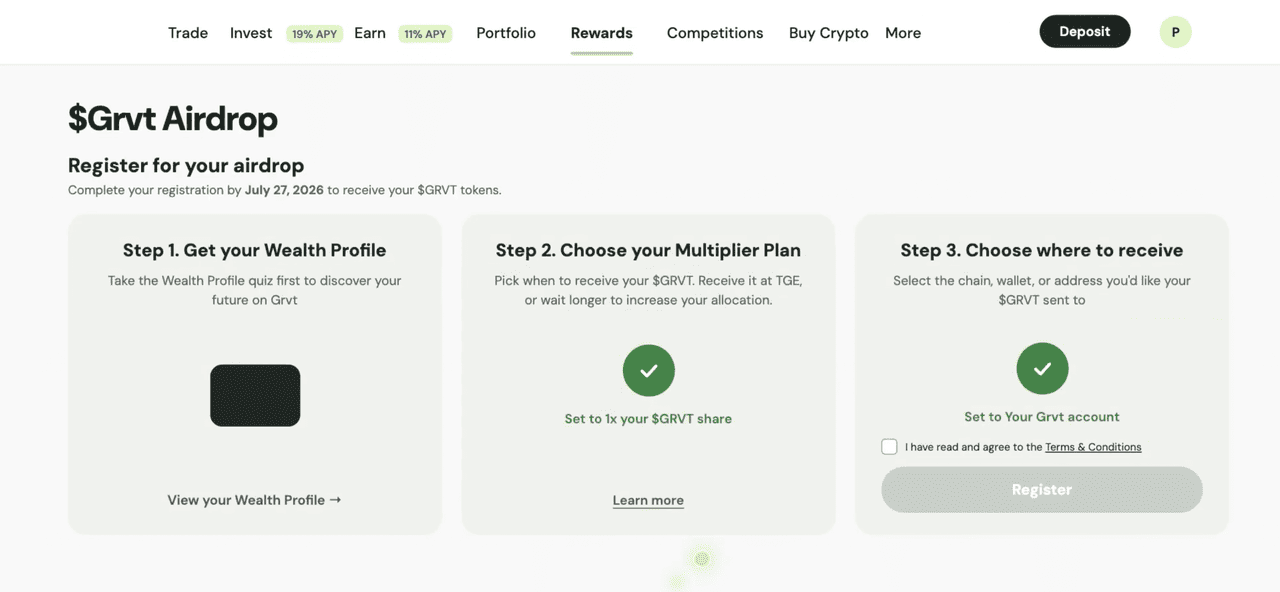
- Airdrop date: July 30, 2026
- Eligible users: Participants from GRVT Season 1 and Season 2
- Automatic distribution: Users who registered before July 17, 2026 and selected a destination received the first tranche automatically
- Claim period: Each unlocked tranche has a 30-day claim window
- How to claim GRVT: Log in to your GRVT account, open the Reward Portal, check whether a tranche is available, select Claim, and confirm the transaction. The tokens will be sent to your GRVT account or selected supported wallet. Use only official GRVT pages and complete the claim before the deadline.
What Are the GRVT (GRVT) Tokenomics?
GRVT tokenomics center on a fixed supply of 1 billion tokens, a membership-based utility model, and long vesting schedules designed to limit early circulating supply. GRVT is an ERC-20 token issued on Ethereum with no minting authority or inflation beyond the fixed cap. It does not provide equity, governance rights, revenue sharing, or claims on platform profits.
GRVT Token Utility and Supply Mechanisms
- Trading benefits: Holding or staking GRVT can unlock lower trading fees, improved margin efficiency, and access to advanced trading tools.
- Earn benefits: Members may receive reduced platform fees on savings and yield products. GRVT does not increase the underlying return paid by those products.
- Investment access: GRVT membership can unlock access to a broader range of curated investment products, including future on-chain and real-world asset offerings.
- Product expansion: The token’s utility may increase as GRVT adds new trading, investment, savings, and payment services to its one-balance platform.
- Fixed supply: GRVT has a hard-capped supply of 1 billion tokens, with no minting mechanism or programmatic inflation.
GRVT Token Allocation
GRVT’s fixed supply is divided across community rewards, ecosystem incentives, investors, and core contributors.
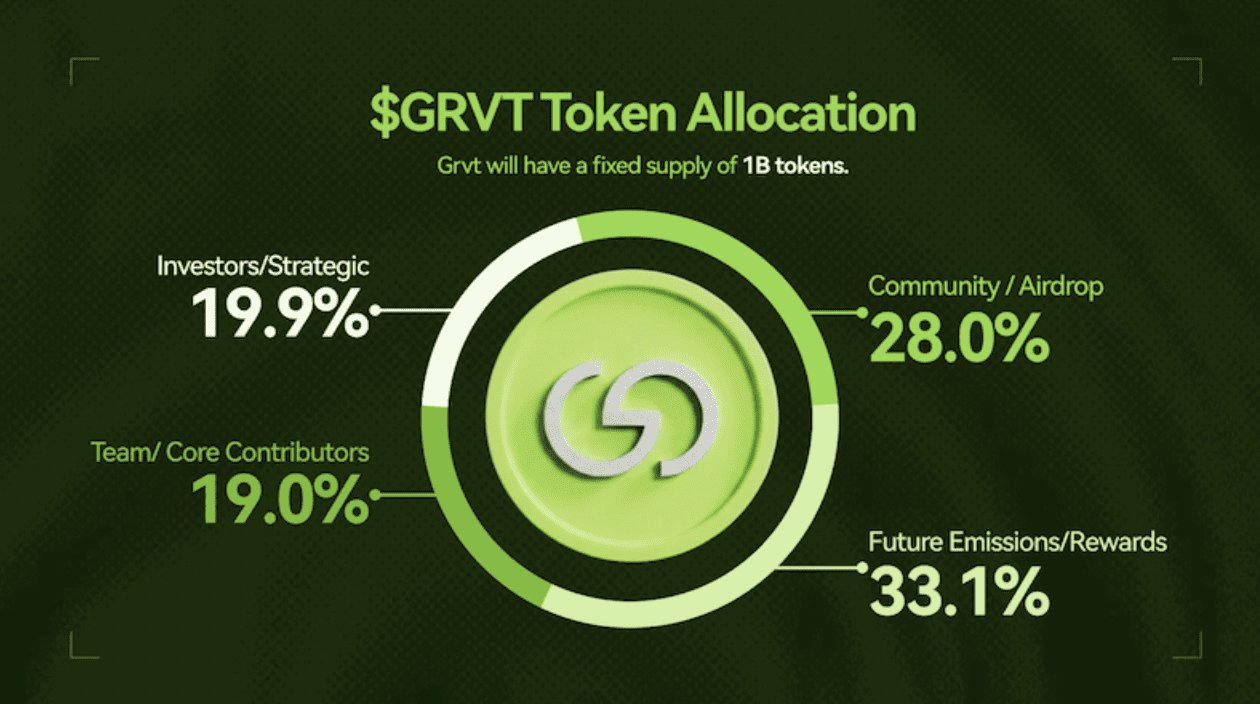
Source: GRVT Blog
|
Allocation |
Share |
GRVT Amount |
|
Future rewards and ecosystem incentives |
33.10% |
331 million |
|
Community and airdrops |
28.00% |
280 million |
|
Investors and strategic partners |
19.90% |
199 million |
|
Team and core contributors |
19.00% |
190 million |
The 280 million-token community allocation covers Season 1 and Season 2 rewards. Most community allocations vest over 12 months, although individual release schedules vary based on activity and participation in the optional Multiplier Plan.
Investor and team allocations had no unlock at the token generation event, followed by a 12-month lockup and generally 36 months of vesting. Part of the ecosystem allocation unlocked for exchange liquidity and operations, with the remainder subject to a six-month lockup and 42-month vesting schedule.
Investors should monitor the circulating supply and future unlock calendar. Although GRVT has no inflation, the gradual release of already allocated tokens can still increase market supply and create selling pressure over time.
How to Trade GRVT (GRVT) on BingX
BingX offers ways to gain exposure to GRVT depending on whether the goal is direct ownership or short-term trading. Spot trading suits users who want to buy and hold GRVT, while futures trading is designed for active traders who want long or short exposure to GRVT price movements. Because GRVT is a newly launched token, always confirm the correct trading pair and verify the official token contract before trading.
Spot Trading: Buy and Own GRVT Directly
Spot trading is the most straightforward way to buy GRVT on BingX. When users buy GRVT on the spot market, they own the asset directly and can hold it in the BingX spot account, transfer it, or withdraw it to a compatible self-custody wallet.
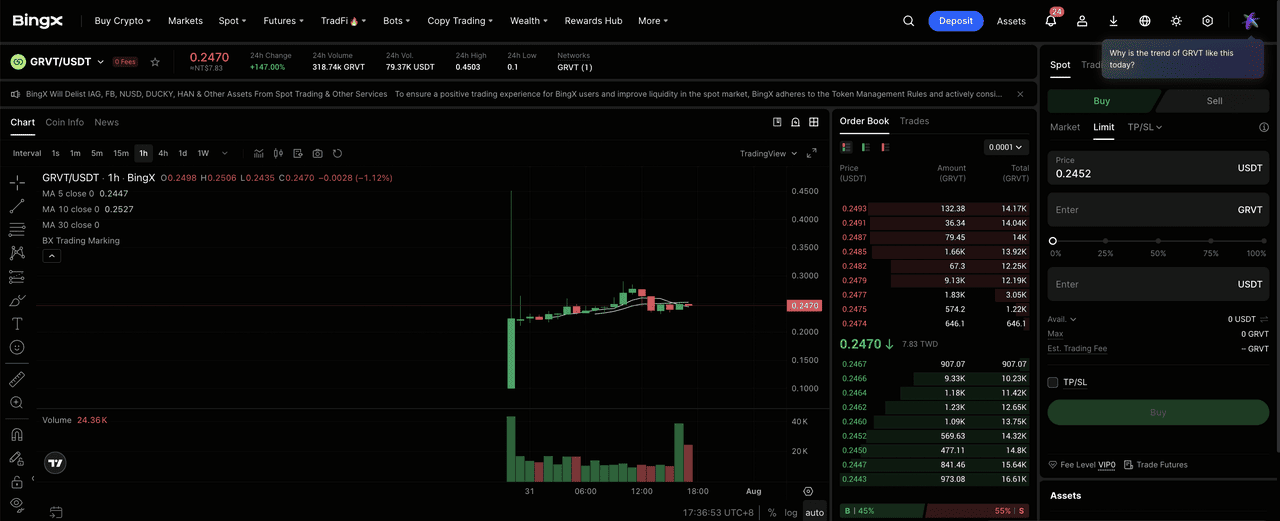
Step 1: Account setup and security. Sign up and log into your BingX account, complete the identity verification (KYC) required in your region, and enable two-factor authentication.
Step 2: Fund your spot account. Deposit USDT or another supported asset into your BingX spot account. Where available, users can also use supported fiat on-ramp options.
Step 3: Navigate to the spot market. Search for the GRVT/USDT trading pair.
Step 4: Place your order. Choose a market order to buy GRVT immediately at the current price, or use a limit order to set the price you want to pay. Because newly listed tokens can be volatile, consider using limit orders to control your entry price.
Step 5: Manage your GRVT. Once filled, your GRVT appears in your spot account. You can keep it on BingX for convenience or withdraw it to a compatible self-custody wallet, taking care to use the correct network and verify the official contract.
Note: Exchange listings, available pairs, and liquidity can change. Always confirm the official GRVT contract, use the correct network, and check liquidity and price impact before trading.
Futures Trading: Trade GRVT Price Movements
For active traders, BingX offers USDT-margined perpetual futures on eligible assets. Where a GRVT perpetual contract is available, futures allow users to trade GRVT price movements without holding the underlying asset, with the flexibility to open long positions if they expect GRVT to rise or short positions if they expect GRVT to fall.
Because futures involve leverage, they can amplify both gains and losses. This approach is more suitable for traders who already have a clear risk plan and understand liquidation risk, particularly for a newly launched asset like GRVT that can be highly volatile during early price discovery, unlock events, and shifts in trading sentiment.
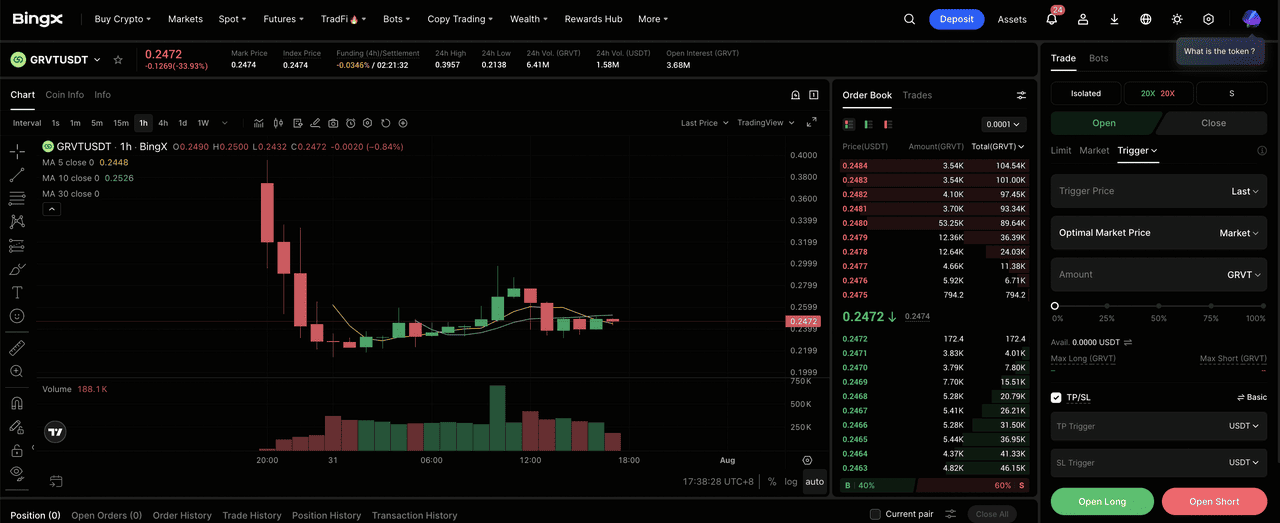
Step 1: Transfer collateral. Move USDT from your spot account into your futures account, where it will serve as margin.
Step 2: Select the contract. Search for the GRVT-USDT perpetual contract.
Step 3: Set direction and leverage. Open long if you expect GRVT to rise, or open short if you expect GRVT to decline. Choose leverage based on your risk tolerance and position size, keeping leverage conservative given early volatility.
Step 4: Execute the trade. Enter the order amount and choose a market or limit order depending on your trading plan.
Step 5: Manage risk. Set stop-loss and take-profit orders before or immediately after entering the position. Profit and loss settle dynamically in USDT.
Risks and Considerations Before Investing in GRVT (GRVT)
GRVT has real product usage, a distinctive self-custodial model, and a regulated framing. However, GRVT still carries risks tied to token supply, early-stage listing, platform execution, and market volatility.
- New token and price discovery risk: GRVT launched very recently, so it has a limited price history, and early trading can be highly volatile as the market establishes a price.
- Token unlocks can pressure price: With only a small portion of supply unlocked at launch and airdrops vesting over time, staged unlocks could add selling pressure if demand does not offset them.
- Platform and execution risk: GRVT's value depends on continued growth of its exchange, its one-balance system, and its Earn, Invest, and Trade verticals, which are still maturing.
- Technology risk: The ZKsync Validium architecture relies on zero-knowledge proofs, off-chain data availability, and a Validium committee, each of which introduces technical dependencies.
- Real-world asset and regulatory risk: Offering perpetuals on commodities and tokenized equities exposes the platform to regulatory considerations that can vary by jurisdiction and evolve over time.
- Market volatility: As a newly launched token in a fast-moving sector, GRVT can experience sharp swings, and past performance does not guarantee future results.
Final Thoughts: Should You Invest in GRVT (GRVT) in 2026?
GRVT is a self-custodial hybrid exchange combining centralized-exchange speed with on-chain settlement, built around a one-balance system and a broad set of crypto and real-world asset perpetuals. Its potential depends on whether the platform converts its trading momentum into durable usage and whether the token's membership utility drives lasting demand.
Its self-custodial model, regulated framing, and real-world asset markets set it apart, but GRVT remains exposed to early-stage price discovery, unlock-driven supply pressure, platform execution risk, and market volatility. Investors should monitor trading volume and open interest, token unlock schedules, exchange listings, product rollouts, and official token disclosures.
This article is for educational purposes only and does not constitute financial advice. Cryptocurrency trading carries significant risk, and you should conduct your own research before making any investment decisions.
Related Reading
- What Is ZKsync (ZK) Ethereum Layer-2 Network and How Does It Work?
- What Are Tokenized Stocks On-Chain, Could They Be the Next Big Trend in 2026?
- Top 10 Safest Crypto Exchanges in 2026 and How to Choose The Best One For You
- What Are the Top Zero-Knowledge (ZK) Crypto Projects of 2026?
- What Are the Top Ethereum Layer-2 Projects of 2025?
FAQs About GRVT (GRVT)
1. What blockchain is GRVT built on?
GRVT runs on a custom Layer 2 built with the ZKsync stack in Validium mode, which proves transaction validity on Ethereum while keeping transaction data off-chain. The GRVT token is an ERC-20 issued on Ethereum.
2. What is the one-balance system?
The one-balance system lets a single deposit earn a base yield while also serving as trading margin and holding spot exposure, so users do not need to move assets between separate products.
3. What is the GRVT token used for?
GRVT is a utility and membership token. Holding or staking it can unlock better trading fees, higher yield allocations, and priority access to new products across the platform.
4. What is the total supply of GRVT?
GRVT has a fixed total supply of 1 billion tokens with no minting mechanism, meaning no inflation beyond the cap. Only a small portion unlocked at the token generation event, with the remainder subject to vesting.
5. Which wallets support GRVT?
GRVT is an ERC-20 token, so it can be stored in Ethereum-compatible wallets such as MetaMask. Users should always verify the official contract address and confirm they are using the correct network before transferring GRVT to avoid loss of funds.
