
Planet Labs (PL) operates a vertically integrated Earth-observation platform that combines satellites, global imagery, geospatial data and software analytics. Its approximately 200 satellites image Earth's landmass every day, while higher-resolution and hyperspectral systems support tasking and specialized missions. Government demand is driving faster growth, though the stock remains sensitive to contract timing, launch schedules, capital spending and valuation.
The latest quarter showed both the scale opportunity and the source of volatility. Planet Labs Q2 FY2027 revenue rose 58% to a record $116.1 million, defense and intelligence contributed about $81 million and adjusted EBITDA reached $13.9 million. Management then guided Q3 revenue to $101 million to $105 million and an EBITDA loss of $1 million to $6 million, showing how satellite handovers can shift revenue between quarters.
The PL stock forecast for 2026 now centers on two competing views:
- The sovereign-demand and backlog-conversion case: $814.9 million of backlog, expanding defense demand and new satellite services could sustain strong growth and broaden recurring revenue.
- The delivery-timing and valuation case: lumpy customer handovers, higher capital spending and equity issuance could keep earnings volatile and compress the sales multiple despite strong demand.
This guide breaks down the PL stock forecast, 2026 price scenarios, key risks and analyst outlooks, drawing on Planet Labs' September 3 Q2 FY2027 earnings release, quarterly filing and market data through September 18, plus how to trade PL stock futures on BingX TradFi with USDT collateral.
Top 5 Things for Planet Labs Investors to Know in September 2026
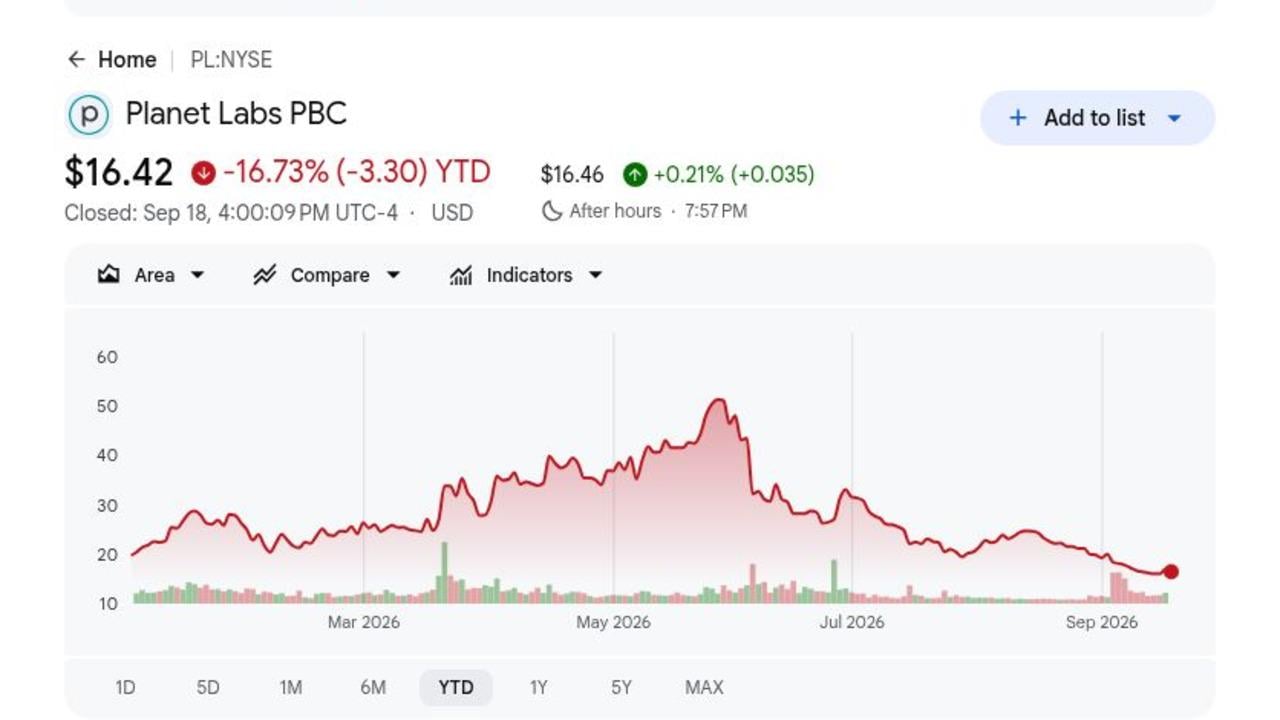
- PL closed at $16.42 and was down 16.73% in 2026: The September 18 reference price remained 68% below the $51.76 52-week high even after the company delivered record quarterly revenue. That gap shows how quickly valuation can compress when investors question the timing and repeatability of satellite-services revenue.
- Q2 revenue reached a record $116.1 million and grew 58%: Sales beat the roughly $104.5 million consensus by $11.6 million and exceeded Planet's $107 million guidance ceiling. Part of the upside came from the Swedish Armed Forces satellite handover, making revenue quality and timing central to the next quarter.
- Defense and intelligence generated about $81 million: The category represented 70% of revenue, up from 57% a year earlier, and grew more than 90%. Sovereign programs expand the opportunity, though government concentration also increases exposure to procurement schedules and milestone acceptance.
- Backlog rose 11% to $814.9 million: Planet expected more than $400 million of remaining obligations and backlog to convert over the next four quarters. That visibility supports the annual outlook, though point-in-time hardware transfers can still make quarterly revenue and margins uneven.
- FY2027 revenue guidance increased to $430 million to $441 million: Management raised the low end by $15 million and forecast adjusted EBITDA profit of $3 million to $10 million. The same plan requires $100 million to $115 million of capital expenditure as Pelican, Owl and manufacturing capacity expand.
What Is Planet Labs (PL)?
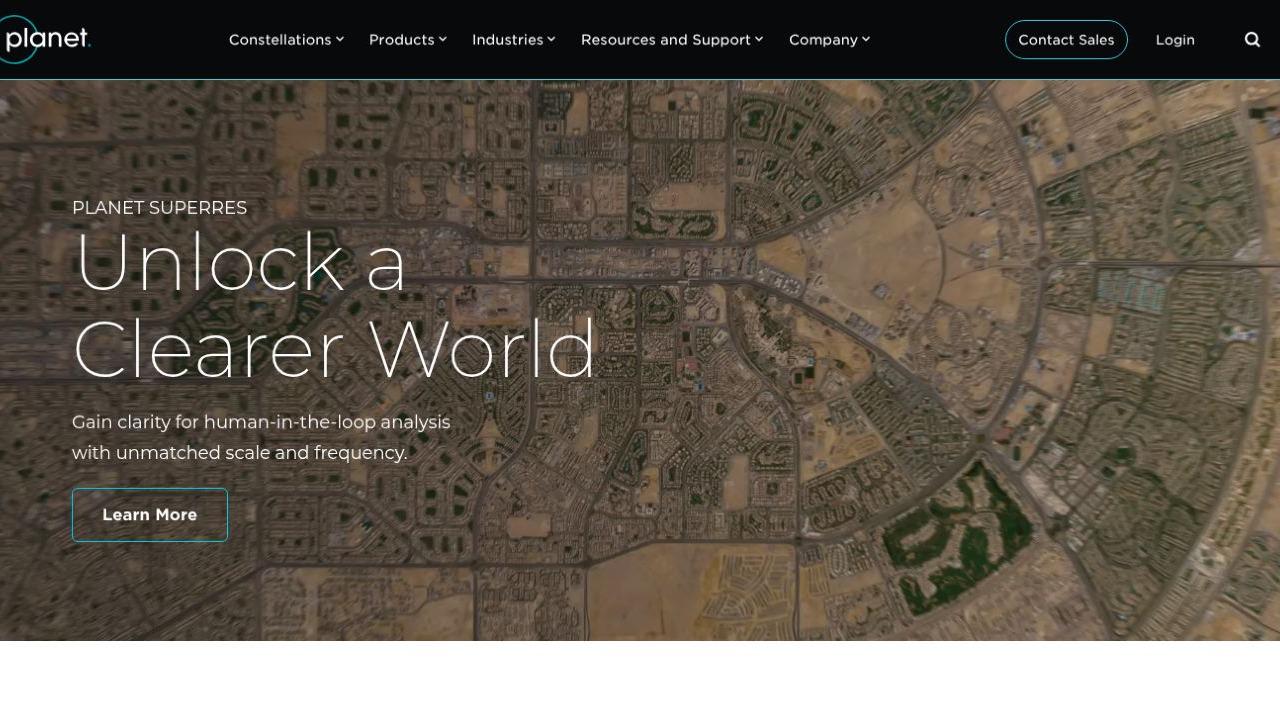
Planet Labs is an Earth-observation company that designs, builds and operates satellites while selling imagery, data feeds, tasking capacity and analytics. PlanetScope provides high-frequency broad-area coverage, SkySat supplies higher-resolution tasking and Pelican is designed to extend high-resolution performance. Customers use the data for defense, agriculture, forestry, mapping, disaster response and supply-chain monitoring. Annual and multi-year subscriptions create recurring revenue, while satellite services and handovers add larger milestone-based contracts.
The long-term strategy combines daily global coverage with sovereign satellite programs and AI-enabled analysis. Planet delivered the first Swedish Armed Forces satellite, won an $8 million agreement with the U.S. National Geospatial-Intelligence Agency, secured a German civil-government tender worth up to EUR 25 million, and launched a national program with the Rwanda Space Agency. A research collaboration with Google explores space-based data centers, while Planet AI aims to make the imagery archive queryable through natural language. These programs connect Planet with the broader commercial space investment cycle.
Read More: Top Space Stocks to Buy Ahead of SpaceX IPO
Planet Labs (PL) Q2 FY2027 Earnings Overview: Record Revenue Meets Lumpy Delivery Timing
Planet reported Q2 FY2027 revenue of $116.1 million versus $104.5 million expected and a $9.4 million GAAP net loss, improved from $22.6 million a year earlier. Adjusted EBITDA of $13.9 million exceeded the $2.3 million consensus, defense and intelligence revenue approached $81 million and non-GAAP gross margin reached 59%. Full-year revenue guidance rose to $430 million to $441 million, though Q3 guidance of $101 million to $105 million signaled a sequential reset.
Read More: Planet Labs (PL) Q2 FY2027 Earnings Overview: $116.1M Record Revenue Triggers a 1.25% Price Selloff
|
Financial Metric |
Guidance / Consensus |
Reported / Actual |
Surprise |
|
Q2 FY2027 revenue |
$104.5M consensus; $107M guidance ceiling |
$116.1M |
Beat. Revenue exceeded consensus by $11.6M and grew 58% YoY. |
|
Q2 GAAP net loss |
-$22.6M a year earlier |
-$9.4M |
Improved. The loss narrowed by $13.2M as revenue scaled. |
|
Q2 adjusted EBITDA |
$2.3M consensus; $6.4M a year earlier |
$13.9M |
Beat. Profit exceeded consensus by $11.6M and more than doubled YoY. |
|
Q2 non-GAAP gross margin |
61% a year earlier |
59% |
Compressed. Satellite-services mix offset operating leverage. |
|
Defense and intelligence revenue |
57% of revenue a year earlier |
About $81M; 70% of revenue |
Accelerated. Revenue nearly doubled as sovereign demand expanded. |
|
Backlog |
— |
$814.9M; +11% YoY |
Expanded. More than $400M was expected to convert within four quarters. |
|
Q3 FY2027 revenue outlook |
$114M consensus |
$101M-$105M |
Below consensus. Point-in-time satellite revenue creates sequential variability. |
|
FY2027 revenue outlook |
Prior $415M-$440M |
$430M-$441M |
Raised. Management lifted the low end by $15M. |
|
FY2027 adjusted EBITDA outlook |
Prior midpoint near $5M |
$3M-$10M profit |
Raised. The range preserves annual profitability despite a Q3 loss outlook. |
- Revenue of $116.1 million beat consensus by $11.6 million: Sales rose 58% and came in $9.1 million above Planet's guidance ceiling. The beat confirms strong sovereign demand, though the Swedish Armed Forces satellite handover made the quarter unusually milestone-heavy.
- Adjusted EBITDA of $13.9 million beat consensus by $11.6 million: Profit more than doubled from $6.4 million, showing strong operating leverage as revenue scaled. Q3 guidance for a $1 million to $6 million loss shows that profitability is not yet consistent.
- Defense revenue of about $81 million nearly doubled: The segment reached 70% of total revenue, up 13 percentage points from a year earlier. Strong government demand supports growth, but also increases exposure to procurement and acceptance timing.
- Non-GAAP gross margin fell 2 percentage points to 59%: Program mix and satellite investment offset part of the revenue leverage. Planet still raised full-year margin guidance to 55% to 57%, making mix and Pelican deployment costs important to watch.
- FY2027 revenue guidance rose to $430 million to $441 million: The low end increased from $415 million, implying roughly 40% to 43% annual growth. Capex also rose to $100 million to $115 million, so growth needs to be weighed against higher cash requirements.
Planet Labs (PL) 2026 Investment Outlook: $35 Bull Case vs. $12.30 Bear Case
Planet's 2026 outlook depends on whether strong defense demand and backlog conversion can support sustained growth beyond milestone-heavy satellite deliveries. The upside comes from repeat sovereign awards and improving profitability, while delivery timing, capex and dilution remain the main risks.
The Bull Case: Strong Defense Growth Pushes PL Toward $35
The Bull Case assumes defense and intelligence revenue continues growing above 50%, Planet converts more of its $4 billion opportunity pipeline and recurring data demand keeps annual revenue near the $441 million guidance ceiling. Pelican, Owl and Planet AI also broaden the business beyond raw imagery while adjusted EBITDA remains positive for the full year.
A move toward $35 would require backlog to remain above roughly $815 million, repeat sovereign awards and positive EBITDA beyond milestone-heavy quarters. Keeping capex within the $100 million to $115 million range and limiting equity issuance would strengthen the case.
The Base Case: Backlog Growth Keeps PL Between $20 and $28
The Base Case assumes Planet delivers $430 million to $441 million of annual revenue and keeps non-GAAP gross margin within 55% to 57%. Defense demand remains strong, though satellite handovers and contract acceptance continue making quarterly results uneven.
PL could trade mainly between $20 and $28 under these conditions. Stable backlog, annual adjusted EBITDA above $3 million and net retention near 109% would support the range. Revenue below $430 million or repeated quarterly EBITDA losses would weaken the upper end.
The Bear Case: Delivery Delays Pull PL Toward $12.30
The Bear Case assumes sovereign satellite handovers move into later periods, backlog conversion slows and launch or manufacturing delays raise Pelican and Owl costs. Higher capital spending and equity issuance would then limit the per-share benefit of otherwise strong revenue growth.
A move toward $12.30 would become more likely if backlog falls below $750 million, annual revenue misses the $430 million floor or adjusted EBITDA turns negative for the full year. Those outcomes would put pressure on Planet's valuation and make future dilution more costly.
PL Stock Price Forecasts for 2026 By Wall Street Analysts
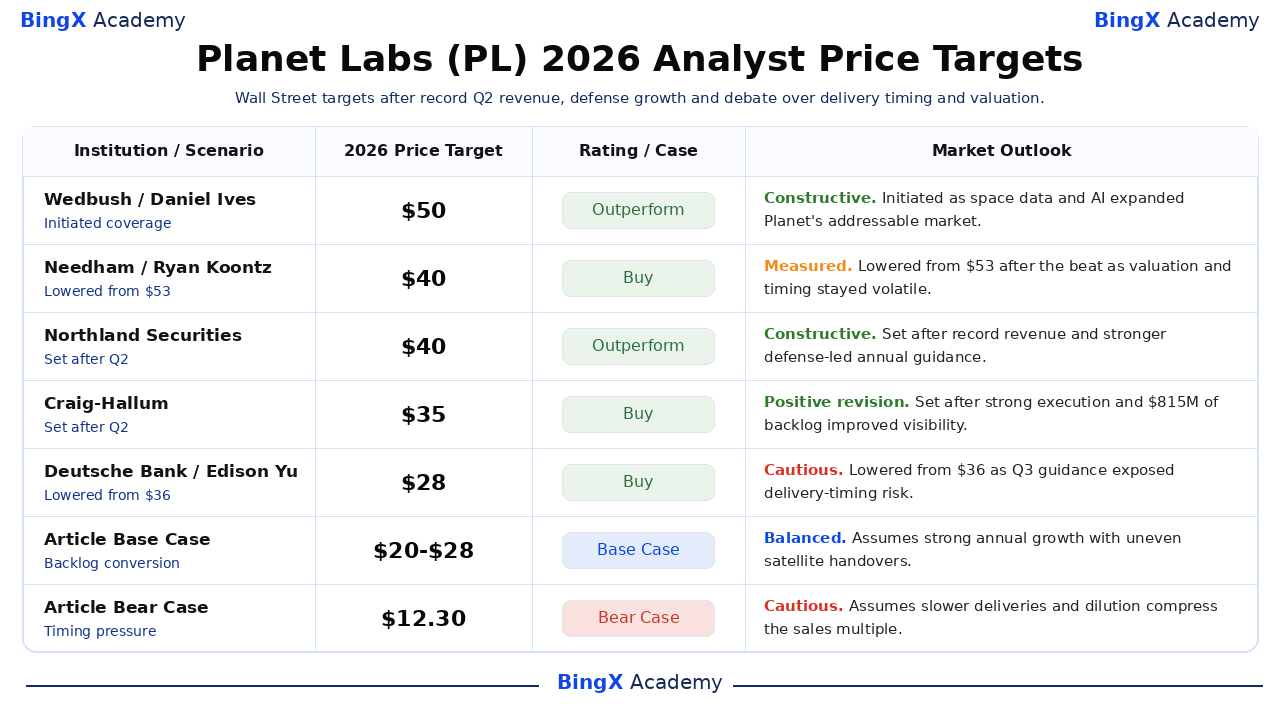
These five dated actions span $28 to $50 and show how Wall Street balances record growth and defense demand against delivery timing and valuation. They are third-party reference points rather than a single forecast. The final Base and Bear rows are BingX Academy editorial scenarios.
|
Institution / Scenario |
2026 Price Target |
Rating / Case |
Market Outlook |
|
Wedbush |
$50 |
Outperform |
Constructive. July 1: initiated as space data and AI expanded Planet's addressable market. |
|
Needham |
$40 |
Buy |
Measured. September 4: lowered from $53 after the beat as valuation and timing stayed volatile. |
|
Northland Securities |
$40 |
Outperform |
Constructive. September 4: set after record revenue and stronger defense-led annual guidance. |
|
Craig-Hallum |
$35 |
Buy |
Positive revision. September 4: set after strong execution and $814.9M of backlog improved visibility. |
|
Deutsche Bank |
$28 |
Buy |
Cautious. September 8: lowered from $36 as Q3 guidance exposed delivery-timing risk. |
|
Article Base Case |
$20-$28 |
Base Case |
Balanced. Assumes strong annual growth with uneven satellite handovers. |
|
Article Bear Case |
$12.30 |
Bear Case |
Cautious. Assumes slower deliveries and dilution compress the sales multiple. |
How to Trade Planet Labs (PL) Stock on BingX
Trade Planet Labs' defense-demand, satellite-delivery and profitability outlook using BingX TradFi and BingX AI tools. Because PL can react sharply to government contracts, launches, handovers, guidance and financing, traders should define both the catalyst and risk limits before entering a position.
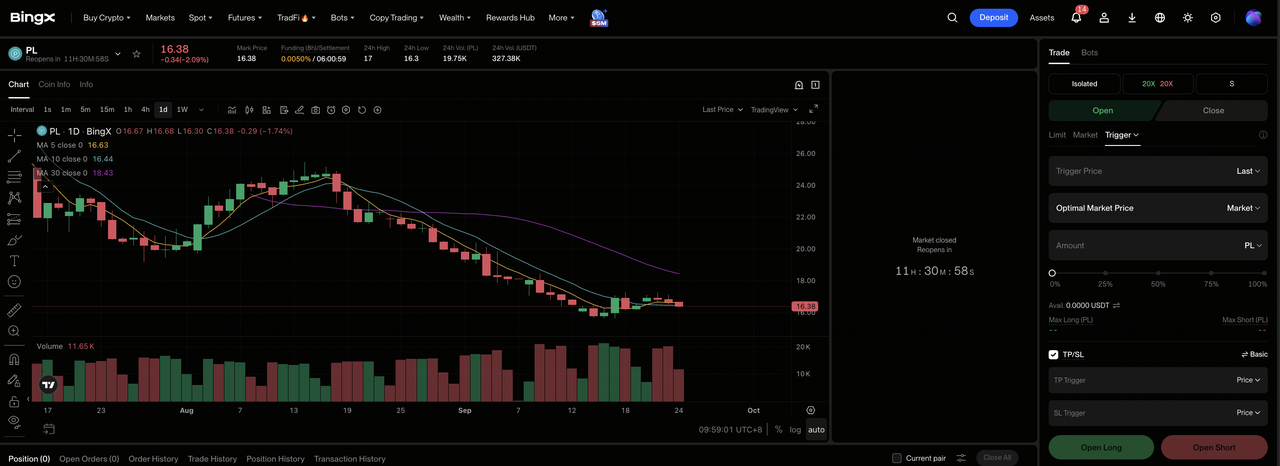
Step 1: Access BingX TradFi. Sign up and navigate to the specialized TradFi section on the BingX exchange dashboard.
Step 2: Select Planet Labs (PL). Search for and select the PL-USDT perpetual futures contract.
Step 3: Choose your direction. Select Open Long if backlog conversion and profitability improve. Select Open Short if delivery delays or dilution weaken expected per-share economics.
Step 4: Select leverage and margin mode. Choose Isolated or Cross-Margin based on your risk tolerance. The decline from a $51.76 high to $16.42 shows why conservative leverage and clear position sizing are important.
Step 5: Execute strict risk protocols. Set Take-Profit and Stop-Loss (TP/SL) levels before or immediately after entering the trade. PL can react quickly to earnings, sovereign contracts, launches, handovers and capital raises.
Top 5 Risks to Watch for Planet Labs Investors in 2026
Planet's $814.9 million backlog provides strong visibility, but satellite-delivery timing, government concentration, launch execution, higher capital spending and valuation volatility can still outweigh operating progress.
- Satellite handovers can make revenue uneven: Q2 revenue reached $116.1 million, while Q3 guidance implies a midpoint near $103 million. Milestone timing can shift revenue and margins between quarters even when underlying demand remains healthy.
- Defense concentration reached 70% of revenue: About $81 million of quarterly revenue came from defense and intelligence customers. Budget delays, procurement changes or acceptance timing could therefore affect a large share of results.
- Launch and manufacturing delays can push revenue out: Pelican, Owl, Tanager and SuperDove expansion depends on spacecraft production and launch availability. Delays could postpone capacity and customer milestones while Planet continues funding its satellite program.
- Capital spending of $100 million to $115 million raises cash needs: Planet held $865.4 million of cash and investments, providing substantial liquidity. However, faster satellite production and infrastructure investment could pressure free cash flow and increase future issuance risk.
- PL remains highly sensitive to valuation changes: Shares fell from a 52-week high of $51.76 to $16.42 despite record revenue growth. Lower valuation multiples could outweigh operating progress if interest rates, space-sector sentiment or growth expectations weaken.
Final Thoughts: Should You Invest in Planet Labs in 2026?
Planet delivered its strongest operating quarter, with $116.1 million of revenue, $13.9 million of adjusted EBITDA and about $81 million of defense and intelligence sales. Backlog of $814.9 million supports the annual outlook. The remaining issue is consistency because Q3 guidance calls for lower revenue and a return to an EBITDA loss.
The Bull Case requires sovereign demand, backlog conversion and recurring profitability to support $35. The Bear Case reflects delayed deliveries, higher capital needs and dilution that could pull PL toward $12.30. Conservative traders may wait for positive EBITDA across multiple quarters, backlog above $815 million and capital expenditure within guidance.
Risk Reminder: Trading and investing in equities like PL involves a high risk of capital loss. Company execution, market volatility, financing and leveraged trading can produce rapid losses. Conduct independent research before allocating capital.
Related Reading
- Top Space Stocks to Buy Ahead of SpaceX IPO
- Top Defense Stocks to Buy in 2026: Primes, Missiles, Drones, Space, and AI-Enabled Warfare
- Rocket Lab (RKLB) Price Prediction 2026: Can New Rocket and Defense Growth Push RKLB Toward $150?
- Firefly Aerospace Stock Outlook 2026: Can Launch Vehicles, Spacecraft Services Drive FLY to $45+?
- Virgin Galactic (SPCE) Price Prediction 2026: Can Delta Class Flights Push SPCE Toward $20?
