

ORDI represents a landmark innovation in the Bitcoin ecosystem as the pioneering fungible token created using the Ordinals protocol and the BRC-20 standard. Launched in March 2023, it demonstrated that Bitcoin's base layer could support native tokenization without sidechains or smart contracts, expanding utility beyond store-of-value functions. As the flagship BRC-20 token, Ordinals (ORDI) has a fixed supply of 21 million tokens, mirroring Bitcoin's scarcity model, and serves as a benchmark for Bitcoin-native digital assets, including fungible tokens and inscriptions often referred to as digital artifacts. T
his article examines ORDI's technology, key features, tokenomics, recent market performance, and practical trading guidance, with a focus on trading ORDI on BingX.
Key Takeaways
- ORDI is the first BRC-20 token inscribed on Bitcoin in March 2023, leveraging the Ordinals protocol developed by Casey Rodarmor.
- It features a capped supply of 21 million tokens, identical to Bitcoin's maximum supply, creating inherent scarcity.
- The token enables fungible token operations through JSON-based inscriptions on individual satoshis, inheriting Bitcoin's security while introducing new use cases for digital collectibles and assets.
- In April 2026, ORDI surged approximately 313% from recent lows near $2.12, driven by renewed interest in the Ordinals ecosystem, increased inscription activity, and strong trading volumes exceeding $1 billion in 24 hours.
- ORDI trades on major exchanges, including BingX Spot Market, offering users secure and efficient access to this Bitcoin-native asset.
What Is Ordinals (ORDI)?
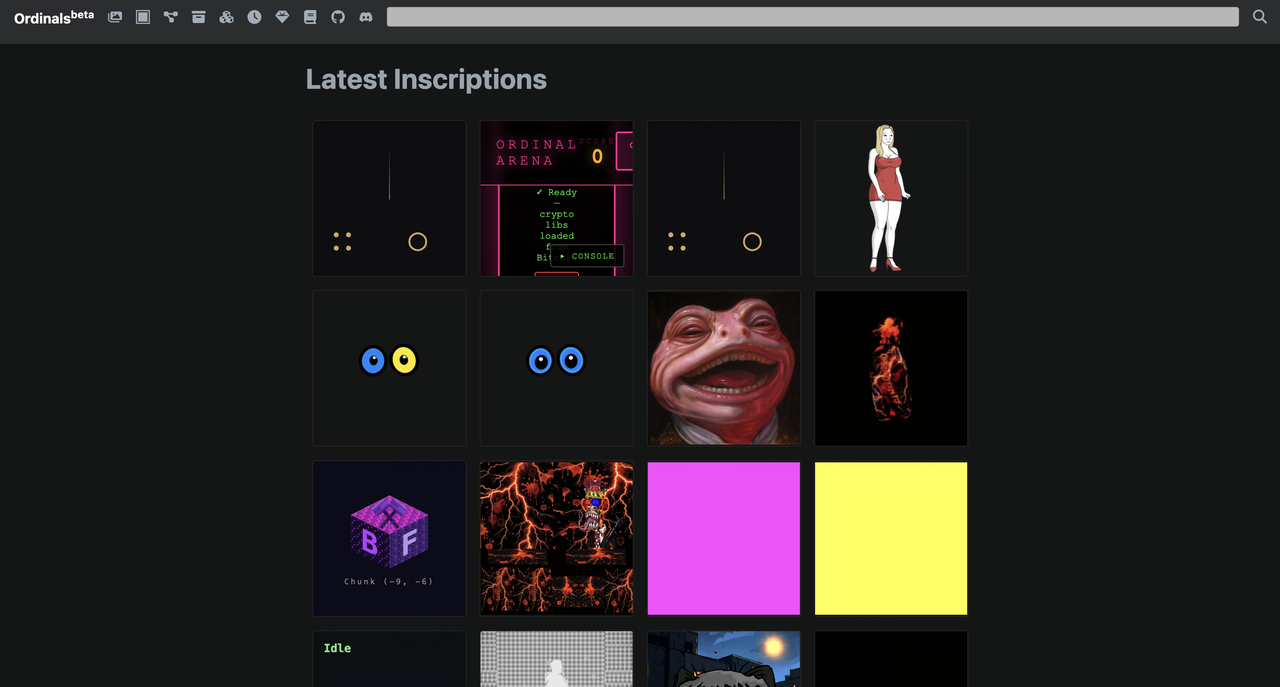
ORDI is the first and flagship fungible token built on the Bitcoin blockchain using the Ordinals protocol and the BRC-20 standard. Unlike traditional tokens on smart contract platforms such as Ethereum, ORDI operates directly on Bitcoin's base layer by inscribing data onto individual satoshis, the smallest unit of Bitcoin (1 BTC equals 100 million satoshis).
The Ordinals protocol was introduced by developer Casey Rodarmor in January 2023, assigns unique serial numbers to satoshis in the order they are mined and allows arbitrary data (text, images, or other content) to be inscribed onto them permanently. This process, known as inscription, transforms ordinary satoshis into carriers of digital artifacts without altering Bitcoin's core protocol. The BRC-20 standard, proposed by the pseudonymous developer Domo shortly after, uses JSON-formatted inscriptions to track balances and enable transfers of fungible tokens like ORDI.
ORDI was inscribed on March 8, 2023, and quickly gained traction as the de facto leader in the BRC-20 category. It is not a smart contract token but relies on Bitcoin's Taproot upgrade for efficient data embedding. With over 107 million inscriptions recorded on the Bitcoin blockchain by early 2026, the ecosystem has shown sustained growth, with inscriptions contributing significantly to network activity, including up to 25% of block space utilization in prior periods. At its core, ORDI serves as a proof-of-concept for Bitcoin-native tokenization, enabling new possibilities for digital collectibles, NFTs, and fungible tokens secured by Bitcoin's robust network.
What are the Key Features of Ordinals (ORDI)?
ORDI stands out due to several distinctive attributes that leverage Bitcoin's strengths:
- Bitcoin-Native Design: ORDI operates entirely on Bitcoin's base layer using inscriptions, avoiding reliance on sidechains, Bitcoin layer-2 solutions, or external tokens. This provides unparalleled security and decentralization inherited from Bitcoin.
- Inscription-Based Technology: Data is permanently attached to specific satoshis via the Ordinals protocol. BRC-20 tokens like ORDI use simple JSON inscriptions to manage deployments, mints, and transfers, making the process lightweight yet effective.
- Scarcity and Fixed Supply: With a total and circulating supply capped at 21 million tokens, ORDI mirrors Bitcoin's deflationary model, enhancing its appeal as a scarce digital asset.
- Ecosystem Benchmark Role: As the first BRC-20 token, ORDI gauges sentiment and activity in Bitcoin's tokenization space. It supports trading of digital artifacts and has inspired broader ecosystem developments, including marketplaces and potential layer-2 solutions for reduced fees.
- Community-Driven Origins: Initially distributed through fair minting and airdrops to early Ordinals users, ORDI embodies a decentralized ethos, with no central team or pre-mine dominating supply.
These features position ORDI as both a speculative asset and a cultural marker for Bitcoin's evolution into a platform for digital ownership.
What Are the Tokenomics of ORDI token?
ORDI maintains a straightforward and transparent tokenomic structure designed for scarcity:
- Total Supply: 21,000,000 ORDI
- Circulating Supply: 21,000,000 ORDI (fully circulating since early distribution)
- Maximum Supply: 21,000,000 ORDI (no inflation or additional minting possible under the BRC-20 deployment)
The token launched with a fair mint mechanism, where most supply was distributed to participants in the Ordinals ecosystem rather than through venture allocations or team reserves. This approach contributed to its initial popularity as a community-driven project. All price movements stem from demand dynamics on a fixed supply base, similar to Bitcoin.
As of mid-April 2026, ORDI's market capitalization has fluctuated significantly with price action, recently expanding from around $68 million to over $190 million in short periods amid high volatility and trading volumes reaching $1 billion or more in 24 hours. No ongoing emissions or staking rewards exist natively; utility derives primarily from its role as a benchmark asset and participation in the broader Ordinals and BRC-20 ecosystem.
Why Is ORDI Up 313% from Recent Lows in Mid-April 2026?
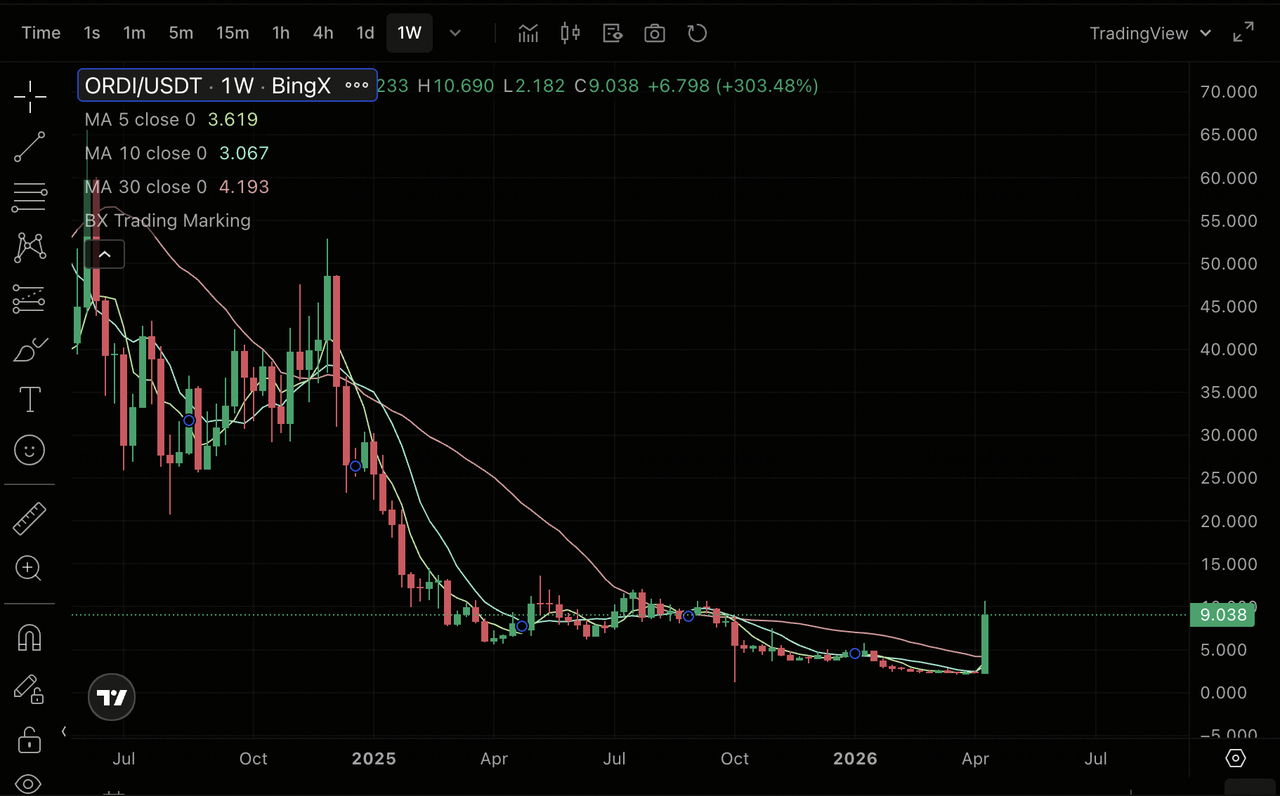
Source: Price Action for ORDI/USDT in the last week on BingX Spot Market
ORDI experienced a dramatic rally in mid-April 2026, climbing approximately 313% from recent lows around $2.12 (set on March 29, 2026) and posting gains of over 212% on the weekly timeframe. On a 24-hour basis, the token surged more than 100-137% at peaks, reaching intraday highs near $9.31 from lows around $3.25, with market capitalization expanding by roughly $94 million in a single day.
Key drivers included:
- Renewed momentum in the Bitcoin Ordinals ecosystem, with daily inscription-related transactions and activity surging to levels not seen since late 2024, including over 615,000 daily transactions in some reports.
- Heightened trading volumes, with 24-hour figures exceeding $1 billion, a 700%+ increase in some sessions, reflecting intense speculative interest and a volume-to-market-cap ratio well above typical levels.
- Broader sector rotation toward Bitcoin-native narratives, including BRC-20 tokens, amid increased social interest, wallet accumulation, and technical breakouts from prolonged consolidation zones.
- Potential catalysts such as protocol developments, rising inscription volumes (with March 2026 alone generating nearly $47 million in Ordinals sales volume), and overall positive sentiment around Bitcoin's utility expansion.
This performance highlighted ORDI's high beta to Bitcoin ecosystem developments, though such moves come with notable volatility typical of emerging narrative-driven assets.
How to Buy Ordinals (ORDI) on BingX Spot Market: Step-by-Step Guide
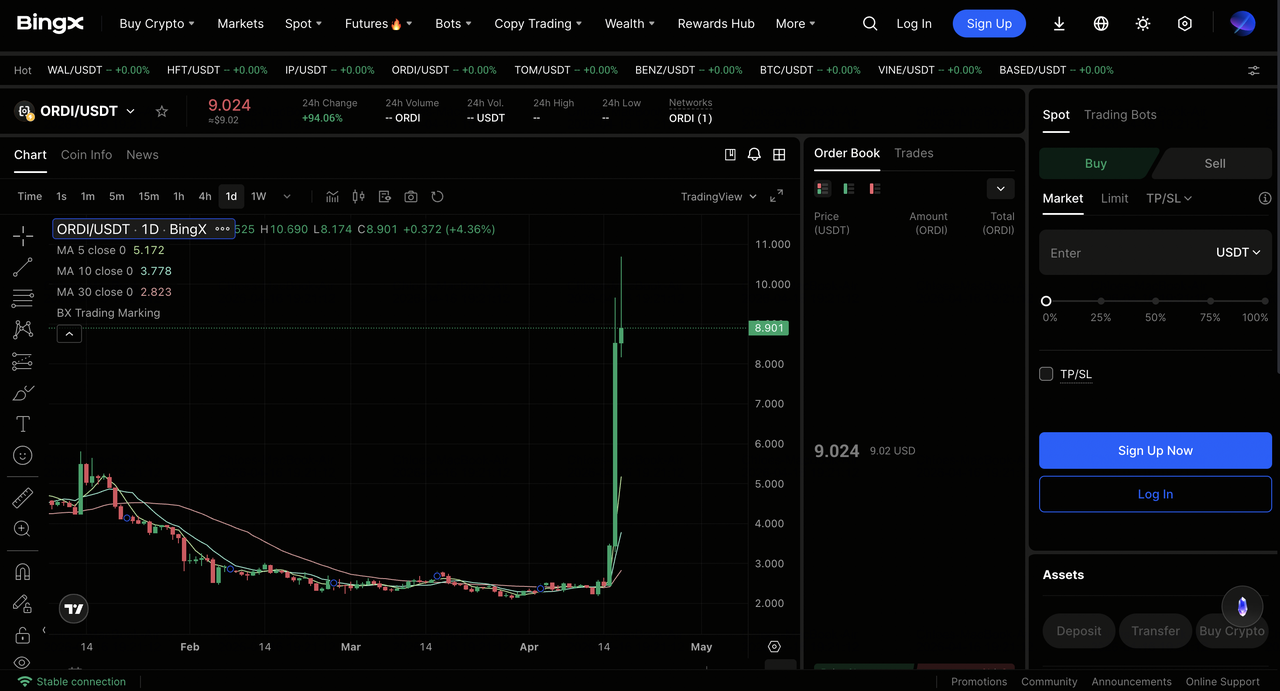
Source: ORDI/USDT on BingX Spot Market
BingX provides a reliable and user-friendly centralized venue for acquiring ORDI with competitive liquidity and strong security. You can access ORDI through the spot market and use them within their respective ecosystems. Here's a step-by-step guide on how to buy ORDI on BingX Spot Market:
Step 1: Log in or Create a BingX Account
Log in to your BingX account. If you don't have one, you can register using an email or mobile number. Completing identity verification (KYC) is required for full access to trading features.
Step 2: Deposit Funds
Go to the Buy Crypto section to deposit funds into your account. BingX supports several payment options such as bank transfer, credit or debit card, and peer-to-peer (P2P) transactions.
Step 3: Find the ORDI/USDT Pair
Navigate to the Spot trading section and search for ORDI/USDT and select the pair to view the trading interface. Use BingX AI tools to analyze ORDI trends and make smarter trading decisions.
Step 4: Place Your Order
Choose between a Market Order to buy at the current price or a Limit Order to set your preferred entry. Enter the amount and confirm the order.
Conclusion: Why You Should Trade Ordinals (ORDI) on BingX
ORDI embodies the innovative spirit of Bitcoin's expanding capabilities, serving as the original fungible token on the Ordinals protocol and a leading representative of the BRC-20 ecosystem. Its fixed supply, native security, and role in driving inscription activity make it a compelling asset for those interested in Bitcoin's tokenization narrative. Trading ORDI on BingX Spot Market offers advantages including reliable liquidity, intuitive interfaces, advanced trading tools, and a focus on user experience in a secure environment.
As the Ordinals space continues to evolve, with millions of inscriptions and sustained network activity, BingX provides an efficient gateway for both new and experienced traders to participate in. Whether exploring Bitcoin-native innovation or capitalizing on market movements, consider BingX as your top choice for ORDI trading. Always conduct thorough research and manage risk appropriately in the dynamic cryptocurrency market.
Related Reading
- What Are the Top Bitcoin Layer-2 Networks of 2026?
- What Are the Top BTCFi (Bitcoin DeFi) Projects in 2026?
- Top Bitcoin Wallets: Best Ways to Store BTC in 2026
- What Is Bitlayer (BTR), the First BitVM-Based Bitcoin Layer 2 Scaling Solution?
- Who Owns the Most Bitcoin in 2026? Top 10 BTC Rich List Revealed