
Quack AI is a unified AI-powered blockchain protocol built to simplify and automate governance for DAOs, Web3 protocols, and Real-World Asset (RWA) ecosystems. It combines autonomous AI agents with modular infrastructure to solve common governance problems such as low voter turnout, slow execution, and operational inefficiencies.
The project focuses on making decentralized decision-making faster, smarter, and more accessible while maintaining transparency and security. As a developer and institution-friendly platform, Quack AI empowers DAOs and protocols to operate with minimal human intervention through verifiable AI logic. With the native $Q token powering the ecosystem, it aims to become the standard backend for the emerging Agent Economy in Web3.
Read more: What Are the Top 10 AI Agent Crypto Projects of 2026?
Key Takeaways
- Quack AI automates the full governance cycle using autonomous AI agents for proposal creation, analysis, and execution.
- It operates cross-chain across BNB Chain, Arbitrum, Ethereum, Solana, and TON.
- The Q402 standard enables secure, gasless, policy-driven transactions with a single signature.
- $Q is the native token used for staking, governance access, and premium features.
- BingX stands as the top choice for trading Quack AI on spot and perpetual futures.
What Is Quack AI (Q)?
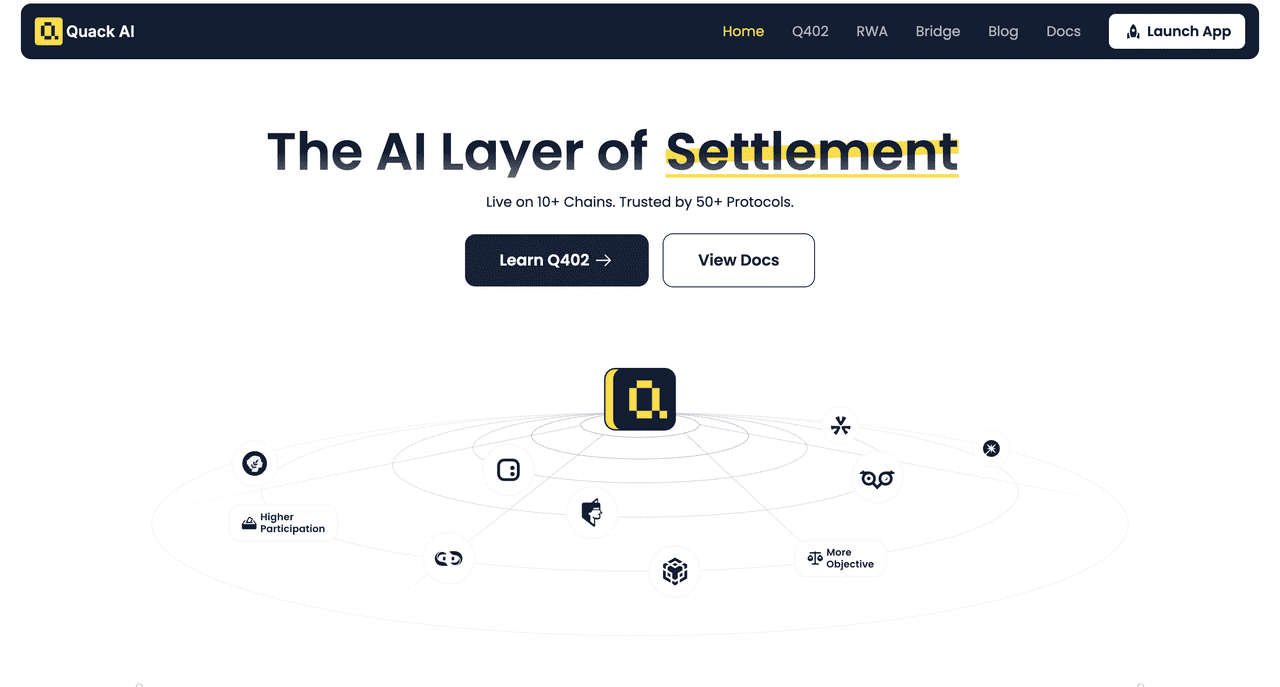
Quack AI (Q) is an AI-powered blockchain protocol designed as a modular governance infrastructure layer for Web3, aimed at automating decision-making for DAOs, Web3 protocols, and Real-World Asset (RWA) ecosystems. It aims to solve inefficiencies in traditional DAOs, such as low voter turnout and slow execution, by deploying autonomous AI agents to manage governance tasks.
Instead of relying on manual voting and slow processes, Quack AI uses intelligent agents to handle proposal drafting, risk analysis, voting, and on-chain execution. The platform supports cross-chain operations and integrates with the Q402 gasless authorization standard for seamless user experience. A core aspect of Quack AI is its focus on verifiable and auditable AI governance, making it suitable for both decentralized communities and institutional RWA applications.
What Are the Key Features of Quack AI?
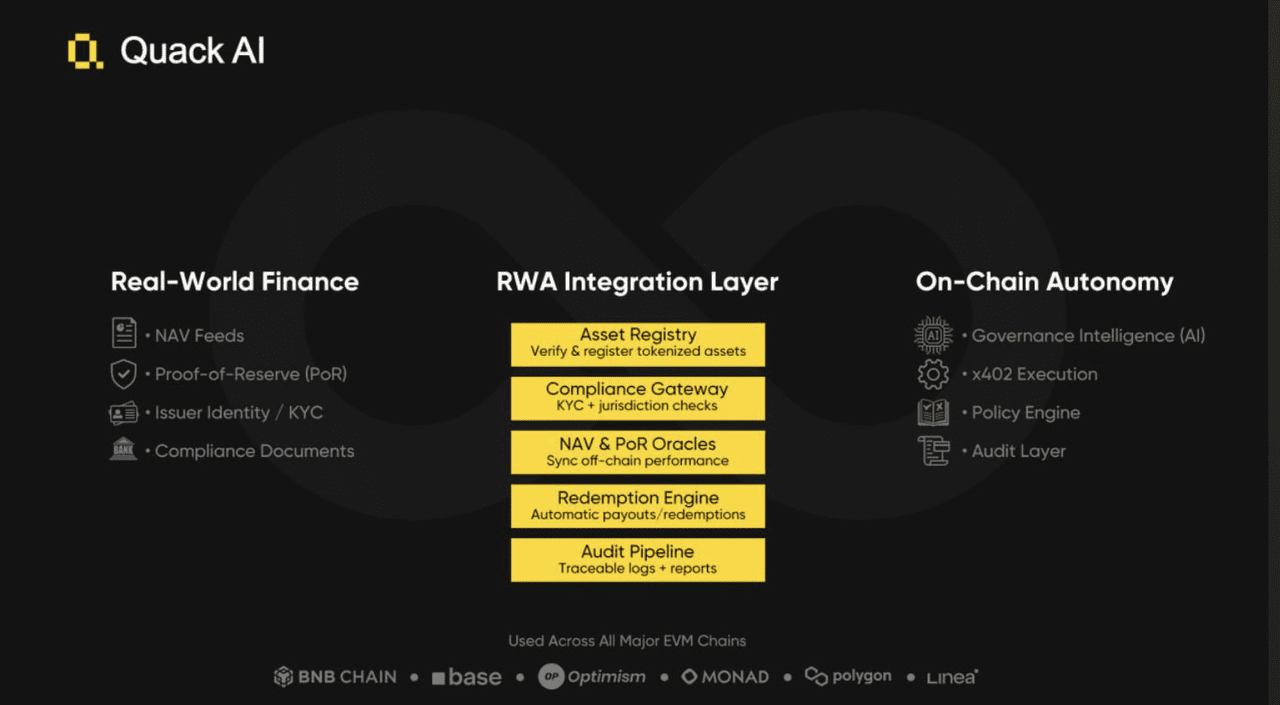
Quack AI stands out through several advanced capabilities tailored for modern Web3 governance. AI-Driven Governance automates the entire proposal lifecycle with verifiable logic and risk scoring. The Q402 standard enables secure, gasless, policy-driven transactions using a single user signature.
Additional features include cross-chain compatibility, RWA integration with compliance tools, and developer-friendly AI tools such as automated code reviews. The platform also supports a growing Agent Economy where autonomous AI agents can operate under defined policies.
Read more: How to Use AI in Crypto Trading and Trade Smarter
What Are the Use Cases of Quack AI?
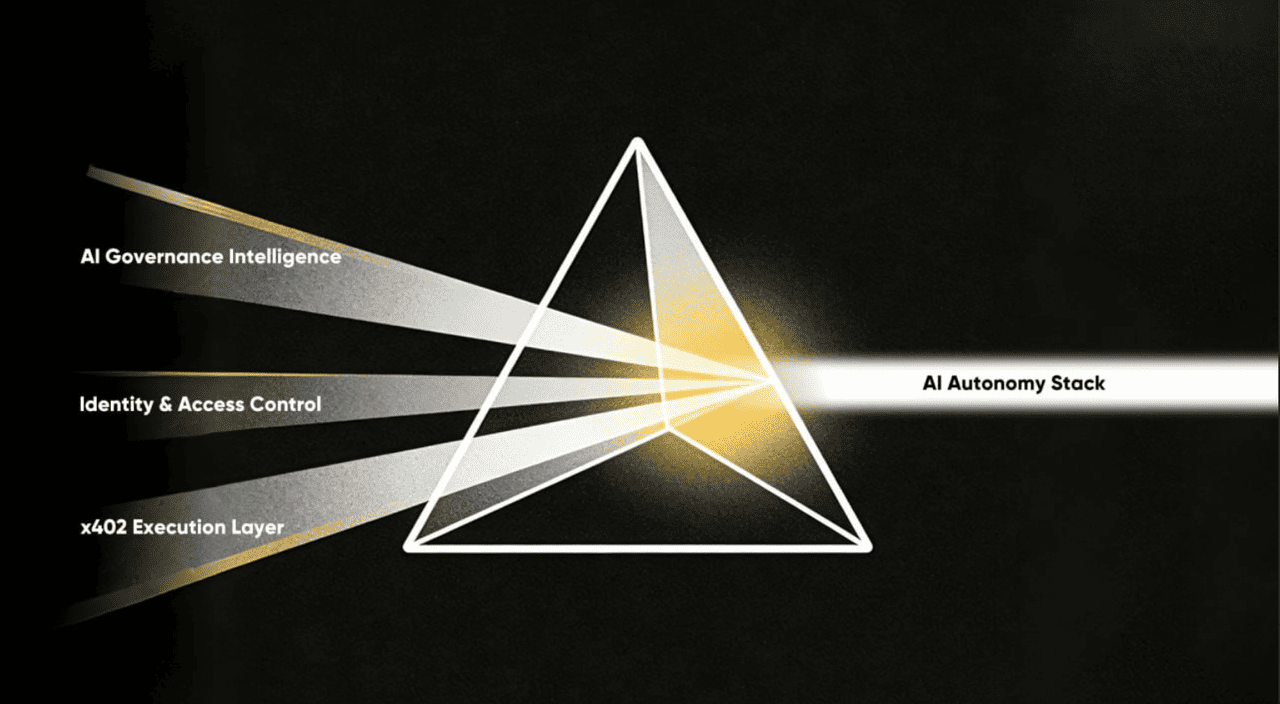
Quack AI offers several powerful use cases across Web3 and traditional finance. DAOs can automate proposal creation, analysis, and execution, significantly improving participation and efficiency. DeFi protocols benefit from intelligent treasury management and automated decision-making.
RWA projects use Quack AI for compliance checks, tokenized asset governance, and automated settlements. Developers can build custom AI agents for specialized tasks while leveraging the platform’s modular infrastructure.
What Are the Tokenomics of Q token?
The $Q token is the native utility and governance token of the Quack AI ecosystem. It is used for staking to secure the network, accessing premium governance features, and powering AI agent operations. The tokenomics are designed to support long-term network security and incentivize active participation in the Agent Economy.
Quack AI ($Q) is a governance and utility token for an AI-driven Web3 platform with a total supply of 10 billion $Q. As of May 2026, the token operates on a high-liquidity model designed for AI-driven DAO governance, with a major focus on community ownership and a 12-month cliff for team tokens.
Quack AI (Q) Key Tokenomics and Metrics (as of May 2026)
- Total/Max Supply: 10,000,000,000 $Q
- Circulating Supply: 1.62 billion $Q
- Token Type: ERC-20 (Ethereum) and BNB Chain
- Key Function: Governance, staking rewards, and purchasing AI analytics
- Team Vesting: 10% of tokens (1 billion) locked until September 2026
Q Token Distribution and Allocation
The project allocates a significant portion to the community to promote decentralized governance:
- Community: 30%
- Ecosystem & Partnerships: 15%
- Airdrop: 12%
- Treasury: 11%
- Investors & Advisors: 11%
- Core Team: 10%
- Marketing & Growth: 6%
- Liquidity: 5%
Read more: .Top 5 AI Agent Crypto Projects to Know in 2026
How to Buy Quack AI (Q) on BingX: A Step-by-Step Guide
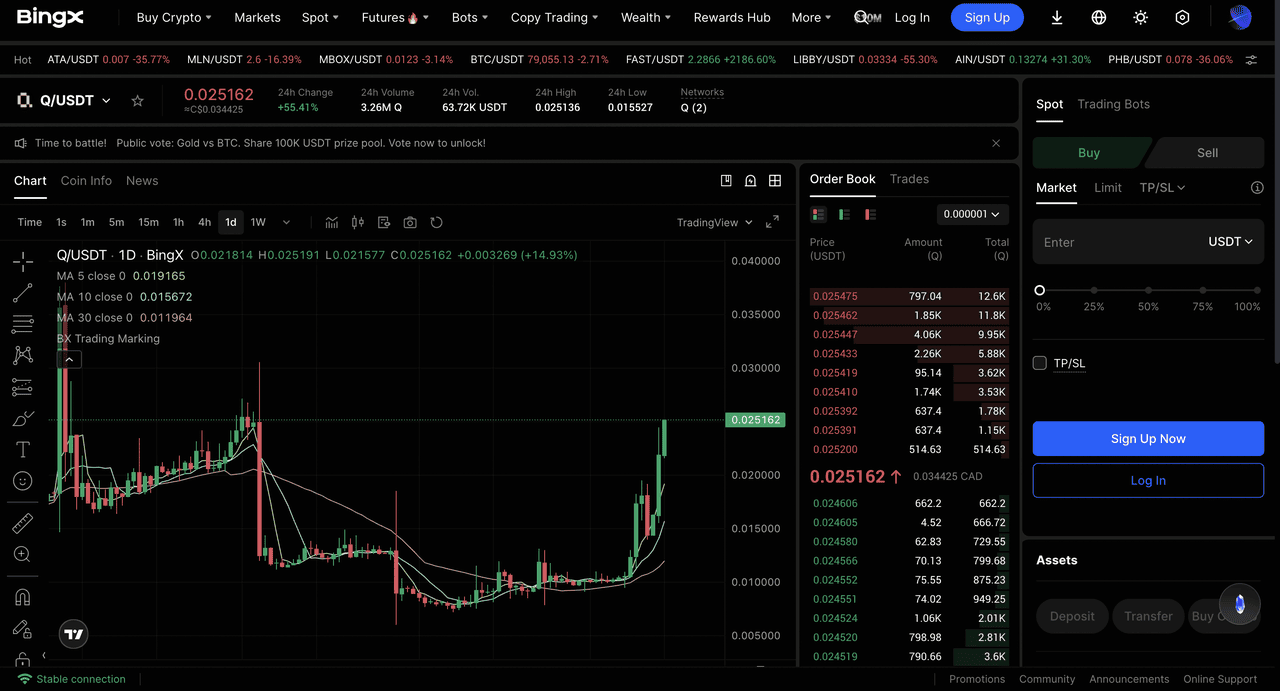
Source: Q/USDT Trading Pair on BingX
You can access Q through the spot market and use it within their respective ecosystems. Here's a step-by-step guide on how to buy Q on BingX Spot Market:
Step 1: Log in or Create a BingX Account
Log in to your BingX account. If you don't have one, you can register using an email or mobile number. Completing identity verification (KYC) is required for full access to trading features.
Step 2: Deposit Funds
Go to the Buy Crypto section to deposit funds into your account. BingX supports several payment options such as bank transfer, credit or debit card, and peer-to-peer (P2P) transactions.
Step 3: Find the Q/USDT Pair
Navigate to the Spot trading section and search for Q/USDT and select the pair to view the trading interface. Use BingX AI tools to analyze Q trends and make smarter trading decisions.
Step 4: Place Your Order
Choose between a Market Order to buy at the current price or a Limit Order to set your preferred entry. Enter the amount and confirm the order.
How to Trade Q Futures on BingX
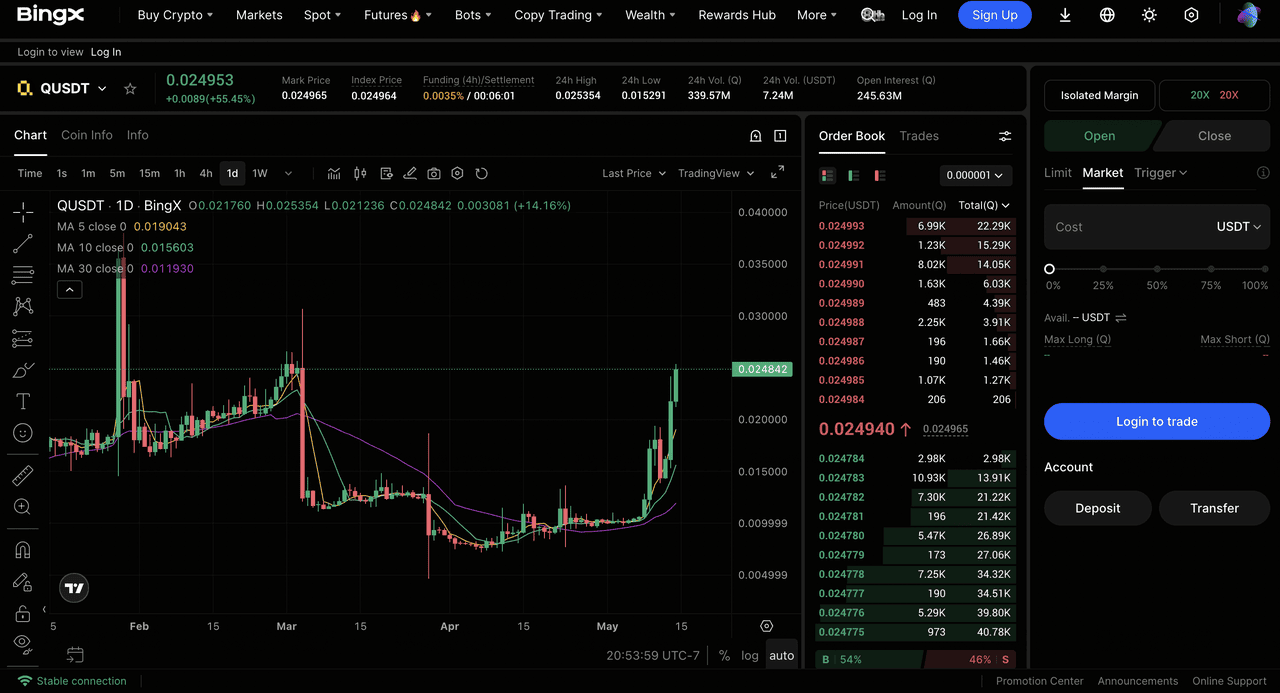
BingX, a user-friendly centralized exchange, supports Q trading with pairs like Q/USDT and offers tools for efficient purchases. Amid the hype, the token is already listed on major centralized exchanges, including BingX, where users can trade Q/USDT perpetuals in the futures market. Follow these steps to trade Q securely:
Step 1: Create and Fund Your BingX Futures Account
Sign up on BingX and complete identity verification. Deposit USDT into your account and transfer your funds into your Futures Wallet.
Step 2: Open the Futures Trading Interface
Navigate to the Futures trading section and search for "Q" or the Q/USDT perpetual contract trading pair. Review the current price, chart, and market data for informed decision-making.
Step 3: Choose Long or Short
- Go long if you expect Q's price to rise
- Go short if you expect Q's price to decrease
Step 4: Set Leverage and Order Type
Adjust leverage based on your risk tolerance. Choose market order for instant execution or limit order for a specific price entry.
Step 5: Manage Risk
Always use stop-loss (SL) and take-profit (TP) to manage downside risk. Monitor margin levels to avoid liquidation. This approach mirrors traditional gold futures trading, but with crypto-native speed, leverage, and flexibility. Monitor your position using BingX's advanced charting tools, set price alerts, and manage risk with stop-loss orders given the high volatility of memecoins. Always consider exchange fees, market conditions, and your risk tolerance before trading.
Read more: Risk Management in Crypto Trading: 7 Rules Every Trader Must Know
Conclusion: Why You Should Trade Quack AI on BingX
Quack AI represents a significant advancement in Web3 governance by introducing autonomous AI agents and gasless execution layers to DAOs, protocols, and RWA ecosystems. Its modular design and focus on verifiable intelligence position it as key infrastructure for the next era of decentralized decision-making and automation. BingX serves as the top choice for trading Quack AI on both spot and perpetual futures markets, combining ease of use, robust liquidity, leverage options, and trusted infrastructure.
Whether speculating on price movements or participating in the ecosystem, BingX enables efficient trading. As the demand for intelligent and automated governance solutions continues to grow, integrating innovative projects like Quack AI with reliable centralized platforms such as BingX offers traders and institutions greater flexibility, security, and confidence in navigating the evolving Web3 landscape.