

In October 2025, Bitcoin printed a new all-time high of $126,198, fueled by a perfect storm: record-breaking spot US ETF inflows ($3.24 billion in a single week), a weakening DXY triggered by the US government shutdown, and aggressive accumulation by institutional whales. Just four days later, BTC flushed over 10%, wiping out $19 billion in leveraged long positions. This cascading price action perfectly encapsulates the multi-million dollar question every crypto investor must answer before deploying capital: What actually drives the price of Bitcoin?
The TL;DR: Bitcoin’s price discovery is driven by a hard-capped, programmatic supply interacting with dynamic market demand. The core catalysts are: (1) The halving cycle and programmatic scarcity, (2) Global macro liquidity and Fed monetary policy, (3) Institutional adoption via spot ETFs and corporate treasuries, (4) The regulatory landscape, (5) Market sentiment and whale accumulation, and (6) Macroeconomic and geopolitical tailwinds. No single variable operates in a vacuum.
Understanding these core market drivers won't eliminate volatility, but it completely shifts your edge. Instead of panic-reacting to raw price action, you learn to front-run the catalysts that trigger the moves.
What Sets Bitcoin Apart from Traditional Assets
Before breaking down the catalysts, it is vital to understand why Bitcoin behaves so differently compared to equities, gold, or legacy fiat. Three core structural traits drive most of its volatility:
- A Hard-Capped, Programmatic Supply: There will only ever be 21 million BTC. As of June 2026, over 19.7 million coins have already been minted. This hard-coded scarcity stands in stark contrast to fiat currencies, which central banks can debase at will.
- 24/7 Global Markets with No Circuit Breakers: Unlike traditional equity markets that trigger trading halts during massive sell-offs, crypto never sleeps. A geopolitical black swan event at 2:00 AM on a Sunday prices in instantly with zero lag. On BingX, traders can track and trade the BTC/USDT pair around the clock.
- A Highly Fragmented Holder Base: Bitcoin is simultaneously accumulated by retail investors via mobile apps, US pension funds through spot ETFs, and corporate treasuries. Each cohort reacts to entirely different market signals, creating complex and often conflicting order books.
Catalyst 1: The Halving Cycle and Supply Shock Dynamics
The halving is the most predictable, hard-coded catalyst in crypto. Every 210,000 blocks mined (roughly every four years), the block reward paid to miners cuts in half. The fourth halving took place in April 2024, slashing block emissions from 6.25 BTC to 3.125 BTC.
The supply-side logic is straightforward: if demand remains constant or expands while net new daily issuance is cut by 50%, the equilibrium price naturally moves higher. Historically, Bitcoin’s most explosive parabolic bull runs have triggered 12 to 18 months post-halving.
As Carlos Russo, CFO of Transfero, notes: the reduction in supply fundamentally shifts the market's equilibrium price, but the impact is structural rather than immediate. This supply-squeeze plays out over months, not overnight.
An essential on-chain metric to track: according to a 2024 CryptoQuant report, long-term holders (LTHs) were absorbing roughly seven times more Bitcoin per month than miners were creating. This indicates that even before the halving took effect, institutional and retail accumulation pressures were already heavily outpacing daily block rewards.
The Impact of Halving Cycles on Miners
Miners are natural, structural sellers of Bitcoin. They must consistently liquidate a portion of their mined BTC to cover heavy energy costs and hardware capex. When the block reward cuts in half, the daily sell pressure from this cohort is sliced proportionally, removing a massive supply overhang from the market. Concurrently, inefficient, high-cost miners get squeezed out of the network, which further flushes out weak hands and stabilizes net emissions.
Catalyst 2: Global Macro Liquidity and Fed Policy
If there is one macro variable that has completely dominated the Bitcoin price narrative over the past two years, it is the Federal Reserve's monetary policy and global liquidity cycles.
In 2022, the most aggressive rate-hike cycle in decades triggered a brutal crypto winter, sending Bitcoin plunging over 60% from roughly $47,000 in January to the $16,000 range by December. The macro logic is clear-cut: high interest rates make risk-free yields (like US Treasuries) highly attractive, crushing the global appetite for risk assets and tightening the credit needed to leverage long positions.
Conversely, easy money policies act as rocket fuel. In September 2025, when the Fed cut interest rates to the 4.00%–4.25% range, the entire crypto market immediately caught a bid, proving the tight correlation between monetary easing and BTC capital inflows.
However, the traditional playbook has evolved. Data from April 2026 suggests that following the launch of spot ETFs in January 2024, Bitcoin has transitioned from a lagging risk asset into a leading macro indicator. Institutional desks like BlackRock and Fidelity trade BTC based on forward-looking interest rate projections, just like US Treasuries. Bitcoin now frequently front-runs shifts in global liquidity expectations.
For smart traders, this means tracking FOMC minutes and Fed dot plots is just as critical as charting technical indicators. Utilizing institutional tools like BingX AI can help distill real-time macro data into actionable trading insights.
The S&P 500 Correlation Matrix
According to Bitget's country manager in Brazil, Bitcoin’s moderate correlation with the S&P 500 (hovering around 0.48) points to a maturing asset class. While it proves BTC still moves with global risk-on/risk-off sentiment, it also shows independence. During traditional market corrections, BTC may initially drop with legacy equities due to liquidity flushes, but it historically bottoms and recovers at a much faster velocity.
Catalyst 3: Institutional Inflows and Spot ETFs
The approval of US spot Bitcoin ETFs on January 10, 2024, was a structural paradigm shift for the asset class. Prior to this, institutional allocators faced massive hurdles regarding direct custody, compliance, and regulatory mandates, keeping trillions of dollars in pension funds, insurance companies, and family offices on the sidelines.
Spot ETFs bridges this gap, allowing institutional capital to flood into Bitcoin via traditional brokerage accounts with deep daily liquidity. BlackRock’s IBIT quickly grew into the largest Bitcoin ETF globally, capturing nearly $45 billion in AUM by late 2024. Fast forward to October 2025, and spot ETFs saw a massive $3.24 billion in net inflows in a single week—the highest weekly total since inception—directly driving BTC to its all-time high.
With aggregate trading volumes across US spot ETFs clearing over $500 billion since launch, the underlying market structure has changed forever. The order books are no longer dominated solely by retail momentum and short-term scalp traders. Instead, a massive layer of sticky, long-term institutional capital now serves as a strong macro bid during deep market corrections.
Corporate Treasuries: The Next Wave of Capital
Beyond ETFs, a corporate treasury playbook pioneered by MicroStrategy in 2020 became a massive global trend by 2025: the rise of Digital Asset Treasury Companies (DATCs). These are public and private enterprises allocating cash reserves into Bitcoin as a strategic hedge against fiat debasement. In Brazil, Méliuz pioneered this strategy, while on the global stage, MicroStrategy has amassed a treasury of over 530,000 BTC. Every corporate balance sheet disclosure acts as a major bullish catalyst, signaling deep, long-term institutional conviction.
Catalyst 4: The Evolving Regulatory Landscape
While Bitcoin operates on a decentralized protocol without a central bank, global sovereign regulations exert immense influence over short-to-medium-term price action. Pro-crypto regulatory frameworks de-risk the asset class for massive capital allocators, while enforcement actions or outright bans trigger heavy liquidations and market uncertainty.
The clearest example of regulatory front-running occurred right before the SEC’s official ETF approval in January 2024. When the SEC’s official X account was compromised and posted a fake approval notice, BTC spiked from $44,000 to $47,800 in a matter of minutes, demonstrating exactly how fast the crypto market prices in regulatory news.
The political shifts in the US throughout 2024 and 2025—headlined by Donald Trump’s pro-crypto administration goals and the proposal for a strategic US Treasury Bitcoin Reserve—acted as a massive macroeconomic tailwind. Furthermore, the departure of Gary Gensler from the SEC cleared the way for a much more permissive, innovation-friendly regulatory environment.
On a regional level, initiatives like the Central Bank of Brazil’s roll-out of Drex, the maturation of licensed VASPs (Virtual Asset Service Providers), and the deep integration of Tier-1 crypto exchanges with traditional banking rails continue to bolster local investor confidence and drive structural adoption across emerging markets.
Catalyst 5: Market Sentiment, FUD, and FOMO Dynamics
No framework for analyzing Bitcoin’s price discovery is complete without factoring in human psychology. The crypto derivatives and spot markets are exceptionally sensitive to collective market sentiment, primarily governed by two cyclical psychological forces:
- FUD (Fear, Uncertainty, and Doubt): Negative headlines regarding regulatory crackdowns, exchange exploits, protocol insolvencies, or deteriorating macro metrics can trigger systemic panic selling. This spot distribution is often amplified by cascading liquidations across over-leveraged long positions in the perpetual futures market. Utilizing advanced stop-loss and take-profit orders is a fundamental risk management practice to protect capital during these sudden flushes.
- FOMO (Fear of Missing Out): During parabolic expansion phases, retail and institutional sidelined capital aggressively chases momentum out of fear of missing the cycle top. This structural buying pressure creates an aggressive reflexivity loop, driving exponential price appreciation until market exhaustion.
The Crypto Fear and Greed Index serves as a vital sentiment benchmark, scaling from 0 (Extreme Fear) to 100 (Extreme Greed). The index aggregates key metrics including volatility, trading volume, social media dominance, Bitcoin market cap dominance, and large-scale whale transaction tracking.
Historical on-chain data from December 2025 highlights how distinct investor cohorts behave during these extremes: while the Fear and Greed Index languished in "Extreme Fear" for roughly 30 consecutive days, Glassnode metrics revealed that mega-whales holding >1,000 BTC were the only cohort sustaining aggressive net-long accumulation. In short: retail panicked and capitulated, while institutional whales absorbed the float.
Catalyst 6: On-Chain Whale Distribution and Exchange Inflow/Outflow Metrics
Intimately tied to market sentiment but fundamentally driven by hard data is the behavior of "whales"—entities controlling massive blocks of circulating Bitcoin. Their programmatic on-chain footprint can be tracked in real-time using institutional analytics platforms like Glassnode, CryptoQuant, and Santiment.
Traders primarily monitor two directional flows:
- Exchange Outflows (BTC Moving to Cold Storage): When large volumes of BTC migrate from centralized exchange wallets into deep cold storage, it signals strong long-term accumulation and a reluctance to sell in the near term. This structural outflow constrains the immediately tradeable liquid supply on exchange order books, creating a positive supply shock that tilts the price discovery path upward. To secure digital assets properly, professional allocators heavily rely on enterprise-grade hardware wallets.
- Exchange Inflows (BTC Moving to Centralized Platforms): Conversely, surging exchange inflows serve as a leading indicator of looming sell-side pressure. When whales transfer large blocks of BTC onto trading platforms, the market interprets it as preparation for liquidation or margin collateral. Centralized trading venues that publish fully audited Proof of Reserves (PoR) offer vital transparency, allowing market participants to accurately track these structural inventory shifts.
On BingX, traders can leverage advanced market intelligence dashboards to monitor these institutional flows in real-time, effectively combining technical analysis with on-chain transparency to build data-driven trading strategies.
Catalyst 7: Macroeconomic and Geopolitical Tailwinds
Depending on the prevailing macro backdrop, Bitcoin is frequently categorized as both "digital gold" (a non-sovereign safe haven) and a "high-beta risk asset." This dual narrative is a primary driver of its mid-term volatility.
For instance, during the US government shutdown in October 2025, the DXY (US Dollar Index) faced severe downward pressure, forcing global capital to rotate into hard, non-sovereign assets like spot gold and Bitcoin. This structural phenomenon is known as the "debasement trade"—fiat capital fleeing sovereign risk to seek protection in programmatically scarce assets. This perfectly underscores Bitcoin's utility as a long-term inflation hedge and fiscal safety valve. For allocators seeking exposure to this trend while mitigating localized currency depreciation, balancing their portfolio with fiat-pegged stablecoins like USDT provides an excellent operational buffer alongside spot BTC positions.
Other geopolitical catalysts that historically impact Bitcoin's order books include regional banking crises, sovereign debt expansions, and shifts in central bank foreign exchange reserves. Hyperinflationary economies like Argentina and Venezuela, burdened by strict capital controls, represent some of the highest organic adoption use cases globally, reinforcing a structural, baseline demand for decentralized capital preservation.
How These Catalysts Converge in Practice
Isolating a single variable to forecast Bitcoin's complex market cycles is a recipe for incomplete analysis. In reality, price discovery is driven by a confluence of macroeconomic, technical, and psychological vectors that either reinforce or counteract one another.
Consider the market dynamics of October 2025: the 2024 halving had already constrained net new supply emissions. Spot ETFs were consistently absorbing billions in weekly institutional inflows, stripping liquid supply off the market. Concurrently, the Fed committed to an aggressive monetary easing cycle, while the US government shutdown accelerated the global debasement trade narrative. With market sentiment pinned in deep greed, this perfect multi-variable convergence blasted Bitcoin to its all-time high of $126,198.
Yet, just four days later, systemic profit-taking triggered an aggressive long-squeeze in the derivatives market, cascading into over 10% spot downside as sentiment rapidly reset. No single factor explains the vertical move up or the flash liquidation down—the synergy of all factors explains both.
How to Trade Bitcoin Using Macro and On-Chain Catalysts
Recognizing the core drivers of Bitcoin's valuation model is phase one. Phase two requires utilizing an execution venue that gives you the technical infrastructure to capitalizes on these insights.
On BingX, global investors gain direct access to trading suites tailored to capture the core catalysts detailed in this guide:
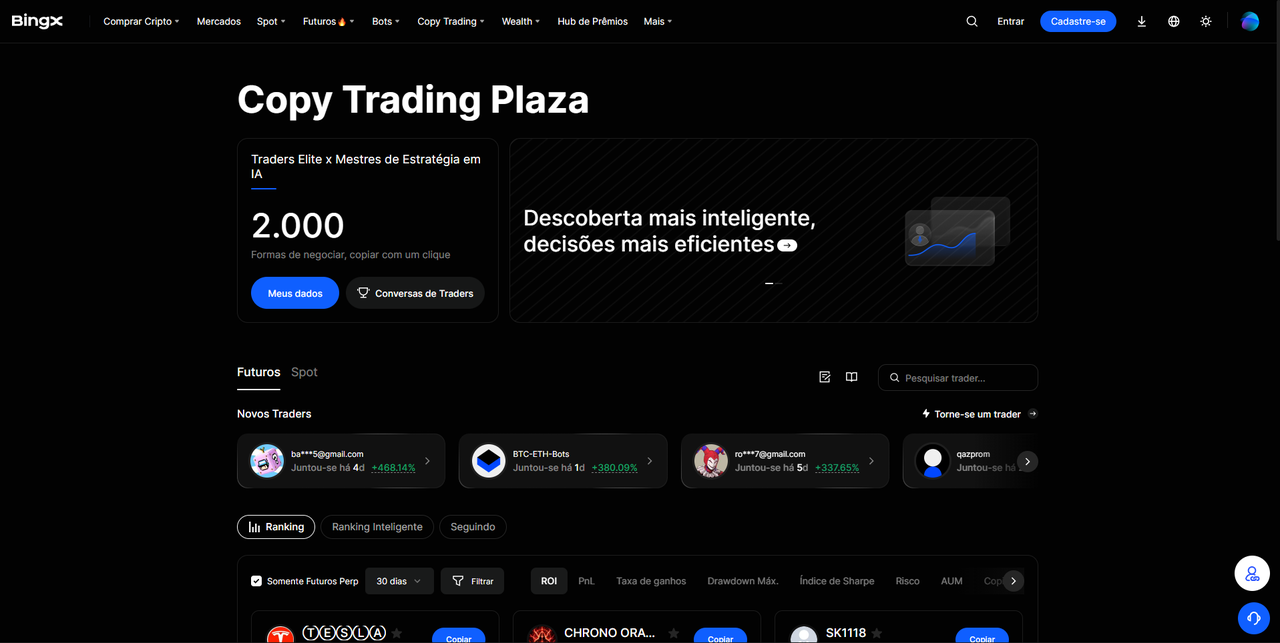
Institutional Grade Copy Trading: Mirror the exact trades of elite, vetted market professionals who systematically track macro liquidity, on-chain whale activity, and derivatives order flow. This tool is highly effective during high-volatility regimes where execution speed and precision are paramount.
Perpetual and Standard Futures Trading: For advanced traders looking to capitalize on market volatility with customized leverage. BingX provides highly granular configuration for stop-loss and take-profit execution, alongside strict risk management tools—crucial parameters for safeguarding capital against sudden liquidations driven by Fed decisions or sudden regulatory shifts.
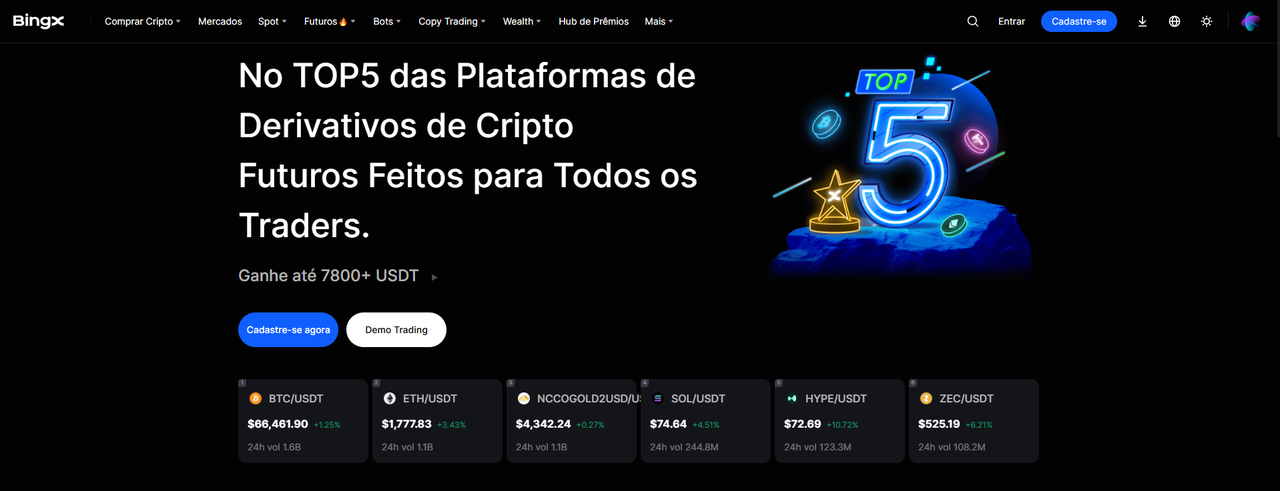
Real-Time Market Intelligence and Order Flow Data: The BingX unified dashboard aggregates live volume, depth-of-market order books, and price feeds, augmented by institutional macro summaries from BingX AI. This allows traders to track institutional delta and trade alongside smart money instead of reacting to noise. For quantitative traders who prefer automated asset management, the platform's advanced algorithmic Grid Trading Bots execute range and trend strategies 24/7/365 without emotional bias.
While alternative legacy platforms like Binance or Coinbase provide matching engines, they often tilt heavily toward rigid Western banking frameworks. For agile international traders looking for seamless on/off ramps, localized fiat support, and a highly competitive fee architecture, BingX delivers a highly tailored ecosystem—including a zero-slippage P2P fiat marketplace to execute immediate local transfers without heavy banking frictional costs.
FAQ: What Drives the Price of Bitcoin?
1. Does the halving cycle guarantee a Bitcoin price surge?
Historically, Bitcoin’s major parabolic bull runs have triggered 12 to 18 months post-halving rather than immediately. Furthermore, data from CryptoQuant in 2024 emphasized that the isolated impact of the halving has been dampening over time, given that new block emissions represent a shrinking fraction of aggregate daily trading volume. What truly dictates the trend is post-halving demand, which is currently heavily amplified by institutional spot ETF inflows.
2. Do Federal Reserve decisions directly impact Bitcoin?
Yes, and with increasing correlation. In 2022, the Fed’s aggressive rate-hike cycle sent Bitcoin plunging by over 60%. Since the launch of spot ETFs in January 2024, BTC has matured, frequently front-running Fed decisions based on forward-looking macro expectations—a behavior typical of institutional assets like US Treasuries. Shifts in Fed hawkishness or dovishness often price into Bitcoin long before official FOMC statements hit the tape.
3. What are crypto whales, and why do they dictate BTC price action?
Whales are large-scale entities holding significant amounts of Bitcoin, typically wallets with balances of 1,000 BTC or more. Because they control a substantial portion of the circulating supply, their on-chain behavior directly impacts order book liquidity. When whales withdraw BTC from centralized exchanges into cold storage, they contract the tradeable market float, creating upward price pressure. Conversely, heavy whale inflows to exchange addresses usually foreshadow looming sell-side distribution.
4. Can regulatory crackdowns permanently crash Bitcoin's price?
To date, no adverse regulatory action has managed to break Bitcoin’s underlying structural thesis. Hostile regulations or regional bans typically trigger temporary panic selling and short-term capital flight. On the flip side, clarity and pro-crypto policies—such as the SEC’s spot ETF approvals—introduce sticky, long-term institutional demand. In the modern financial landscape, regulation serves as a catalyst for capital onboarding rather than an existential threat.
5. Can crypto market sentiment be quantified?
Yes. The Bitcoin Fear and Greed Index is the most widely monitored benchmark for tracking market psychology. It aggregates data from implied volatility, trading volume, social media dominance, BTC market cap dominance, and Google search trends. Readings near 0 indicate Extreme Fear, which has historically correlated with macro cycle bottoms. Readings near 100 signal Extreme Greed, pointing to local or cyclical tops. Professional traders often treat this index as a contrarian indicator: allocating capital during periods of peak fear and reducing risk exposure during euphoria.
6. Is Bitcoin a risk asset or a digital store of value?
It functions as both, depending on the prevailing macroeconomic backdrop. During risk-off liquidity flushes, Bitcoin demonstrates a high beta, correcting alongside tech equities. Conversely, during periods of systemic banking distress or fiat debasement, it shifts into a non-sovereign hedge, rallying alongside gold. This dual narrative is precisely what makes BTC unique, requiring investors to perform a sophisticated macro analysis rather than relying on a singular asset classification.
7. What triggered Bitcoin's rally to $126,000 in October 2025?
The all-time high was the result of a powerful convergence of multi-variable catalysts hitting the market simultaneously: the lagging supply-squeeze of the 2024 halving, historic weekly spot ETF net inflows ($3.24 billion), a weakening US dollar triggered by the government shutdown, favorable "Uptober" cyclical seasonality, and a derivative market driven by high-greed momentum. No single variable could have achieved that valuation in isolation.
8. Can the price of Bitcoin be accurately predicted?
No. No mathematical model or technical indicator can reliably forecast short-term price action with absolute accuracy. Factor and on-chain analysis instead provide an understanding of structural market conditions, allowing traders to identify core catalysts, evaluate risk-to-reward ratios, and position portfolios based on mathematical probabilities rather than guesswork. Any forecast promising absolute certainty should be viewed with heavy skepticism.
Core Key Takeaways
- Bitcoin’s price discovery relies entirely on an unalterable, hard-capped supply interacting with dynamic market demand, independent of any central bank or sovereign issuer.
- The halving cycle cuts programmatic block rewards every four years, triggering a structural supply shock that historically leads to cyclical bull runs 12 to 18 months post-event.
- Federal Reserve monetary policy heavily impacts crypto liquidity: hawkish rate hikes drain global capital and crush risk appetite, while dovish rate cuts act as expansionary fuel.
- The 2024 spot ETF launch unlocked a permanent layer of institutional demand, fundamentally shifting the asset's structural market architecture and liquidity profile.
- The regulatory landscape operates as a demand modifier rather than an existential risk: positive regulatory frameworks establish structural inflows, while enforcement actions create short-term volatility.
- Market psychology heavily amplifies raw fundamentals: FUD accelerates panic liquidations below intrinsic value, while FOMO drives over-leveraged momentum past sustainable levels.
- Tracking exchange inflow/outflow metrics and whale wallet distribution provides an edge to spot accumulation and distribution phases before they materialize on a technical chart.
- Macroeconomic shocks and geopolitical trends constantly shift Bitcoin's core narrative between a high-beta risk asset and a safe-haven flight from sovereign debt debasement.
Related Articles
- Top Bitcoin ETFs for Global Investors in 2026
- How to Compare Real-Time Bitcoin Spot Rates Across Leading P2P Crypto Exchanges
- Best Advanced Charting Software and Platforms for Real-Time Bitcoin Price Action
- Securing Your Crypto Assets in 2026: Centralized Exchanges vs Hot Wallets vs Cold Storage
- Automated Bitcoin Trading: Advanced API Integrations and BingX Strategy Guide (2026)
