For Taiwanese investors, cryptocurrency futures trading is a trading method that allows participation in market fluctuations through both long and short positions without actually holding the assets, while using leverage to improve capital efficiency. However, futures trading involves significantly higher costs and risks than spot trading, with factors such as funding rates, forced liquidation mechanisms, and order depth potentially amplifying losses during market volatility.
When choosing a futures trading platform, evaluation should not focus solely on trading fees but also include whether the margin system is transparent, whether the liquidation mechanism is conservative, whether order depth is sufficient to support trading, and whether there are insurance funds to cope with extreme market conditions. Platforms like BingX, which provide Traditional Chinese interfaces and clear risk control settings, can reduce operational and parameter setting errors, which is particularly important for Taiwanese users.
Currently, the most mainstream product in the market is "perpetual futures," which has no expiration date, allows long-term positions, and maintains prices close to spot through a funding rate mechanism. This design allows traders to flexibly conduct short-term trading, arbitrage, and risk hedging, making it the most commonly used futures form among Taiwanese investors. This article will focus on perpetual futures, comparing differences between platforms from the perspective of rates and risk control mechanisms.
Key Takeaways
- BingX's perpetual futures entry rates are 0.02% maker fee and 0.05% taker fee, which are competitively low among mainstream futures trading platforms and do not require reaching specific trading volumes to apply, making the threshold lower for Taiwanese users.
- The true cost of futures trading includes not only maker and taker fees but also funding rates, which serve as variable costs for long-term positions, settled every 8 hours and fluctuating with market long-short supply and demand changes.
- High or low leverage multiples do not equate to risk control quality; the design of forced liquidation mechanisms, transparency of margin systems, and insurance fund scale are the core indicators for evaluating a platform's risk control capabilities.
- Perpetual futures, having no expiration date and allowing bidirectional operations, are more suitable for most Taiwanese short-to-medium-term traders, enabling flexible strategy establishment and position adjustment in different market directions.
- Futures trading risks are significantly higher than spot trading. Taiwanese novice users are advised to start with low leverage (around 3–5x), familiarize themselves with forced liquidation mechanisms and funding rates, then gradually increase operational scale.
Perpetual vs. Standard Futures: Which One Should You Choose?
Before entering platform comparisons, understanding the differences between two main contract types helps determine which product best fits your needs. For most Taiwanese investors, "perpetual futures" is currently the most mainstream and commonly used trading form.
Perpetual Contracts are currently the most mainstream futures form in the cryptocurrency market, with no fixed expiration date and can be held indefinitely. Unlike traditional futures that require settlement or rollover at specific times, perpetual contracts allow traders to freely decide holding time based on market conditions, offering higher operational flexibility. To keep contract prices closely aligned with spot markets long-term, perpetual contracts operate through a "Funding Rate" mechanism. When market long-short is imbalanced, long or short positions must pay rates to counterparts every 8 hours, bringing prices back to reasonable ranges. This also means funding rates are not only cost sources but also important foundations for arbitrage and hedging strategies.
Additionally, perpetual contracts support bidirectional long-short operations, allowing participation in market movements whether prices rise or fall, combined with leverage to improve capital efficiency. For Taiwanese investors, perpetual contracts are particularly suitable for short-to-medium-term trading, funding rate arbitrage, and price risk hedging before asset conversion, making them the most practical and widely applicable derivative tools.
Regular Futures Contracts have fixed expiration dates (such as weekly or quarterly) and settle based on index prices at expiration. Since there's no funding rate mechanism, long-term holding costs are more predictable, but they require consideration of expiration settlement and rollover issues, making operations relatively more complex and typically more suitable for advanced users with specific strategic needs.
|
Comparison Dimension |
Perpetual Futures |
Regular Futures Contracts |
|
Expiration Date |
None, can be held indefinitely |
Fixed expiration date (weekly/quarterly) |
|
Funding Rate |
Yes, settled every 8 hours, floating rates |
No |
|
Long-term Holding Cost |
Depends on funding rate direction accumulation, uncertain costs |
No funding rates, more predictable costs |
|
Suitable Users |
Short-to-medium-term traders, general Taiwanese investors |
Advanced users with arbitrage or specific hedging needs |
|
Operational Complexity |
Lower, suitable for beginners and daily trading |
Higher, requires understanding expiration and settlement mechanisms |
How to Choose a Crypto Perpetual Futures Exchange
The choice of perpetual futures exchange directly affects strategy execution efficiency and risk control security. For Taiwanese users, besides fees, platform differences in risk control design, interface clarity, and asset protection also affect actual trading experience. The following are core aspects to prioritize when evaluating perpetual futures trading platforms, which can also serve as reference frameworks for subsequent platform comparisons.
- Futures Trading Fees (Maker and Taker Fees): The difference between futures trading fees and taker fees has significant impact in high-frequency operations. Mainstream platforms with maker fees around 0.02% and taker fees around 0.05% are at competitive levels; platforms with rates above this range will noticeably increase long-term costs.
- Funding Rate Settlement Frequency and Transparency: Funding rates are variable costs for long-term positions, commonly settled every 8 hours. Platforms should clearly display next settlement time and estimated rates on contract pages, allowing users to evaluate costs before opening positions.
- Leverage Multiples and Margin Mode: Maximum leverage doesn't represent risk control advantages; more importantly, whether isolated and cross margin modes are supported. Isolated margin can limit single trade loss ranges, making it more suitable for Taiwanese novice users.
- Order Depth and Slippage Control: When order book depth is insufficient, large market orders will produce significant slippage. Evaluation should observe whether bid-ask spreads for mainstream coins remain stable during volatile periods.
- Liquidation Warning Mechanism: Whether real-time notifications are provided when margin approaches liquidation lines directly affects users' ability to add margin or reduce positions timely. Trading platforms supporting App push notifications are more practical.
- Insurance Funds and Asset Transparency: Insurance fund scale and reserve transparency relate to asset protection capabilities during extreme market conditions. Public proof of reserves can enhance platform trustworthiness.
- Traditional Chinese Interface and Customer Support: Futures trading involves multiple risk control parameter settings; complete Traditional Chinese interfaces can reduce operational error risks. Platforms like BingX that provide localized interfaces and customer support have advantages for Taiwanese users in actual operations and emergency situation handling.
Best Crypto Futures Exchanges in Taiwan (2026): Full Platform Comparison
Based on the seven evaluation aspects mentioned above, the following organizes mainstream futures exchanges most commonly used by Taiwanese users. Different platforms have various differences in fee structures, risk control mechanisms, order depth, and language support. Suitable choices also vary with trading frequency and strategy types. Through systematic comparison, it helps achieve better balance between cost, efficiency, and risk, finding the trading platform that best fits individual needs.
1. BingX
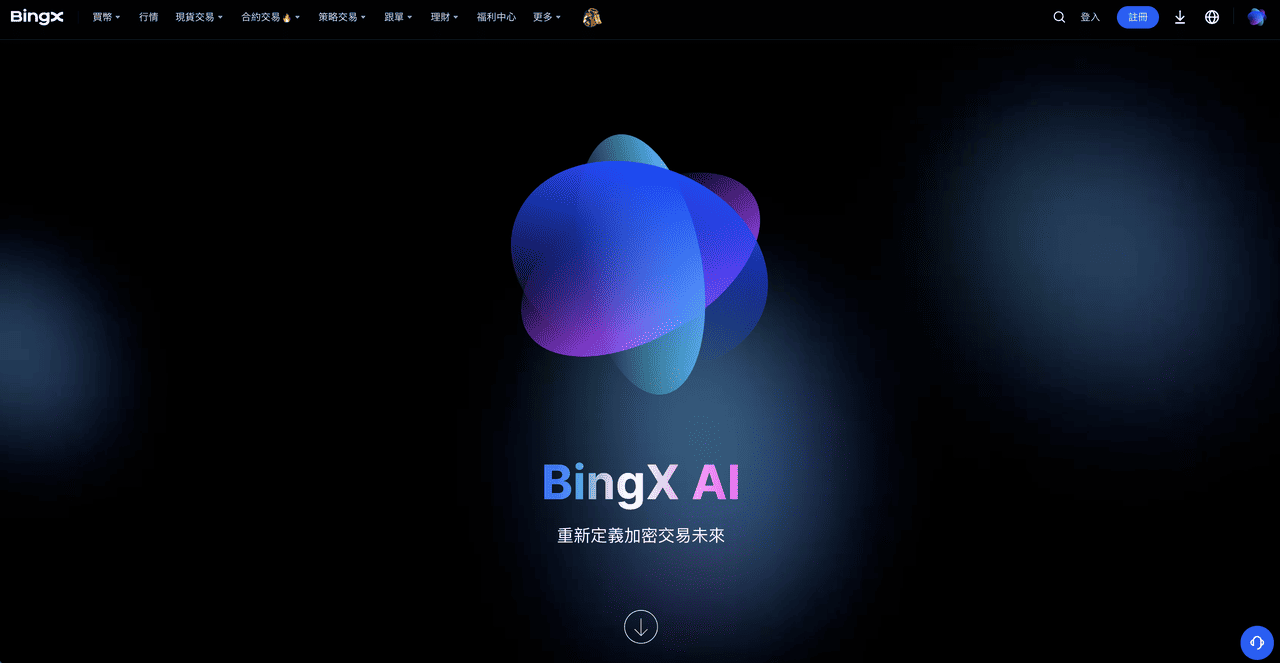
BingX is one of the perpetual futures trading platforms commonly used by Taiwanese users. Its fee structure is 0.02% maker fee and 0.05% taker fee, with trading fees lower than most mainstream exchanges and no need to reach VIP levels or high trading volume thresholds to apply, allowing general investors to trade directly at lower costs. For example, with a 100,000 USDT market futures order, the single trading fee is about 50 USDT. Compared to the 60–75 USDT common among mainstream exchanges, each trade can directly save about 10–25 USDT; if entering and exiting 3 times daily, you can save about 30–75 USDT per day, accumulating savings of about 900–2,250 USDT per month (30 days). Rate differences directly reflect in final returns. Funding rates are settled every 8 hours and displayed directly on contract pages with estimated rates and settlement times, allowing users to judge holding costs, rate directions, or whether funding rate arbitrage conditions exist before opening positions.
In trading execution, mainstream coins have stable order depth and liquidity, with stable slippage control for small-to-medium and medium-to-large orders, making them more suitable for short-term and strategic trading compared to platforms with insufficient depth. In risk control, it supports isolated and cross margin modes, where isolated margin can limit maximum single loss within the invested margin range, avoiding single positions affecting overall assets, and provides App push notifications before liquidation, allowing users to add margin or reduce positions timely.
The platform also provides copy trading functionality, allowing users to directly replicate other traders' positions and strategies, reducing the threshold for market judgment. BingX AI provides market trend summaries, technical analysis, and trading assistance signals to help quickly determine entry and exit timing. In terms of security and user experience, the platform uses 100% Merkle Tree Proof of Reserves, allowing users to independently verify asset coverage status, and provides complete Traditional Chinese interface and 24-hour customer support, reducing operational and communication costs.
BingX Platform Advantages Overview
- Futures Rates: 0.02% maker fee, 0.05% taker fee, no VIP level required
- Funding Rates: Settled every 8 hours, real-time display of estimated rates and time
- Risk Control Mechanism: Supports isolated and cross margin, provides App push warnings before liquidation
- Operations and Security: Traditional Chinese interface + 24/7 customer service, combined with 100% Merkle Tree Proof of Reserves
- BingX AI + Copy Trading Features: Provides market analysis, trading signals, and strategy replication, lowering decision-making barriers
2. OKX
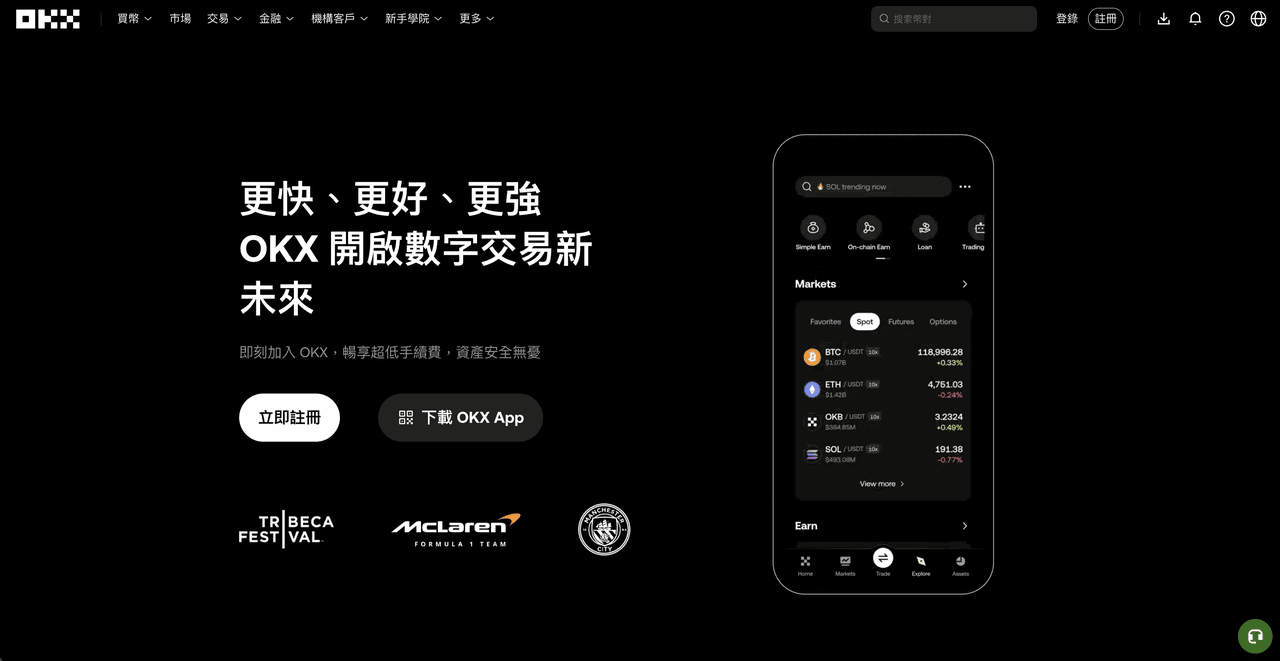
OKX is one of the top three global cryptocurrency exchanges by trading volume, offering over 300 perpetual futures varieties with representative order depth and liquidity in the industry. For trading fees, general-level users have futures maker fees of 0.02% and taker fees of 0.05%. Note that holding platform token OKB is mainly used to offset spot trading fees, while futures rate discounts require increasing trading volume or asset balance to reach higher VIP levels, with some high-level users enjoying negative maker fee rates. For interface support, OKX provides complete Traditional Chinese options, including localized terminology familiar to Taiwanese users. Platform features include isolated and cross margin modes, and tools like copy trading, strategy grids, and automated bots. Funding rates are usually settled every 8 hours but may adjust intervals during severe market volatility.
Extended Reading: BingX vs OKX Comparison: Which Exchange is Better for Spot and Futures Trading? Fee and Pros & Cons Analysis (2026)
3. Binance
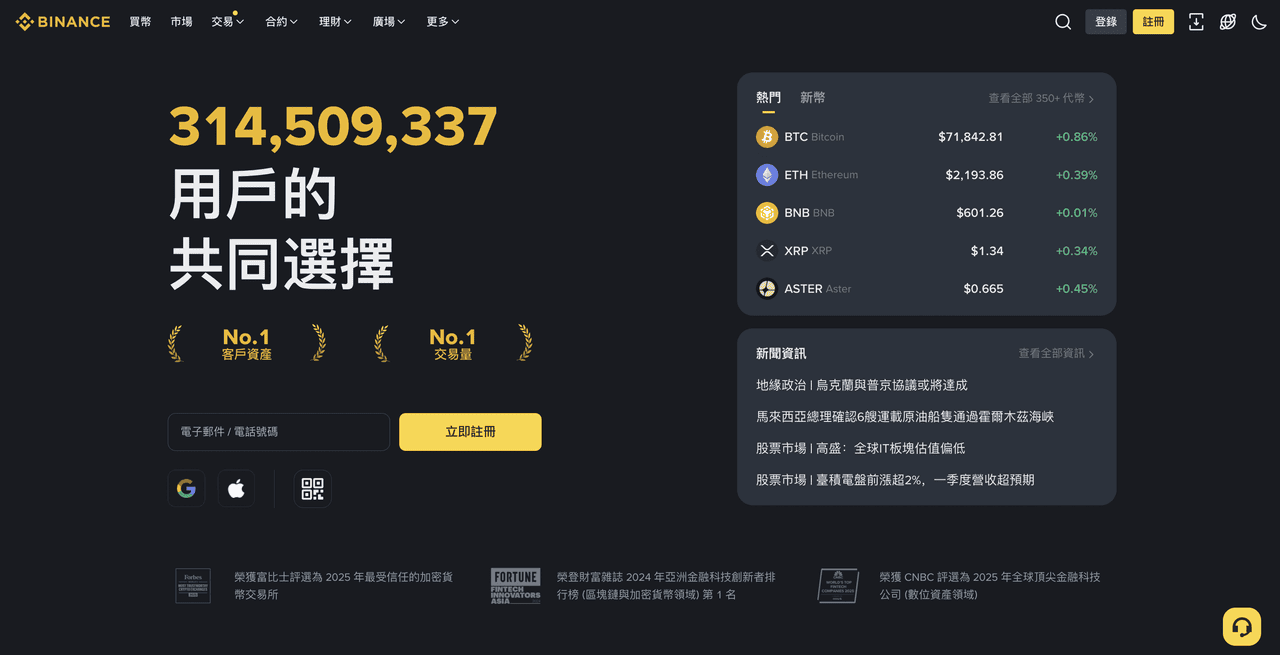
Binance is the leading global cryptocurrency exchange by trading volume, with over 480 perpetual futures varieties. For mainstream trading pairs like BTC and ETH, its order book depth has market representation and can handle larger trading requirements. General users' futures entry rates are 0.02% maker and 0.05% taker fees. If using platform token BNB for payment, a 10% discount is available, adjusting actual taker fees to 0.045%.
For security, the platform has a Secure Asset Fund for Users (SAFU) of approximately $1 billion as a protection mechanism for extreme events. In 2019, there was a security incident involving about $40 million, where the platform fully compensated affected users through the SAFU fund without causing user fund losses. For interface support, Binance provides complete Traditional Chinese options and localized terminology, allowing Taiwanese users to directly use familiar interfaces for risk control settings like take profit and stop loss.
Extended Reading: BingX vs. Binance Comparison: Which Exchange is Better for Spot and Futures Trading? Fee and Pros & Cons Analysis (2026)
4. Bitget
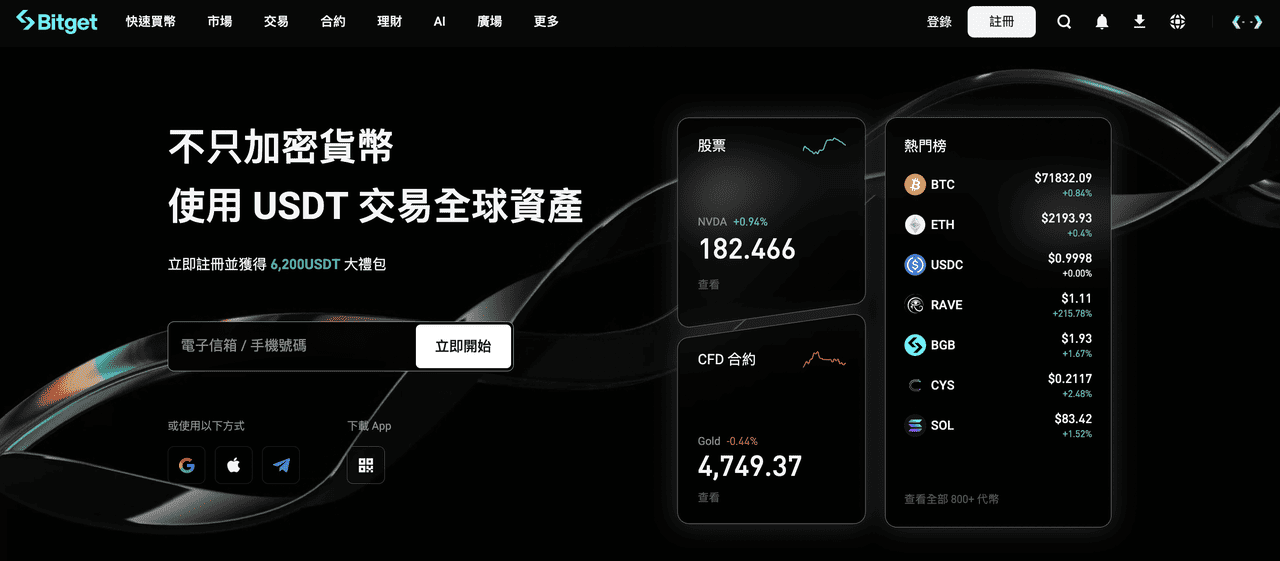
Bitget has grown rapidly in recent years, featuring copy trading as its core characteristic. Users can view traders' historical performance, maximum drawdown, and win ratios through the platform, and set automatic synchronization of their positions, which is attractive to investors who prefer referencing others' strategies. For fee structure, Bitget futures general user entry rates are 0.02% maker and 0.06% taker fees. Users can choose to hold platform token BGB for fee discounts, enjoying 20% off, reducing actual trading costs. Additionally, the platform has a risk protection fund exceeding $300 million (estimated at about $440 million in early 2026) as one of the user asset security protection mechanisms. For interface support, Bitget provides complete Traditional Chinese, allowing Taiwanese users to directly use familiar interfaces for various operations and risk control settings.
Extended Reading: BingX vs Bitget: Which is Better for Spot and Futures Trading? Complete 2026 Fee and Pros & Cons Comparison
5. Kraken Pro
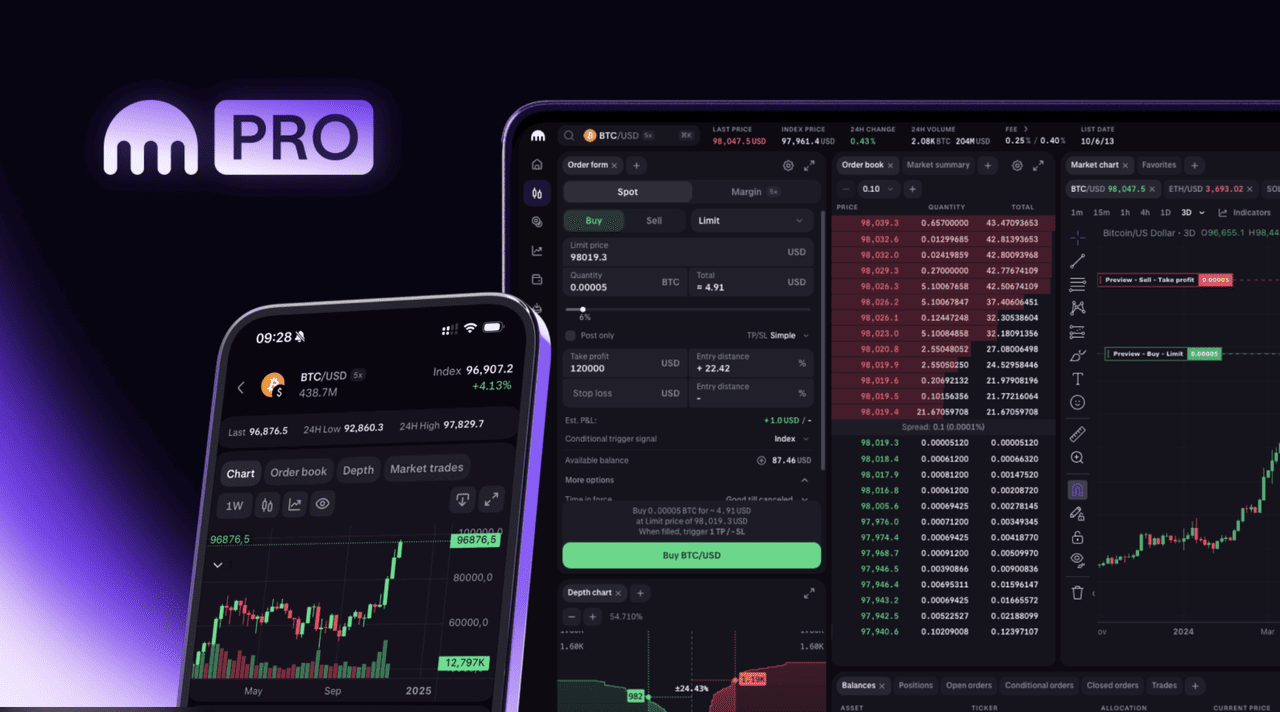
Founded in 2011, Kraken has no record of customer fund losses to date, with regulatory reputation among the highest in the industry. It conducts regular third-party audits and holds a Wyoming state banking license, making its structure closer to traditional financial institutions. Futures contract general user rates are 0.02% maker and 0.05% taker fees, with competitive rates. Its funding rates are usually settled every 8 hours, with long-term holding capital costs requiring special calculation in conjunction with market volatility. Institutional user participation makes order depth stable, with relatively controllable slippage risks for large transactions. Kraken's official interface currently doesn't support Chinese and requires full English operation, creating certain usage barriers for some Taiwanese users. Due to the platform's compliance requirements in different jurisdictions, some features may be subject to regional service term restrictions.
Extended Reading: BingX vs Binance vs Kraken: 2026 Cryptocurrency Exchange Comparison, Which Platform is Best?
Futures Exchange Fees and Features in Taiwan (2026)
|
Platform |
Maker Fee |
Taker Fee |
Funding Rate Settlement |
Traditional Chinese |
Liquidation Warning |
|
BingX |
0.02% |
0.05% |
Every 8 hours |
✓ Full support |
✓ App push |
|
OKX |
0.02% |
0.05% |
Every 8 hours |
✓ Supported |
✓ |
|
Binance |
0.02% (0.018% after BNB discount) |
0.05% (0.045% after BNB discount) |
Every 8 hours |
✓ Supported |
✓ |
|
Bitget |
0.02% |
0.06% (0.048% after BGB discount) |
Every 8 hours |
✓ Supported |
✓ |
|
Kraken Pro |
0.02% |
0.05% |
Hourly |
✗ |
✓ |
Note: Futures rates are based on public data from each platform. Rate policies may change at any time. Please refer to current displays on each platform's futures specification pages before trading.
Which Futures Exchange Offers the Strongest Security and Asset Protection?
When evaluating futures trading platforms, security doesn't only come from asset segregation and risk control systems; "insurance funds" and "proof of reserves" are core indicators for measuring whether platforms can protect user assets during extreme market conditions. When markets experience large-scale liquidations with losses exceeding user margins, whether platforms have sufficient funds to cover shortfalls directly affects whether users bear additional losses.
Among mainstream platforms, BingX provides a dedicated user protection fund and adopts 100% Merkle Tree Proof of Reserves, allowing users to independently verify asset coverage status. Currently, the fund scale is approximately $123 million, including 1,000 BTC, 4,000 ETH, and 40 million USDT, which can be used to cover loss shortfalls and prioritize user asset protection during extreme market conditions or systemic risks. Binance's SAFU fund scale is approximately $1 billion, the largest known protection fund in the industry, previously used to fully compensate user losses during security incidents; OKX has risk reserves and public proof of reserves; Bitget provides a protection fund (approximately $300 million scale); Kraken maintains asset security records through long-term stable operations and regular audits.
Overall, besides fund scale, "asset transparency" and "independent verification capability" are equally important. For Taiwanese users, choosing platforms that have both protection funds and proof of reserves provides better protection during long-term use and extreme market conditions.
|
Platform |
Proof of Reserves |
Insurance Fund / Mechanism |
Third-party Audit |
|
BingX |
100% Merkle Tree (self-verifiable) |
Approximately $123 million (1,000 BTC / 4,000 ETH / 40 million USDT) |
✓ |
|
OKX |
Public proof of reserves |
Risk reserves (specific scale not disclosed) |
✓ |
|
Binance |
Public proof of reserves |
SAFU fund approximately $1 billion |
✓ |
|
Bitget |
Public proof of reserves |
Protection fund approximately $300 million |
✓ |
|
Kraken Pro |
Regular public reserves |
Insurance mechanism (fund scale not disclosed) |
Regular audits |
Which Futures Exchange Offers High Leverage with Lower Liquidation Risk?
The maximum leverage offered by futures exchanges usually doesn't differ much. Most mainstream platforms like BingX, OKX, Binance, and Bitget all provide maximum 125x leverage for BTC perpetual futures; Kraken is mostly within 50x. Therefore, "highest leverage" isn't the main differentiator; the key factors affecting liquidation risk are margin system and risk control mechanism design.
In practical operations, isolated and cross margin modes directly affect risk scope. Isolated margin limits single trade losses within that margin amount, suitable for beginners to control risk; cross margin uses all available funds in the account, which can delay liquidation but may amplify overall losses during severe volatility. Additionally, whether complete and timely liquidation warning mechanisms are provided directly affects users' ability to add margin or reduce positions when approaching risk lines.
Taking BingX as an example, the platform provides forced liquidation warning notifications. When margin ratios approach liquidation lines, it simultaneously reminds users through App push and in-site notifications, allowing timely position adjustments before liquidation, such as adding margin or reducing positions. Compared to platforms offering only single notification methods, this dual warning mechanism is more practical during rapid market volatility and helps reduce unexpected losses. For most Taiwanese users, it's recommended to prioritize platforms with complete warning mechanisms and start with 3–5x leverage, then gradually adjust based on experience.
Leverage and Liquidation Risk Comparison (2026)
|
Platform |
BTC Maximum Leverage |
Margin Mode |
Liquidation Warning |
Recommended Leverage for Beginners |
|
BingX |
Maximum 125x |
Isolated / Cross |
✓ App push + in-site notifications |
3–5x |
|
OKX |
Maximum 125x |
Isolated / Cross |
✓ App + in-site notifications |
3–5x |
|
Binance |
Maximum 125x |
Isolated / Cross |
✓ App + in-site notifications |
3–5x |
|
Bitget |
Maximum 125x |
Isolated / Cross |
✓ App notifications |
3–5x |
|
Kraken Pro |
Approximately 50x |
Primarily isolated |
✓ In-site notifications |
3–5x |
Which Futures Exchange Has the Best Liquidity and Lowest Slippage?
Futures trading order depth directly affects actual execution prices. When order book depth is insufficient, market orders will progressively consume different price level orders, causing average execution prices to deviate from quoted prices, resulting in slippage losses. For Taiwanese users, this situation is particularly common when trading non-mainstream coins or during rapid market volatility. Therefore, besides liquidity itself, "effective slippage control capability" is the key factor affecting actual returns.
Among mainstream platforms, Binance and OKX still have the highest industry-standard order depth for BTC and other mainstream coins, suitable for executing extremely large transactions; Bitget's overall liquidity is at intermediate levels. BingX provides stable and sufficient order depth for mainstream trading pairs, with bid-ask spreads maintained within 0.05% under normal market conditions. Medium to medium-large trading scales can still maintain stable execution prices. For most Taiwanese users, good execution quality can be obtained without institutional-level barriers.
More critically, BingX provides guaranteed price mechanisms that can directly lock execution prices under specific conditions. Even during sudden severe market volatility, unexpected slippage won't occur. Compared to platforms relying solely on order book depth, such mechanisms are more practical for short-term operations and strategic trading, minimizing execution uncertainty with more direct impact on actual trading results.
How to Start Trading Crypto Futures on BingX: A Guide for Taiwan Users
After completing registration and logging into BingX, you can start operating perpetual futures in the Traditional Chinese interface. The platform provides 0.02% maker fees and 0.05% taker fees, with funding rates settled every 8 hours. The overall cost structure is clear and transparent. The following is the practical operation process for Taiwanese users from opening positions to risk control settings:
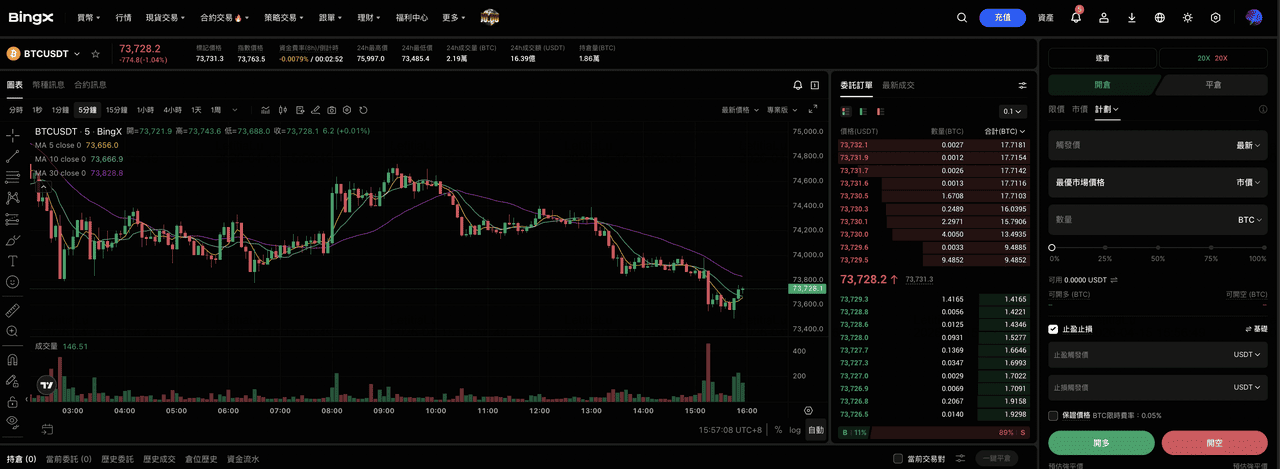
- Transfer USDT to Futures Account: On the "Assets" page, select "Fund Transfer" to transfer USDT from spot account to futures account. The transferred amount becomes the maximum margin for this trade. It's recommended to use isolated margin mode to control risk within single trades.
- Enter Perpetual Futures Page and Confirm Market Conditions: Select target trading pair (such as BTC-USDT), check order book depth and bid-ask spreads, confirm liquidity before proceeding. Also note funding rates and settlement times to evaluate holding costs.
- Use BingX AI to Assist Entry Timing Decisions: Before placing orders, refer to market analysis and trading signals provided by BingX AI as decision-making basis for entry and exit, helping determine trend direction and potential trading opportunities.
- Set Leverage and Order Direction: Set leverage multiples based on risk tolerance; beginners are recommended to start with 3–5x. Choose "Buy Long" or "Sell Short" and prioritize using limit orders to reduce trading costs with 0.02% maker fees.
- Set Stop Loss and Take Profit, Continue Monitoring Positions: Immediately set Stop Loss and Take Profit after opening positions, and continuously monitor unrealized PnL, leverage ratios, and funding rate changes on the position page. Combined with platform warning notifications, positions can be adjusted timely when approaching risk lines.
5 Key Factors Before Trading Crypto Futures
- Leverage Proportionally Amplifies Losses: Futures trading risk is significantly higher than spot trading. With 5x leverage, approximately 20% price decline may trigger forced liquidation, losing all margin. It's recommended to first use small amounts to familiarize with mechanisms, avoiding investing most assets at once.
- Funding Rates Continuously Erode Returns: Funding rates are settled every 8 hours (some platforms hourly). Long-term holding accumulated costs may exceed trading fees. Before opening positions, confirm rate directions to avoid long-term holding of unfavorable positions.
- Beginners Should Prioritize Isolated Margin Mode: In isolated margin mode, maximum losses are limited to that margin; cross margin may use all account funds during extreme market conditions. Until familiar with mechanisms, cross margin is not recommended.
- Stop Loss is Essential Setting: Futures markets operate 24 hours; constant monitoring isn't possible. Stop loss should be set simultaneously when opening positions to avoid losses exceeding expectations due to rapid price movements.
- Platform Rules May Change Anytime: Trading fees, funding rates, and leverage limits change with market and policy variations. Before actual trading, refer to current platform displays as standard.
Conclusion: Why BingX Is a Top Choice for Crypto Futures Trading
For Taiwanese users, choosing a futures trading platform isn't just about leverage or number of coins, but whether it can "reduce errors and costs in actual trading processes." BingX provides complete Traditional Chinese interface with clear risk control and order logic, directly reducing operational error risks. With 0.02% maker fees and 0.05% taker fees applicable without reaching high trading volumes, it represents clearly lower rate levels among peer platforms. Combined with stable order depth, lower slippage, and guaranteed price mechanisms, execution quality can be controlled even during market volatility, creating a more "long-term usable" trading environment for most Taiwanese users.
Besides basic trading conditions, the platform provides BingX AI market analysis and copy trading features, giving users more decision-making references before entry while lowering decision barriers. Combined with 100% Merkle Tree Proof of Reserves and user protection funds, it has clear advantages in security and transparency. For Taiwanese users hoping to steadily participate in futures trading while controlling risks, BingX is currently a more practical and easier-to-use choice. However, regardless of platform used, leverage control, stop loss settings, and funding rate management remain key factors affecting final returns.
Related Reading
- Taiwan Cryptocurrency Exchange Comprehensive Review: Complete Comparison of New User Registration Bonuses, VIP Rates, and Chinese Customer Service (2026)
- What are Cryptocurrency Trading Fees? What is Spread? Complete Trading Cost Guide
- Scalping vs. Swing Trading in Futures Trading: Complete 2026 Trading Strategy Comparison
- Where to Buy Bitcoin in Taiwan? 2026 Bitcoin Exchange Recommendations and Complete Purchase Tutorial
- How to Buy USDT in Taiwan? 2026 Cryptocurrency Exchange Recommendations and Complete Purchase Tutorial
- Taiwan Exchanges vs. International Exchanges: How to Choose the Right Cryptocurrency Trading Platform for You?
