

PepsiCo (PEP) has entered 2026 at a historic inflection point, trading near $185 as it reinforces its position as a leading global beverage and snack company. With strong brand momentum in North America, accelerating growth in emerging markets, and continued margin expansion from productivity initiatives, PepsiCo is transitioning from a mature consumer staples giant to a more dynamic, growth-oriented powerhouse. Explore the institutional price targets, the portfolio roadmap, and whether PEP is a buy in 2026.
In early 2026, PepsiCo (PEP) has decoupled from traditional consumer staples cycles. While North America remains the core profit engine, international and emerging market acceleration, combined with snacking strength, has fueled consistent mid-single-digit organic growth. As of March 2026, the narrative centers on volume recovery, pricing discipline, and margin leverage amid moderating inflation. Pepsi enters 2026 with solid structural tailwinds.
CEO Ramon Laguarta continues to emphasize portfolio premiumization, productivity savings, and emerging market expansion, projecting sustained 4-6% organic revenue growth and 7-9% EPS growth. With strong free cash flow and dividend reliability, 2026 shapes up as a year of steady compounding. This guide breaks down the Pepsi stock price prediction for 2026 using data from analysts and consensus estimates.
Top 5 Things for Pepsi Investors to Know in 2026
- Organic Growth Momentum: Organic revenue grew 4.5% in 2025, with emerging markets contributing double-digit gains.
- Margin Expansion: Operating margins expanded 80 basis points in 2025 to 14.8%, driven by productivity and mixed improvements.
- Dividend Aristocrat Status: 53 consecutive years of dividend increases, with 2025 payout ratio at 68% and yield around 3.0%.
- Polarized Targets: Analyst forecasts for 2026 range from bearish lows around $160 to bullish highs of $220 to $240.
- Valuation Debate: Forward P/E around 21-22x reflects defensive premium, but margin leverage and emerging market growth support re-rating.
What Is PepsiCo (PEP)?
Pepsi is a global leader in beverages and convenient foods, with iconic brands including Pepsi, Mountain Dew, Gatorade, Lay's, Doritos, Cheetos, Quaker, and Tropicana. In 2026, it is increasingly viewed as a resilient consumer staples powerhouse with defensive cash flows and emerging market growth potential. Its core value lies in brand strength, global distribution, and diversified portfolios across beverages (60% of revenue) and snacks/foods (40%). Unlike pure-play beverage or snack peers, PepsiCo's ecosystem includes strong North American profitability, accelerating international expansion, and consistent shareholder returns through dividends and buybacks.
Read more: Alphabet (GOOGL) Stock Outlook 2026: Can Gemini and Google Cloud AI Drive GOOGL Cross $420?
PepsiCo (PEP) 2025 Performance Overview: The Margin Expansion Year
In 2025, PepsiCo (PEP) navigated a dynamic consumer staples environment marked by moderating inflation, shifting consumer preferences, and resilient demand for snacks and beverages. While North America continued to deliver stable profitability and volume trends, international and emerging markets provided meaningful acceleration through premiumization and pricing discipline. The company's Frito-Lay snacking portfolio maintained strong momentum, while beverage brands benefited from healthier-for-you innovations and functional offerings.
Aggressive productivity initiatives, supply chain efficiencies, and disciplined pricing drove significant margin expansion despite input cost pressures. This powerful combination of defensive core strength, emerging market growth, and operational leverage produced consistent organic revenue gains and record profitability levels, reinforcing PepsiCo's position as a high-quality consumer staples compounder.
1. PEP Stock Performance, Market Cap Stability
PepsiCo's stock exhibited classic defensive resilience throughout 2025, benefiting from consumer staples rotation during periods of market volatility. Shares delivered steady gains with limited drawdowns, reaching new all-time highs multiple times during the year. Market capitalization consistently ranged above $260 billion and peaked near $280 billion following strong quarterly reports.
The stock traded at a premium forward P/E multiple reflecting its reliable dividend growth, margin expansion, and emerging market acceleration, while outperforming broader consumer staples benchmarks and providing downside protection relative to more cyclical sectors.
2. Financial Performance: Organic Revenue Up 4.5%, Margins Expand
PepsiCo delivered solid and consistent results, with full-year organic revenue growth of 4.5% and reported net revenue of around $92 billion. Core constant currency operating profit grew approximately 6%, supported by productivity savings exceeding $1 billion and favorable brand mix.
Operating margins expanded 80 basis points to 14.8%, reflecting disciplined pricing, cost management, and premiumization across snacks and beverages. Net income and core EPS rose mid-single digits, with strong free cash flow supporting dividend increases and modest share repurchases. Quarterly performance showed steady improvement, particularly in Q3 and Q4, as volume trends stabilized and international markets accelerated.
3. Emerging Markets Surge: Growth Exceeds 8%
International divisions delivered mid-single to low-double-digit organic growth, with emerging markets (Asia, Africa, Latin America, Middle East) contributing double-digit gains in several quarters. Snacks performed particularly strongly in key regions, while beverages benefited from premium and functional innovations. Pricing actions offset inflationary pressures, and volume recovery in core markets supported overall international momentum. The performance underscored PepsiCo's successful execution of its "Winning with Purpose" strategy in faster-growing geographies.
4. Strategic Milestones: Productivity, Premiumization, Dividend Growth
PepsiCo achieved over $1 billion in productivity savings through supply chain optimization, procurement efficiencies, and manufacturing improvements, directly supporting margin expansion. Premiumization accelerated with stronger growth in zero-sugar, functional beverages, better-for-you snacks, and premium offerings across portfolios. The company increased its dividend for the 53rd consecutive year, maintaining a payout ratio around 68% and a yield near 3.0%. Additional milestones included expanded sustainability initiatives, new product launches in emerging markets, and continued portfolio reshaping toward higher-growth, higher-margin categories.
The Pepsi Thesis for 2026: 5 Pillars of $PEP Stock Valuation
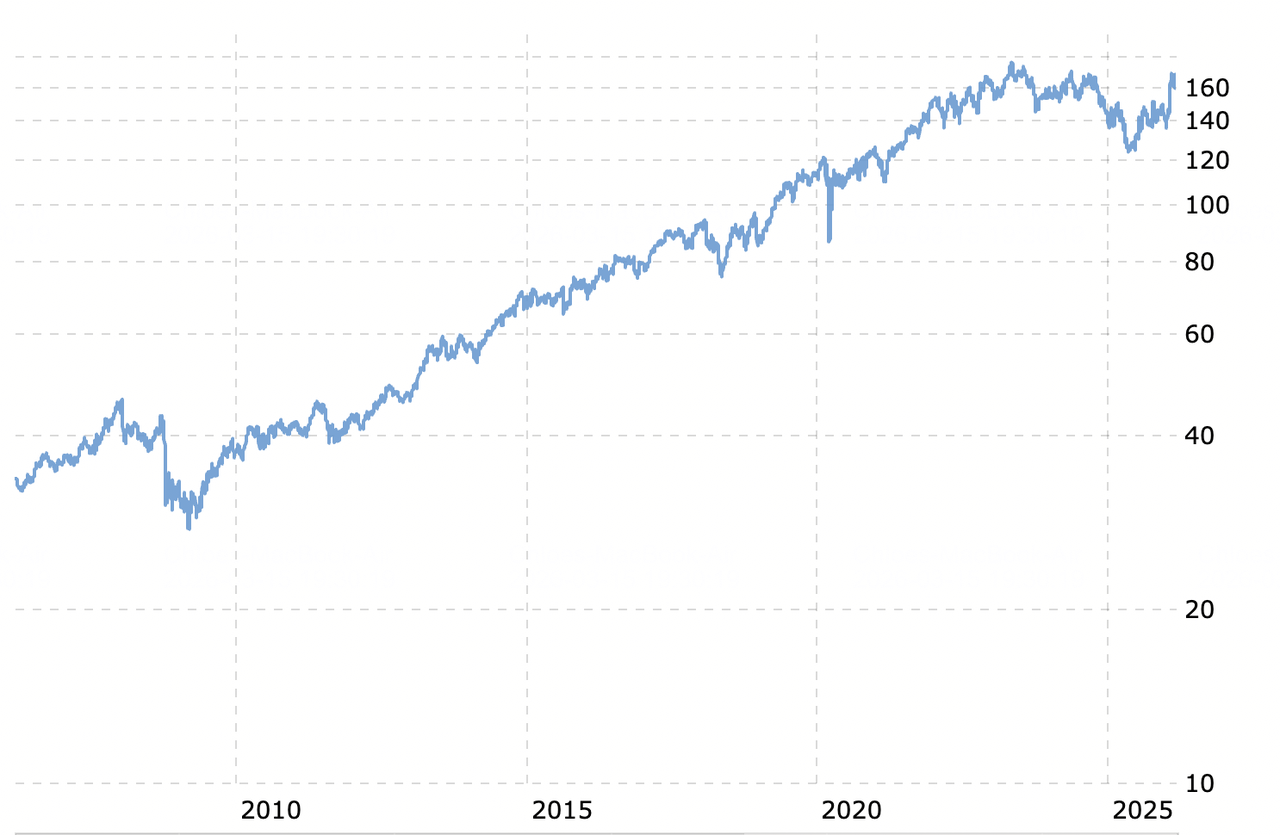
Source: MacroTrends | Pepsi Stock Growth in the Last 20 Years from 2006-2026
While North America provides reliable cash flow and defensive characteristics, PepsiCo's valuation in 2026 increasingly reflects its balanced growth profile, margin leverage potential, and emerging market acceleration.
1. Organic Growth: The Core Layer
PepsiCo targets 4-6% organic revenue growth in 2026, driven by volume recovery in developed markets, continued pricing discipline, and accelerating contributions from emerging markets and premium/functional offerings.
2. Margin Expansion: The Profitability Layer
Ongoing productivity initiatives (targeting $1B+ annual savings) and favorable mix shift toward higher-margin snacks and premium beverages support 50-100 basis points of operating margin expansion annually, creating powerful operating leverage.
3. Emerging Markets: The Growth Layer
Double-digit organic growth in emerging markets like Asia, Africa, Latin America, Middle East continues to outpace developed markets, diversifying revenue and providing long-term acceleration as consumer spending rises in these regions.
4. Dividend Reliability: The Defensive Layer
53 consecutive years of dividend increases, strong free cash flow conversion, and a sustainable payout ratio around 68% reinforce PepsiCo's status as a premium defensive compounder with attractive yield and total return potential.
5. Brand Moat: The Scalability Layer
Iconic global brands (Pepsi, Lay's, Gatorade, Doritos, Quaker), unmatched distribution network, and pricing power create formidable competitive barriers. This moat supports consistent revenue growth, margin resilience, and long-term scalability across diverse markets and categories.
Pepsi (PEP) Stock Price Forecasts for 2026: Bull vs. Bear Outlook
Institutional views on Pepsi stock remain balanced, reflecting its defensive growth characteristics and steady compounding potential.
|
Institution / Analyst |
2026 Price Target |
Market Outlook |
|
Goldman Sachs |
$220 to $240 |
Bullish: Margin expansion and emerging market growth support upside. |
|
Morgan Stanley |
$210 |
Bullish: Maintains Overweight on productivity and premiumization. |
|
Market Consensus (aggregated from MarketBeat, TipRanks, Zacks) |
$195 to $205 |
Moderate Buy: Balanced view on stable growth and dividend reliability. |
|
JPMorgan |
$190 |
Neutral: Hold rating on execution watch. |
|
Bearish Outlooks (various low-end) |
$160 to $180 |
Pessimistic: Macro pressure and volume risks. |
Source: Aggregated from MarketBeat, Yahoo Finance, and analyst reports (as of early March 2026)
The range from bullish targets above $220 to bearish calls below $180 captures uncertainty around volume trends, input costs, and macro consumer spending.
The Bull Case: The Margin Surge Drives PEP Stock Price Above $220
Bulls focus on sustained margin expansion and emerging market acceleration. If PepsiCo delivers 4-6% organic growth, achieves 50-100 bps margin improvement through productivity and mix, and sustains double-digit international gains, the company could compound EPS at mid-to-high single digits. This positions PEP as a premium defensive growth name with attractive total return potential, supporting targets of $220 or higher by year-end 2026.
The Bear Case: The Correction to $180 or Lower
Bears highlight macro sensitivity and potential volume pressures. If inflation persists, consumer spending weakens, commodity costs rise sharply, or emerging market growth slows, multiples could compress toward historical averages. Execution risks or competitive intensity would drive the share price lower, with some targets in the $160 to $180 range.
Read more: Palantir (PLTR) Stock Outlook for 2026: Can AI-Driven Enterprise Supercycle Take PLTR to $235+?
How to Trade PepsiCo (PEP) on BingX
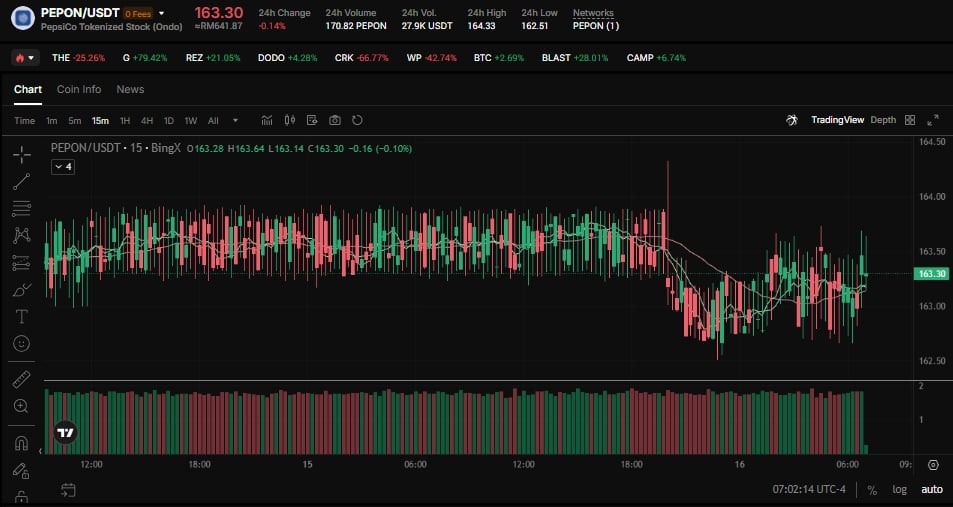
BingX offers a versatile ecosystem for gaining exposure to Pepsi's 2026 momentum, utilizing BingX AI to provide traders with real-time volatility insights and automated execution strategies.
To buy tokenized stocks like PepsiCo (PEPON) on BingX Spot:
- Log in to your BingX account and complete identity verification (KYC) if you have not already done so.
- Navigate to the Spot trading section and search for the PEPON/USDT tokenized stock trading pair.
- Choose your order type. A Market Order executes immediately at the current price. A Limit Order lets you set your preferred entry price and waits for the market to reach it.
- Enter the amount you wish to purchase. Because tokenized stocks on BingX support fractional ownership, you can invest with a small amount of USDT rather than having to buy a full share equivalent.
- Confirm the order. Your tokenized stock tokens will appear in your spot wallet once the trade is filled.
Spot tokenized stock trading is best suited for investors who want straightforward buy-and-hold exposure to equity price movements, benefit from 24/7 market access, or are building a diversified digital asset portfolio that includes both crypto and equity-linked instruments.
5 Critical Risks to Watch for Pepsi in 2026
While PepsiCo's strong brand portfolio, margin expansion potential, and emerging market acceleration offer substantial upside through steady compounding and defensive cash flows, traders must navigate a complex landscape of macroeconomic sensitivity, commodity cost pressures, competitive intensity, regulatory/health trends, and execution challenges.
1. Macroeconomic and Consumer Spending Sensitivity
PepsiCo's volumes in both beverages and snacks are highly sensitive to consumer discretionary spending and economic cycles. A slowdown in consumer budgets, persistent inflation, or recessionary pressures in 2026 could lead to flat or declining volumes, particularly in developed markets like North America. With snacks and beverages representing the core business, any meaningful weakness in consumer demand would offset gains from emerging markets and premiumization, pressuring organic growth and valuation.
2. Commodity Cost Inflation and Input Price Volatility
PepsiCo faces exposure to volatile commodity costs, including sugar, oils, potatoes, corn, packaging materials, and transportation fuels. Significant or sustained input cost inflation in 2026 that cannot be fully offset through pricing actions, productivity savings, or hedging could compress gross margins and limit operating profit growth. Historical periods of rapid commodity spikes have pressured profitability when pricing power was constrained by competitive or consumer pushback.
3. Intensifying Competition and Market Share Pressure
Pepsi's competitors, including Coca-Cola, Keurig Dr Pepper, private-label brands, and emerging healthier-for-you players, continue to advance in beverages and snacks. If PepsiCo loses share in key categories (ex., carbonated soft drinks, salty snacks), or if competitors outpace innovation in functional, low-sugar, or plant-based offerings, volume growth could slow and pricing power could weaken, particularly in North America and select international markets.
4. Health, Regulatory, and Consumer Trend Headwinds
Increasing global focus on sugar taxes, nutritional labeling, advertising restrictions to children, and plastic packaging regulations poses ongoing risk. A further acceleration of consumer shifts toward low-calorie, zero-sugar, functional beverages, or healthier snacks could pressure volumes in core carbonated soft drink and traditional snack categories if PepsiCo's innovation and reformulation pace lags. Regulatory changes or new taxes in major markets would directly impact profitability and growth trajectory.
5. Execution and Emerging Market Risks
PepsiCo's long-term growth increasingly depends on accelerating performance in emerging markets (Asia, Africa, Latin America, Middle East). Execution missteps, such as slower-than-expected premiumization, distribution challenges, currency volatility, geopolitical instability, or failure to capture shares in high-growth categories, could limit international upside. Any shortfall in productivity savings targets or delays in portfolio reshaping would also undermine margin expansion goals and investor confidence.
Conclusion: Should You Invest in PepsiCo (PEP) Stock in 2026?
Deciding whether to invest in Pepsi in 2026 requires viewing it as a high-quality defensive growth compounder with reliable cash flows and consistent shareholder returns. For income-focused and conservative investors, PepsiCo's 4-6% organic growth target, ongoing margin expansion, 53 consecutive years of dividend increases, and strong brand moat support premium valuation and attractive total return potential in uncertain markets. Successful execution in emerging markets and premiumization could deliver steady, low-volatility compounding.
For growth-oriented investors seeking higher upside, the company's mid-single-digit organic growth pace, macro/consumer sensitivity, commodity exposure, and regulatory/health trends present limitations compared to higher-growth sectors. The stock's performance ties to multiple drivers: either volume recovery, margin leverage, and international acceleration sustain the compounding story, or macro headwinds and competitive pressures trigger multiple compression toward historical averages. Closely monitor quarterly organic revenue growth, margin trends, emerging market performance, commodity cost updates, and dividend announcements as the clearest indicators of whether PepsiCo can maintain its defensive growth profile at scale.
Risk Reminder: Trading and investing in equities like PEP involves substantial risk of capital loss. PepsiCo's defensive characteristics do not eliminate macroeconomic, commodity, competitive, or regulatory risks. Investors should conduct thorough independent research and consider professional financial advice before allocating capital.
Related Reading
- Circle IPO (2025) Everything You Need to Know About CRCL, Valuation, What It Means for Crypto Market
- Strategy (MSTR) Stock Outlook 2026: Can MSTR Cross $700 on Bitcoin Treasury Strategy?
- Robinhood Stock Forecast 2026: $130 Hyper-Growth or Valuation Correction?
- Alphabet (GOOGL) Stock Outlook 2026: Can Gemini and Google Cloud AI Drive GOOGL Cross $420?
- What Are Coinbase Tokenized Stocks COINX and COINON and How to Buy Them?
