
Decentralized USD (USDD) is a multi-chain, over-collateralized stablecoin natively launched on TRON, Ethereum, and BNB Chain. Originally launched as an algorithmic asset, USDD completed a protocol upgrade in early 2026 to USDD 2.0, prioritizing transparency, freeze-free transactions, and a robust reserve of crypto-assets includingTRX, sTRX, WBTC, and USDT.
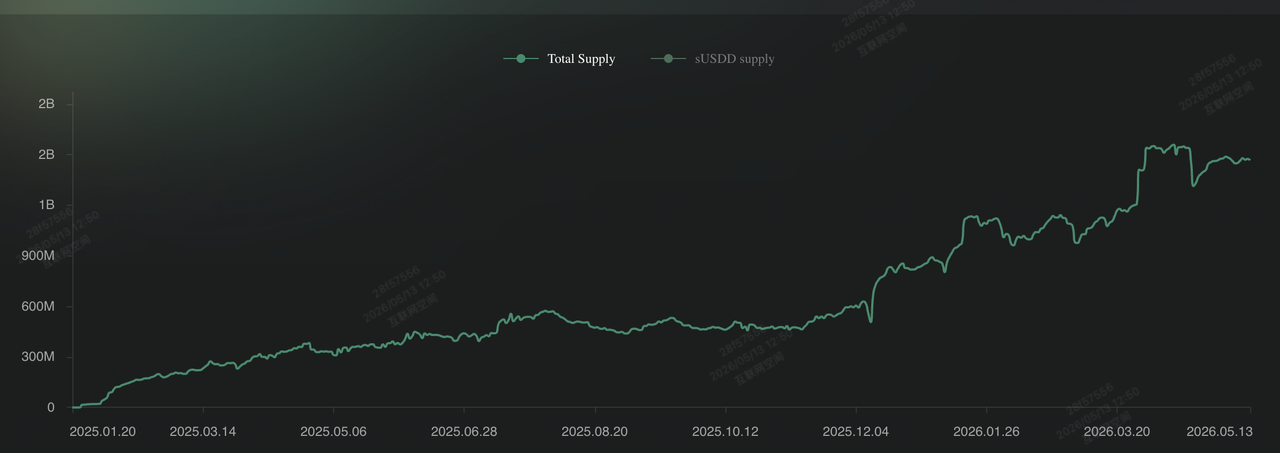
Total supply of USDD as of May 2026 | Source: USDD
As of May 2026, the USDD ecosystem has reached a total supply of $1.47 billion, backed by over $2.23 billion in high-quality crypto collateral. With its innovative Smart Allocator mechanism and the yield-bearing sUSDD token, the protocol provides a decentralized alternative to fiat-backed stablecoins, allowing users to earn native rewards directly on-chain without centralized interference.
This article explores the mechanics of USDD 2.0 stablecoin, the yield-generating sUSDD token, the utility of the JST governance token, and how to optimize your portfolio using the USDD ecosystem by trading USDD on BingX.
What Is Decentralized USD (USDD)?
USDD is a decentralized stablecoin pegged 1:1 to the US dollar. Unlike centralized alternatives that rely on bank deposits, USDD is secured by an over-collateralized basket of digital assets. The protocol’s core mission is to provide the blockchain industry with a tamper-proof and freeze-free stablecoin system independent of any centralized entity.
The transition to USDD 2.0 has introduced several institutional-grade features:
- Over-Collateralization: USDD consistently maintains an over-collateralization ratio, ensuring a massive safety buffer against market volatility.
- Censorship Resistance: Because it is governed by smart contracts on the TRON, Ethereum, and BNB Chain networks, no central authority can freeze user funds.
- On-Chain Transparency: All reserves are publicly verifiable in real-time. In April 2026, USDD added support for machine-readable documentation (MCP) to enhance data accessibility for AI agents and developers.
How Does the USDD Ecosystem Work?
The protocol operates through a series of modules designed to maintain price parity and generate sustainable value for holders.
1. The Vault System for Minting
Users can access stablecoin liquidity without selling their assets by opening a Vault. By staking collateral such as TRX, sTRX, USDT, and WBTC, users can mint USDD.
2. Peg Stability Module (PSM)
The PSM is a fixed-rate swap feature that facilitates 1:1 exchanges between USDD and other major stablecoins like USDT or USDC with zero slippage and zero service fees (gas fees only). This allows arbitrageurs to quickly correct any price deviations, keeping USDD tightly pegged to $1.00.
3. The Smart Allocator for Yield Generation
The Smart Allocator is USDD’s primary engine for sustainability. It identifies idle capital in the reserves and deploys it into trusted DeFi protocols like Aave, Spark, and Morpho. As of May 2026, these strategies have generated over $17.11 million in cumulative earnings, which are redistributed to the community.
How to Earn Rewards with USDD Stablecoin: sUSDD and Staking
There are two primary ways to grow your USDD holdings:
sUSDD Yield-Bearing Token
sUSDD is the interest-bearing version of USDD based on the ERC-4626 standard. When you stake USDD into the savings module, you receive sUSDD.
- Passive Accumulation: You don't need to claim rewards; the exchange rate of sUSDD to USDD increases over time as yield from the Smart Allocator accrues.
- High Liquidity: sUSDD is fully redeemable for USDD at any time with no lock-up periods.
JST Governance and Mining
JST serves as the primary governance token. Users can acquire JST through ecosystem activities like lending or providing liquidity on platforms like JustLend DAO. To support long-term value, the community has implemented a JST Buyback and Burn program, funded by USDD ecosystem revenue once it exceeds $10 million.
USDD vs. Traditional Stablecoins: Key Differences
|
Feature |
USDD |
Traditional (USDT/USDC) |
|
Issuer |
TRON DAO (Decentralized) |
Centralized Corporations |
|
Collateral |
TRX, sTRX, WBTC, USDT (On-chain) |
Cash, Treasuries (Off-chain) |
|
Freeze-proof |
Yes |
No (Issuers can freeze) |
|
Yield |
Native (sUSDD/Smart Allocator) |
Typically 0% to the user |
|
Transparency |
Real-time On-chain Proof |
Periodic Audits/Attestations |
Unlike fiat-backed stablecoins like USDT or USDC that rely on opaque, off-chain bank reserves and quarterly attestations, USDD 2.0 operates on an over-collateralization model purely with on-chain assets. As of May 2026, USDD is backed by a $2.23 billion reserve consisting of TRX, sTRX, USDT, and WBTC, providing a transparent, real-time Proof of Reserve that is publicly verifiable 24/7. This decentralized architecture ensures USDD is freeze-free and censorship-resistant, protecting users from the centralized freezing risks inherent in traditional stablecoins governed by corporate entities.
Practically, USDD transforms the stablecoin from a static asset into a productive one through the Smart Allocator and sUSDD mechanism. While traditional issuers typically internalize the interest earned on their reserves, the USDD protocol redistributes its cumulative earnings, reaching $17.11 million in May 2026, back to holders. By staking USDD for sUSDD, investors capture a dynamic yield derived from the protocol's automated deployment into high-tier DeFi protocols like Aave and Morpho, offering a native, on-chain APY that far exceeds the 0% yield provided by holding standard fiat-pegged alternatives.
How to Buy Decentralized USD (USDD) Stablecoin on BingX
BingX provides a high-liquidity environment for trading USDD and its associated ecosystem tokens.
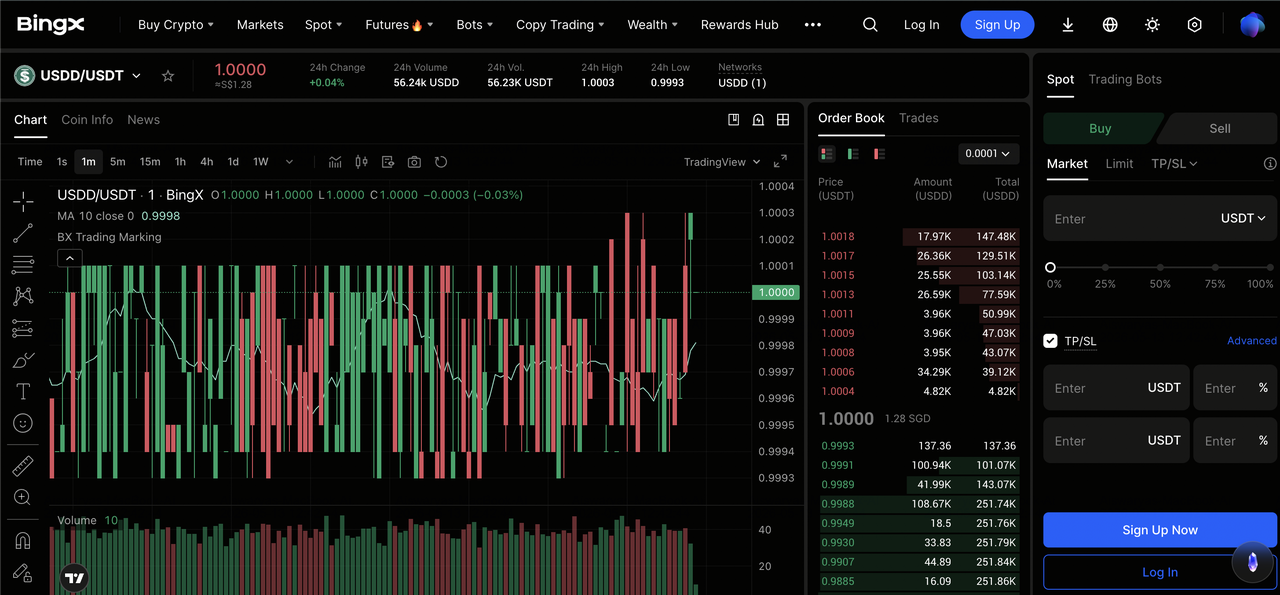
USDD/USDT trading pair on the BingX spot market
Buy or Sell USDD on BingX Spot Market
Spot trading is the most secure way for long-term investors to acquire USDD for staking or JST for governance.
- Access the Terminal: Navigate to the Spot tab and search for USDD/USDT.
- Order Execution: Use a Limit Order to set a specific entry price or a Market Order for instant acquisition.
- Transfer to Wealth: Once purchased, you can move your USDD to the BingX Wealth section to participate in flexible interest programs.
5 Key Considerations Before Using USDD
Before allocating capital to the USDD ecosystem, it is vital to evaluate the structural risks of its over-collateralized model and the technical nuances of its decentralized governance.
- Collateral Volatility: While over-collateralized, a rapid crash in TRX, sTRX, USDT, or WBTC could impact the collateralization ratio.
- Migration Status: Ensure you are using USDD 2.0. Older versions like USDDOLD should be migrated via the official 1:1 portal.
- Smart Contract Risk: As with all DeFi, the protocol relies on the integrity of its code, though it has been audited by firms like ChainSecurity and CertiK.
- Exchange Liquidity: Monitor exchange listings as any new listings or delistings could impact USDD's liquidity, even though DeFi liquidity remains deep.
- Dynamic APY: The yield on USDD holdings is not fixed; it is determined by the Dynamic APY Pricing Model which tracks market benchmarks and protocol earnings.
Final Thoughts: Is USDD the Future of Decentralized Dollars?
As of May 2026, USDD has established itself as a foundational DeFi primitive by successfully shifting the stablecoin narrative from passive fiat-tracking to active, productive capital. By integrating a multi-chain architecture across TRON, Ethereum, and BNB Chain with an automated yield engine, the protocol offers a verifiable alternative to centralized models. Its practical utility is anchored in the Smart Allocator mechanism, which bridges the gap between idle reserves and on-chain credit markets, providing a transparent framework for users to capture value while maintaining 1:1 parity via the Peg Stability Module.
For the strategic participant, the long-term viability of USDD depends on its ability to maintain its over-collateralization buffer against market volatility and its continued decentralization. While its freeze-free nature offers significant advantages for financial sovereignty, users must balance these benefits against the inherent risks of smart contract vulnerabilities and the fluctuation of underlying crypto-collateral. Ultimately, USDD serves as a high-fidelity tool for those looking to integrate stable liquidity with automated yield, provided they engage in consistent monitoring of on-chain reserve health.
Risk Reminder: Digital asset investments carry significant market risk. The stability of USDD depends on its collateral health and protocol mechanisms. Always perform your own research and monitor the USDD transparency dashboard. BingX is not responsible for trading losses.
Related Reading
- Top TRON Ecosystem Projects & dApps to Watch in 2026
- Top DeFi Projects for Yield Farming on TRON Network
- Best TRON Wallets in 2026: Top 7 Picks for Security, Speed, and Features
- USDC vs. USDT: Key Differences and Which Stablecoin to Choose in 2026?
- What Are the Best Stablecoins to Have in Your Portfolio in 2026?
