

QIE Blockchain is a pioneering high-performance Layer 1 (L1) protocol designed to solve the friction of user onboarding and fragmented identity in the decentralized era. By integrating a high-speed execution engine with QIE Pass, a decentralized identity (DID) solution, QIE transforms the blockchain from a mere ledger into a comprehensive operating system for payments, gaming, and DeFi.
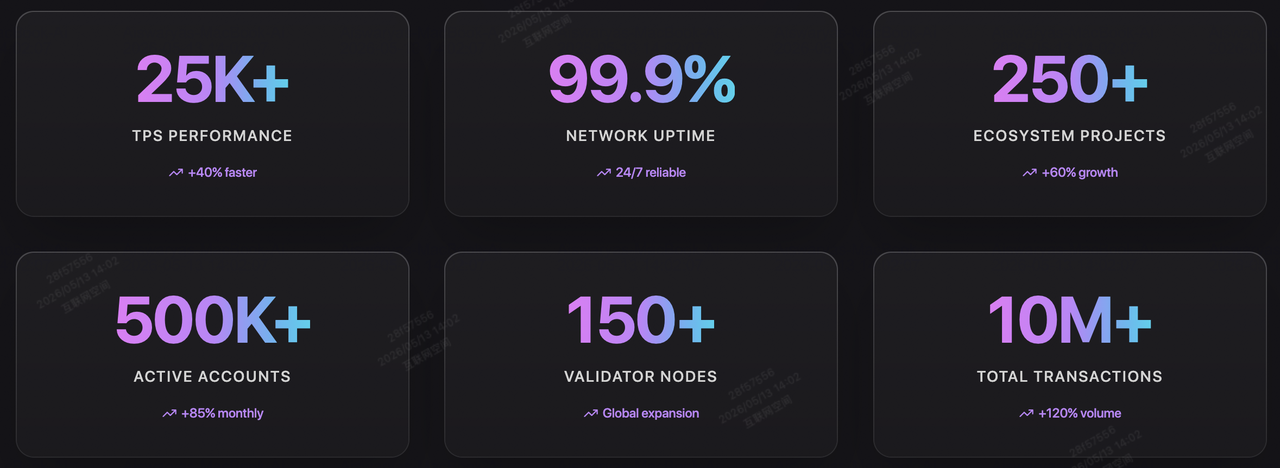
QIE Blockchan's performance metrics as of May 2026 | Source: QIE
As of May 2026, the QIE ecosystem is addressing the scalability and usability gaps that have hindered mass adoption. With a hard-capped supply and a unique dual-compatibility for both EVM and Cosmos SDK, the protocol allows developers to build cross-chain applications that are as fast as centralized apps but remain entirely decentralized. With over 117,000 active users and 4,000+ validator nodes, QIE is rapidly becoming the foundational layer for Identity-First Web3.
This article examines the high-speed architecture of QIE, the deflationary mechanics of its QIE token, and how to trade QIE Blockchain (QIE) on BingX.
What Is QIE Blockchain (QIE)?
QIE is a decentralized Layer 1 blockchain that serves as the Identity Layer for digital assets and smart contracts. Unlike traditional blockchains that focus solely on transaction throughput, QIE prioritizes a Verify Once, Use Everywhere philosophy. It eliminates the need for redundant KYC and complex wallet addresses, replacing them with human-readable domains and universal login credentials.
The platform's core mission is to bridge the gap between institutional-grade security and consumer-grade usability. QIE offers:
- Unmatched Throughput: Capable of processing up to 25,000+ TPS and tested up to 30,000 TPS with sub-2-second finality.
- Decentralized Identity (QIE Pass): A privacy-preserving ID that enables one-click logins for exchanges and dApps across the ecosystem.
- Dual Ecosystem Compatibility: Full support for Ethereum’s Solidity (EVM) and Cosmos’s Inter-Blockchain Communication (IBC) protocol.
- Sustainability: A transition to Delegated Proof-of-Stake (dPoS) that reduces energy consumption by over 99% compared to legacy PoW networks.
How Does the QIE Ecosystem Work?
QIE operates through a sophisticated multi-layered architecture to ensure that transactions remain nearly free and instantly verifiable:
- EVM + Cosmos Execution Layer: QIE features a dual-compatibility engine. Developers can deploy Ethereum smart contracts with zero changes, while native modules leverage the Cosmos SDK for modularity and cross-chain bridging.
- QIE Pass and Domains for Identity Layer: This is the heart of the network. QIE Pass provides a universal KYC-verified identity, while QIE Domains, e.g., alice.qie, replace long cryptographic addresses, making crypto payments as easy as sending an email.
- dPoS with Slashing for Consensus: The network is secured by thousands of validator nodes. Validators stake QIE to participate in block production; if they act maliciously or experience downtime, their stake is slashed, ensuring a 99.9% uptime and rock-solid security.
- The Deflationary Gas Engine: QIE utilizes a revolutionary 80% gas fee burn mechanism. As network activity increases, more QIE is permanently removed from circulation, creating a buyback-and-burn effect directly through network utility.
What Is the QIE Token Used for?
Within the ecosystem, the QIE token acts as the primary utility asset and unit of value:
- Network Gas Fees: QIE is used to pay for smart contract executions and transfers at near-zero costs, averaging around $0.0001.
- Staking & Security: Token holders can delegate their QIE to validators to earn competitive 10–15% APY rewards, paid out every 24 hours.
- On-Chain Governance: QIE holders propose and vote on protocol upgrades, such as the biennial reward halving or changes to fee structures.
- Identity Services: QIE is required to register and maintain .qie domains and access premium features within QIE Pass.
What Is QIE Tokenomics?
The QIE token features a transparent, fair-launch supply model designed to support long-term scarcity.
- Max Supply: 150,000,565 QIE hard-capped; no unlimited minting supply.
- Fair Distribution: No ICO, VC, or Private Sale. All tokens were distributed via fair mining and community rewards.
- Validator Rewards: 66 million QIE are reserved for rewards, distributed over a 100-year horizon.
- Halving Schedule: To combat inflation, block rewards (currently 0.5 QIE/block) are subject to a 2-year halving cycle.
- Deflationary Pressure: 80% of all transaction fees are burned, meaning the circulating supply shrinks as adoption grows.
How QIE Differs From Legacy Blockchains: QIE vs. Layer-1 Blockchains
QIE represents a paradigm shift from traditional blind blockchains to an identity-aware infrastructure. While traditional models struggle with high fees and complex addresses, QIE utilizes its built-in DID layer to verify participants mathematically. This reduces the risk of fraud and simplifies the user journey for enterprise-grade applications in law, finance, and gaming.
|
Feature |
QIE Blockchain |
Ethereum (L1) |
Bitcoin |
|
Speed (TPS) |
25,000+ |
~20-30 |
~5-7 |
|
Finality |
<2 Seconds |
~12-15 Minutes |
~60 Minutes |
|
Avg. Fee |
$0.00 |
High (Gas spikes) |
High |
|
Identity |
Native (QIE Pass) |
Third-party only |
None |
|
Compatibility |
EVM + Cosmos |
EVM Only |
None |
QIE Blockchain shifts the paradigm from blind ledgers to an identity-aware infrastructure by integrating a native Decentralized Identity (DID) layer directly into its protocol. While legacy Layer-1s like Ethereum or Bitcoin rely on third-party plugins and complex 42-character hexadecimal strings, QIE utilizes QIE Pass and QIE Domains to replace cryptographic addresses with human-readable IDs. This architectural choice enables a Verify Once, Use Everywhere ecosystem where a single on-chain KYC allows users to navigate DeFi, gaming, and exchanges without redundant onboarding, effectively reducing user friction by an estimated 90% compared to traditional multi-step Web3 sign-ups.
Technically, QIE outperforms legacy competitors through its high-performance dual-compatibility engine, supporting both EVM and Cosmos SDK for a tested throughput of 25,000 to 30,000 TPS. Unlike the high-fee, probabilistic finality of older Proof-of-Work or early Proof-of-Stake chains, QIE achieves deterministic finality in under 2 seconds with near-zero gas costs averaging $0.0001. Furthermore, while many L1s suffer from inflation or opaque tokenomics, QIE employs a hard-capped supply of 150 million tokens with a rigorous 80% gas fee burn mechanism. This ensures that as network utility scales, the protocol exerts direct deflationary pressure, aligning network growth with token scarcity in a way legacy chains with unlimited minting cannot match.
How to Trade QIE Blockchain (QIE) on BingX
Following its ecosystem expansion in early 2026, QIE is available for trading with deep liquidity on BingX.
- Access the Market: Navigate to the Spot tab on BingX and search for the QIE/USDT trading pair.
- Choose Your Strategy: Use a Limit Order to buy at a specific entry point or a Market Order for instant execution.
- HODL and Earn: Once purchased, you can transfer your QIE to the QIE Wallet to delegate to a validator and earn daily staking rewards.
5 Key Considerations Before Investing in QIE
Before allocating capital to the QIE ecosystem, you should evaluate its unique deflationary mechanics, the competitive landscape of Layer-1 protocols, and the specific adoption metrics of its identity-first products.
- Identity Adoption: QIE’s value is heavily tied to the adoption rate of QIE Pass and QIE Domains.
- L1 Competition: The Layer 1 sector is crowded; QIE's success depends on maintaining its developer-friendly 30,000 TPS advantage.
- Deflationary Milestones: Monitor the 80% gas burn metrics; as dApp usage climbs, the supply reduction accelerates.
- Governance Participation: As a dPoS chain, active voting on halving events significantly impacts reward yields.
- Regulatory Compliance: QIE Pass is designed to be regulatory-friendly, which may provide an advantage in jurisdictions with strict KYC requirements.
Final Thoughts: Is QIE Blockchain a Foundation for the Verified Web?
As of May 2026, QIE Blockchain has evolved from a high-throughput payment network into a functional identity-first infrastructure. By merging EVM and Cosmos SDK compatibility with a fixed-supply, deflationary model, the protocol offers a predictable environment for both dApp deployment and long-term asset holding. For participants, $QIE serves as more than a medium of exchange; it acts as the native fuel for a verified Web3 economy where the integration of QIE Pass reduces the friction of cross-platform onboarding and transaction settlement.
From a practical standpoint, the network's viability depends on the continued expansion of its decentralized knowledge graph and the actual burn rate of gas fees as transaction volume scales. Prospective users should monitor the biennial reward halving events and the growth of the validator set to gauge the protocol’s long-term decentralization and security. While the technical infrastructure supports up to 30,000 TPS, the ultimate value of the ecosystem will be driven by its ability to secure enterprise partnerships and maintain its 80% fee-burn efficacy amidst shifting market conditions.
Risk Reminder: Digital asset investments carry significant risk due to market volatility and technical complexities. Always perform your own research and evaluate your risk tolerance before making any allocations. BingX is not responsible for trading losses.
Related Reading
- What Is Humanity Protocol (H) and How to Get Started?
- What Is Proof‑of‑Humanity (POH) and How Does It Work?
- What Is idOS (IDOS) Decentralized Identity Layer and How to Buy?
- What Is Trusta.AI (TA), the Future of Identity in AI and Crypto?
- What Is Cyber (CYBER) Social-First AI Layer 2 and How to Buy CYBER?