
What Happened at the July 2026 FOMC and Why Does It Matter?
The July meeting kept rates unchanged, yet the details pushed markets toward a much more hawkish interpretation. The combination of multiple dissents, higher oil prices, and limited forward guidance shifted attention from possible rate cuts to the risk of another hike.
- The Fed held rates steady: On July 29, 2026, the FOMC voted 9 to 3 to keep the federal funds rate at 3.50% to 3.75%, in line with market expectations.
- Three officials favored a rate hike: The unusually large dissent showed a deeper internal split and suggested that concerns about inflation were stronger than the headline decision implied.
- Markets sold off sharply: The Dow fell 2.2%, the S&P 500 dropped 1.5%, and the Nasdaq declined 1.7% as investors reassessed the outlook for rates and risk assets.
- Oil prices and limited guidance increased uncertainty: Higher oil prices added to inflation concerns, while the new Fed Chair offered little direction on what would trigger the next policy move.
- September hike expectations surged: Markets began pricing a 76% to 82% chance of a September rate increase, reshaping expectations across stocks, bonds, gold, and the U.S. dollar.
What Is the FOMC and How Does It Affect Markets?
The Federal Open Market Committee (FOMC) is the Federal Reserve body that sets U.S. interest-rate policy. Its decisions influence borrowing costs, bond yields, the U.S. dollar, stocks, gold, and cryptocurrencies. Lower-rate expectations usually support risk assets, while higher rates or a more hawkish outlook can pressure valuations and strengthen the dollar.
July 2026 FOMC Overview
|
Item |
Detail |
What It Signals |
|
Rate decision |
Held at 3.50% to 3.75% |
No change, but the vote and tone were the real story |
|
Vote split |
9 to 3 |
Most divided FOMC since 2016, with three dissents favoring a hike |
|
September hike odds |
76% to 82% |
A full reversal from the year's early rate-cut expectations |
|
30-year Treasury yield |
Surged to 5.14% |
Rising long-end rates compress duration-sensitive valuations |
|
Equity reaction |
Dow -1,150, Nasdaq -1.7% |
High-multiple growth stocks hit hardest |
Before the July meeting, the market had priced only a 30% to 38% chance of a hike. The combination of dissents, an oil shock, and the absence of guidance repriced that probability sharply higher within a single session, and the conversation moved from when the Fed would cut to whether it would be forced to hike.
Why Did the Market React So Sharply? 3 Forces Behind the Selloff
The severe reaction came from more than the rate decision itself. Three separate pressures landed on the same day, and each reinforced the others.
- Three officials dissented in favor of a hike. Dallas Fed President Logan, Minneapolis Fed President Kashkari, and Cleveland Fed President Hammack all voted for a rate increase. This was the first time since 2016 that three voting members simultaneously dissented in favor of a hike, and it made the hawkish split inside the Fed impossible to ignore.
- The Iran war escalated and oil prices spiked. Just hours before the decision, Iran launched a surprise attack on U.S. forces in Jordan, and the U.S. signaled a forceful response. Brent crude surged 6.6% to $89.61 per barrel and WTI jumped 6.4% to $84.31 per barrel. The flare-up directly amplified fears that inflation would re-accelerate and force the Fed's hand.
- The new Fed Chair gave no forward guidance. Unlike his predecessor, Chair Warsh declined to submit his own rate forecast in the dot plot and offered no forward guidance, which one outlet called one of the most unpredictable Fed meetings in years. Without a policy anchor, investors were left to price in the hawkish risk on their own.
For investors, the interaction between these forces matters more than any single one. An oil shock raises inflation from the supply side, while the Fed's rate tool works on demand, so a hike would address the symptom rather than the cause. That mismatch, combined with the absence of guidance, left the market unable to anchor the policy path and forced a broad repricing of risk.
How Does a Hawkish Fed Affect Treasury Bonds, Stocks, and Gold?
The market reaction usually begins with the risk-free rate. When the Fed turns more hawkish, rate-hike expectations rise, Treasury yields climb, and the U.S. Dollar Index often strengthens. From there, bonds, stocks, and gold react through different channels.
1. Treasury Bonds and Yields: Why Hawkish Fed Policy Pushes Yields Higher
The three dissenting votes pushed markets to price a 76% to 82% chance of a September hike. That repricing moved directly into bonds, sending the 30-year Treasury yield to 5.14% and the 10-year yield to a 2026 high of 4.62%. As yields rise, existing bond prices fall, especially for longer-dated securities.
Higher oil prices added pressure by lifting inflation expectations. The long end of the curve sold off even as the 2-year yield eased, suggesting investors expected no immediate hike but saw greater long-term inflation risk.
2. Stock Market Outlook: Why Higher Interest Rates Pressure Growth Stocks
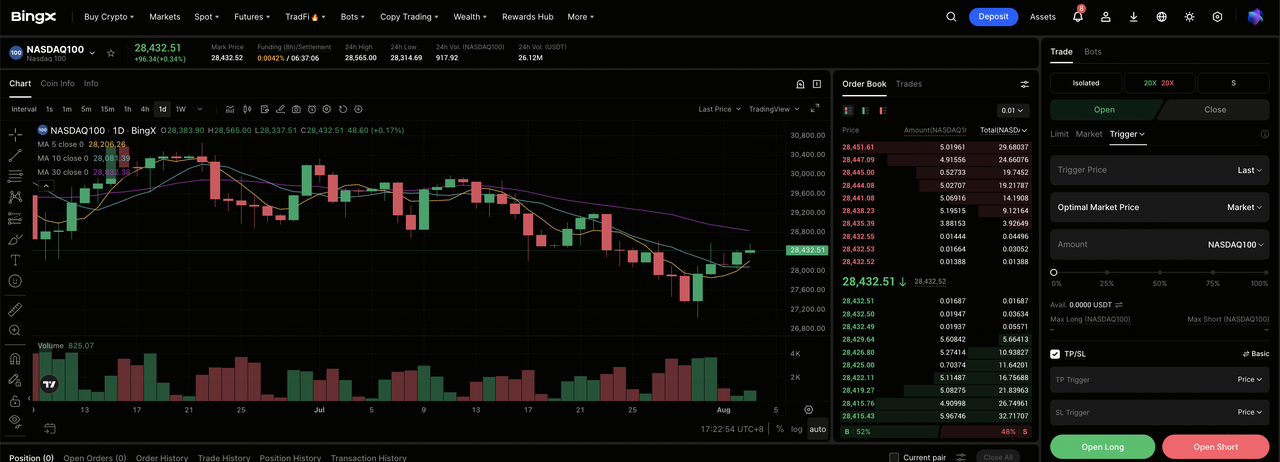
Higher Treasury yields raise the discount rate applied to future earnings, reducing the present value of stocks. High-growth and technology shares are especially sensitive because more of their valuation depends on profits expected further in the future.
The Dow fell 1,150 points, the S&P 500 dropped 1.5% to 7,316, and the Nasdaq declined 1.7%. Limited forward guidance added a volatility premium, while stocks and bonds fell together, reducing the protection normally provided by a traditional 60/40 portfolio.
3. Gold Price Outlook: Can Safe-Haven Demand Offset Higher Rates?
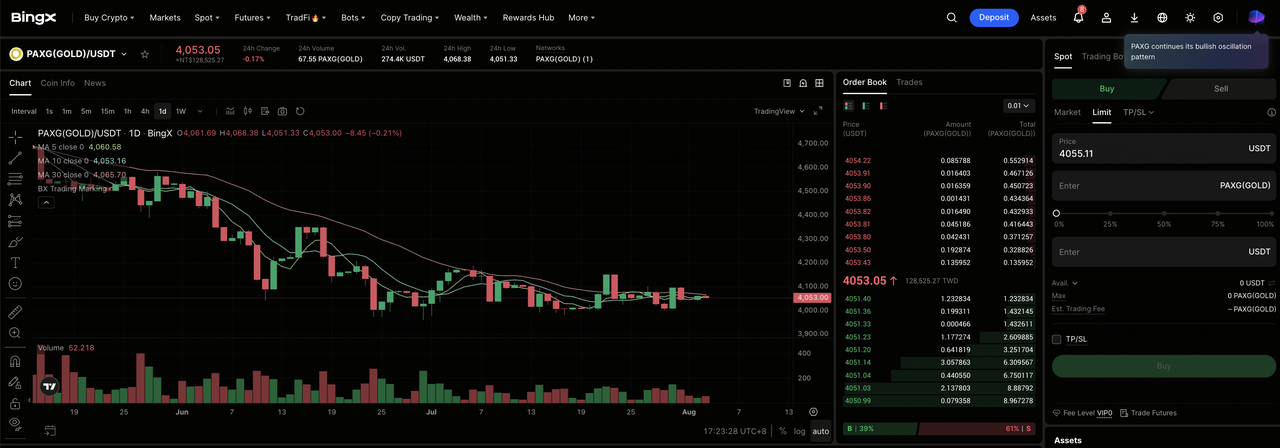
A hawkish Fed usually weighs on gold by strengthening the dollar and increasing real yields. Because gold pays no interest, higher rates raise its opportunity cost and can reduce investor demand.
Geopolitical tension in Iran worked in the opposite direction by increasing safe-haven demand. That left gold near $4,020, caught between rate pressure and conflict-related buying. The longer-term outlook remains divided, with some forecasts still pointing toward $6,000, while more bearish views expect higher rates to limit upside.
What Are Institutions Saying About the July FOMC?
By late July, the rate outlook across major Wall Street institutions had completely reversed from the rate-cut consensus that opened the year. Rate cuts are now off the table for 2026 across every major desk, and the only live debate is whether the Fed holds for the rest of the year or is forced to hike.
|
Institution |
2026 Call |
Core View and Stance |
|
Goldman Sachs |
Hold |
No longer expects 2026 cuts; sees any cuts pushed to 2027, but holds on-hold as the base case |
|
J.P. Morgan |
Hold |
Expects on-hold through 2026, followed by a 25bp hike in September 2027 |
|
Morgan Stanley, Barclays, HSBC, UBS, Nomura |
Hold |
All project no change through 2026 |
|
BofA |
Hike |
Most aggressive; sees 75bp of cumulative hikes bringing the terminal rate to 4.25% to 4.50% |
|
Deutsche Bank |
Hike |
Projects 25bp hikes in September and December, cumulative 50bp to 4.00% to 4.25% |
|
BNP Paribas, Macquarie |
Hike |
Project a hike later in the year |
The consensus is notable for how narrow the base case has become. One chief economist summed up the split by describing a full-year hold as still the base case, but only a 60-40 call. No major desk is confident about the path, which is itself a sign of how much the July meeting unsettled the outlook.
3 Major Risks Every Investor Must Watch After the July FOMC
The July decision raised the odds of a September hike, but that outcome is not settled. Investors still need to watch three key risks that will decide whether the hawkish scenario plays out.
- The September FOMC is the next real test. The 76% to 82% hike probability depends heavily on two variables: the August and September CPI reports, and whether the Iran war escalates further. As one economist put it, the September meeting will be the first real test of whether recent inflation trends prove durable, and softer data could quickly unwind the hawkish repricing.
- A non-linear oil price spike could force the Fed's hand. Oil prices have swung from around $68 during a ceasefire to $74 after it broke down, then to $84 after the July 29 attack. If crude continues pushing toward and above $100 per barrel, inflation would inevitably re-accelerate, leaving the Fed with little room to avoid acting.
- Long-end yields could tighten conditions on their own. With the 30-year Treasury yield above 5.14% and some prominent investors expecting long-end rates to keep rising, a self-reinforcing move higher could tighten financial conditions materially even without a Fed hike. That tightening without a hike would squeeze real estate, highly leveraged companies, and duration-sensitive assets.
July 2026 FOMC: Is the Fed Really Moving Toward a Rate Hike?
The July FOMC is the most consequential Fed meeting of 2026, and it did something no single data point could: it removed the rate-cut scenario from the near-term table and replaced it with a live hike debate. That alone justifies the repricing in bonds, stocks, and gold.
But the composition matters. The hawkish shift rests on two forces, an oil shock and a stubbornly elevated core inflation trend, and only one of them is durable. The oil spike is geopolitical and can reverse quickly, while persistent core inflation is the more lasting signal the Fed is watching. If the Middle East calms and CPI cools, the September hike may not arrive at all.
The hike question is now a matter of data rather than direction, and the answer arrives with the August and September CPI reports and the September FOMC meeting. Until then, positioning built on the July reaction is positioning built on the assumption that oil stays elevated and inflation stays sticky.
Related Reading
- June 2026 US CPI Cools to 3.5%: What the Inflation Drop Means for Stocks, Gold, and Crypto
- Alphabet, TSMC, and ASML Q2 2026 Earnings: Can AI Growth Justify Record Capex?
- Microsoft, Meta, Amazon, and Apple Q2 2026 Earnings: Can AI Spending Still Be Covered by Cash Flow?
FAQs on the July 2026 FOMC Decision
1. Did the Fed raise rates in July 2026?
No. The Fed held the federal funds rate steady at 3.50% to 3.75%. The market reaction was driven not by the decision itself but by the hawkish signals around it, including three dissenting votes in favor of a hike and the absence of forward guidance.
2. Why did stocks fall if rates were unchanged?
The details of the meeting were more hawkish than the hold suggested. Three officials wanted a hike, an oil shock raised inflation fears, and the market repriced the odds of a September hike to 76% to 82%. Higher expected rates lifted Treasury yields, which compressed valuations for growth and technology stocks.
3. What is the significance of a 9-to-3 vote?
It was the most divided FOMC decision since 2016 and the first time in that period that three voting members dissented in favor of a hike at the same time. The split signals that the hawkish view inside the Fed has moved from the margins to a serious force shaping policy.
4. Which assets are most affected by a hawkish Fed?
Long-duration and non-yielding assets are most exposed. Growth and technology stocks fall because a higher discount rate shrinks their valuation room. Long-dated bonds fall as yields rise, which is why stocks and bonds can drop together and the traditional 60/40 portfolio offers little protection. Gold faces pressure from higher real rates and a stronger dollar, though safe-haven demand from geopolitical risk can offset it.
5. When is the next FOMC meeting?
The next major test is the September 2026 FOMC meeting, preceded by the August and September CPI reports. Those inflation prints, along with the path of oil prices, will largely determine whether the Fed follows through on a September hike.
Risk Reminder: This article is for educational and informational purposes only and does not constitute investment advice. Financial markets are volatile and carry risk. Always conduct your own research before trading.
