

Monero (Monero, XMR) is one of the most comprehensively privacy-protected cryptocurrencies in the current crypto market. Through the triple encryption mechanism of Ring Signatures, Stealth Addresses, and Ring Confidential Transactions (RingCT), the sender, receiver, and amount of each XMR transaction cannot be tracked by external parties. However, precisely because of these privacy features, some mainstream exchanges have gradually delisted Monero in recent years, making wallet selection and asset custody core issues that every XMR holder must thoroughly understand.
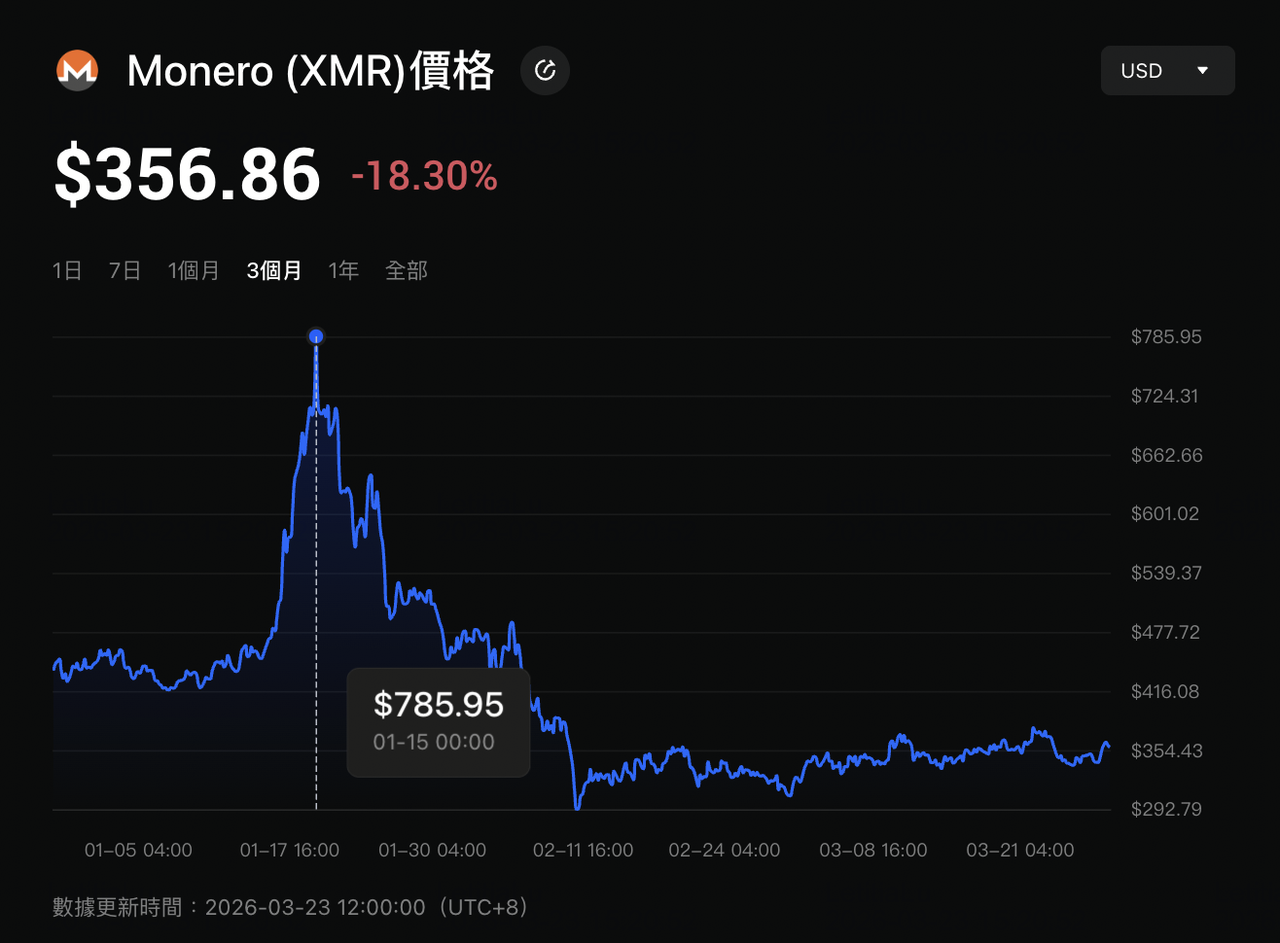
In January 2026, Monero briefly touched approximately $800 all-time high, attracting more investors to consider long-term holding. Whether for short-term operations or long-term storage, choosing the right wallet is the first step in protecting XMR asset security. This article systematically compiles the most noteworthy hardware wallet and software wallet options for 2026, along with complete operational guidance for safely converting XMR to USD.
Key Takeaways
- Monero's privacy architecture has special technical requirements for wallets, and not all wallets are compatible with XMR.
- Hardware cold wallets are the highest security option for long-term holding of large amounts of XMR. Mainstream brands are Ledger and Trezor, both requiring third-party software wallets for use.
- Among software wallets, Monero GUI is suitable for desktop users pursuing complete control; Cake Wallet and Monerujo are suitable for daily mobile use.
- MyMonero web version officially ceased service on January 6, 2026, and is not recommended for continued use.
- When converting XMR to USD, Kraken is currently one of the few compliant exchanges that still supports direct XMR/USD trading pairs.
What Is Monero (XMR)?
Monero (ticker: XMR) is an open-source blockchain project launched in 2014, designed with privacy, fungibility, and decentralization as core principles. Unlike Bitcoin or Ethereum, Monero encrypts transaction information by default, making transaction amounts, sender addresses, and receiver addresses indiscernible to external parties from the public ledger. It is precisely for this reason that Monero has always been regarded as a representative asset with high privacy protection among mainstream cryptocurrencies.
Monero's privacy mechanism is built on three main technologies. First is Ring Signatures, which mixes transaction signatures with multiple random public keys, making it difficult for external parties to identify the actual sender. Second is Stealth Addresses, where each transaction generates a one-time receiving address, so even if the same recipient receives multiple payments, they cannot be directly correlated. Finally, Ring Confidential Transactions (RingCT) hide transaction amounts, preventing third parties from knowing the actual amount of XMR transferred. These three layers work together to make overall transactions highly untraceable on the blockchain.
In terms of mining mechanism, Monero uses the RandomX algorithm, optimized for general CPUs, allowing personal computers to participate in mining, reducing dependence on specialized mining equipment, further distributing hash power sources, and helping maintain the network's decentralized structure. Supply-wise, it adopts a tail emission design, continuing to release small amounts of new coins as miner rewards after the main issuance phase ends, allowing the network to maintain stable economic incentives during long-term operation. In governance and development, Monero is not dominated by a single company or foundation, but jointly maintained by a global developer and volunteer community. This decentralized development model keeps Monero relatively independent in technical roadmap and decision-making, also continuing its original emphasis on privacy and censorship resistance.
Best Hardware Wallets for Monero (XMR): Ledger, Trezor and Tangem Security Comparison
Hardware wallets store private keys in secure chips of physical devices, operating completely offline, making them the most effective defense against hacker attacks, malicious software, and remote theft. For investors holding larger amounts of XMR, hardware cold wallets are the industry-recognized highest security level storage method. Currently, the main hardware wallet brands officially supporting Monero are three: Ledger, Trezor, and Tangem, each with distinct differences in security architecture and operational logic.
1. Ledger: Widest Compatibility, Best for Most Users
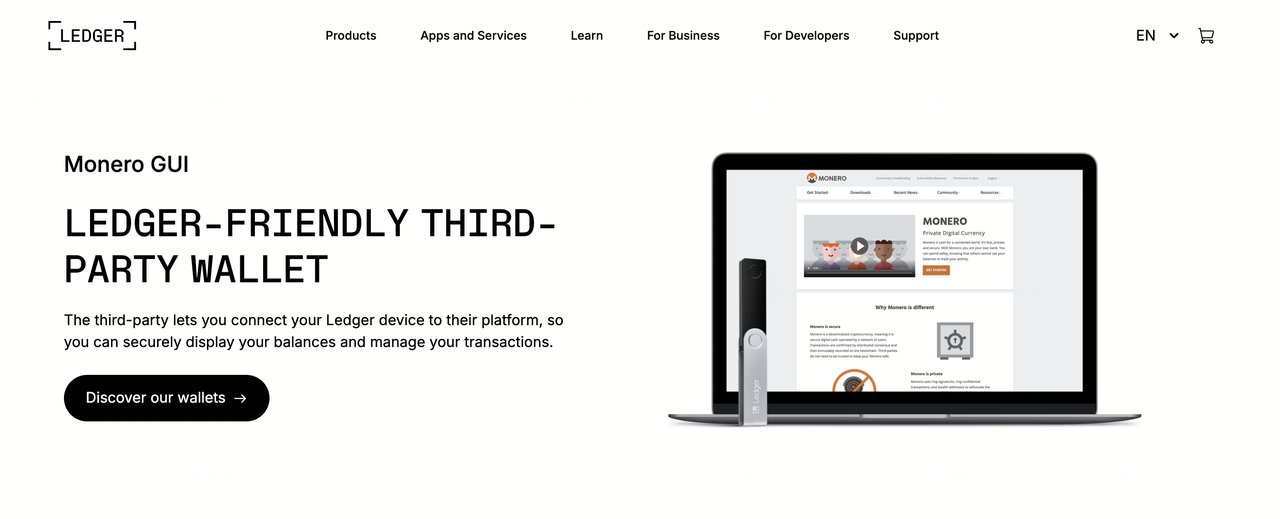
Ledger (Nano S Plus, Nano X, Stax) is the most widely used Monero hardware wallet in the market, with devices featuring built-in CC EAL5+ certified secure element chips that can prevent private key reading at the hardware level. When using, you need to install the Monero application through Ledger Live, then pair it with one of the desktop or mobile wallets: Monero GUI, Feather Wallet, Cake Wallet, or Monerujo to manage XMR. Nano X supports Bluetooth and can be used on mobile devices; Nano S Plus is a lower-priced entry-level option; Stax features a touchscreen and is positioned as an advanced flagship. Ledger's main controversy is its closed-source firmware design, which some privacy advocates have reservations about, but widespread community verification and regular security audits make its overall reputation solid. Prices range from approximately $79 to $279.
2. Trezor: Fully Open-Source Firmware, Best for Privacy Advocates
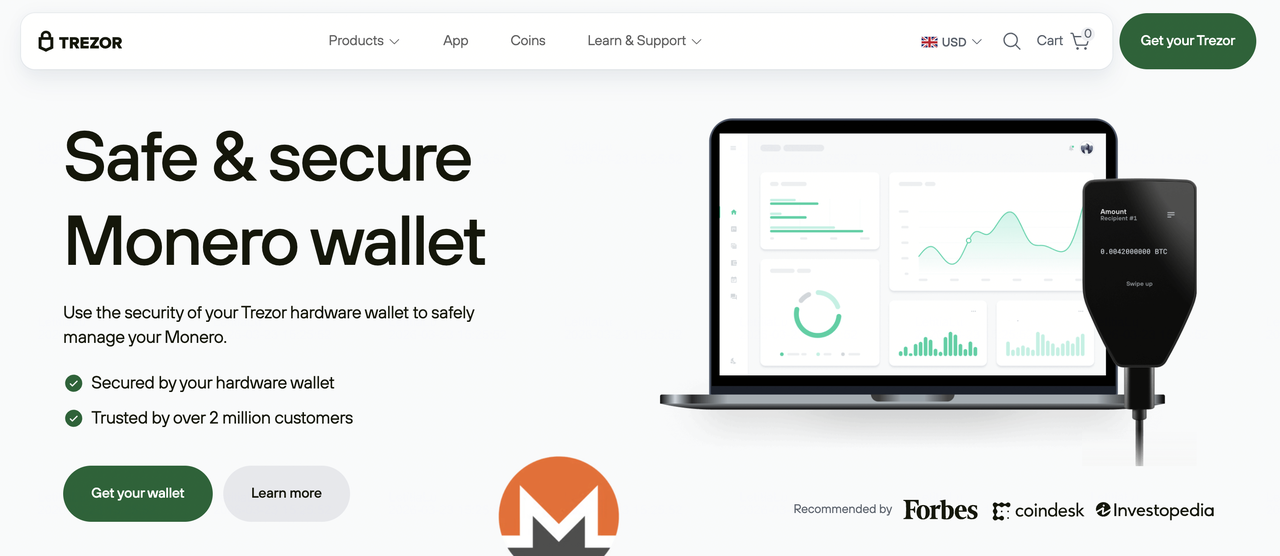
Trezor (Model T, Safe 3, Safe 5) is currently the only mainstream hardware wallet brand with fully open-source firmware. The code can be publicly audited by anyone, with independent security researchers regularly conducting public audits. Trezor uses the SLIP10 standard to derive Monero private keys and requires pairing with Monero GUI, Monero CLI, or Feather Wallet; Cake Wallet currently does not support Trezor pairing. It's particularly worth noting that Trezor uses a different key derivation method from most other blockchains, and backup seed phrases may not be recoverable on non-Trezor devices for XMR wallets, so careful confirmation is needed before migration or device replacement. Safe 7 already supports Monero at the firmware level, but due to incomplete third-party wallet integration, it cannot be used normally at present. Prices range from approximately $169 to $219.
3. Tangem: No Seed Phrase Design, Lowest Barrier to Entry
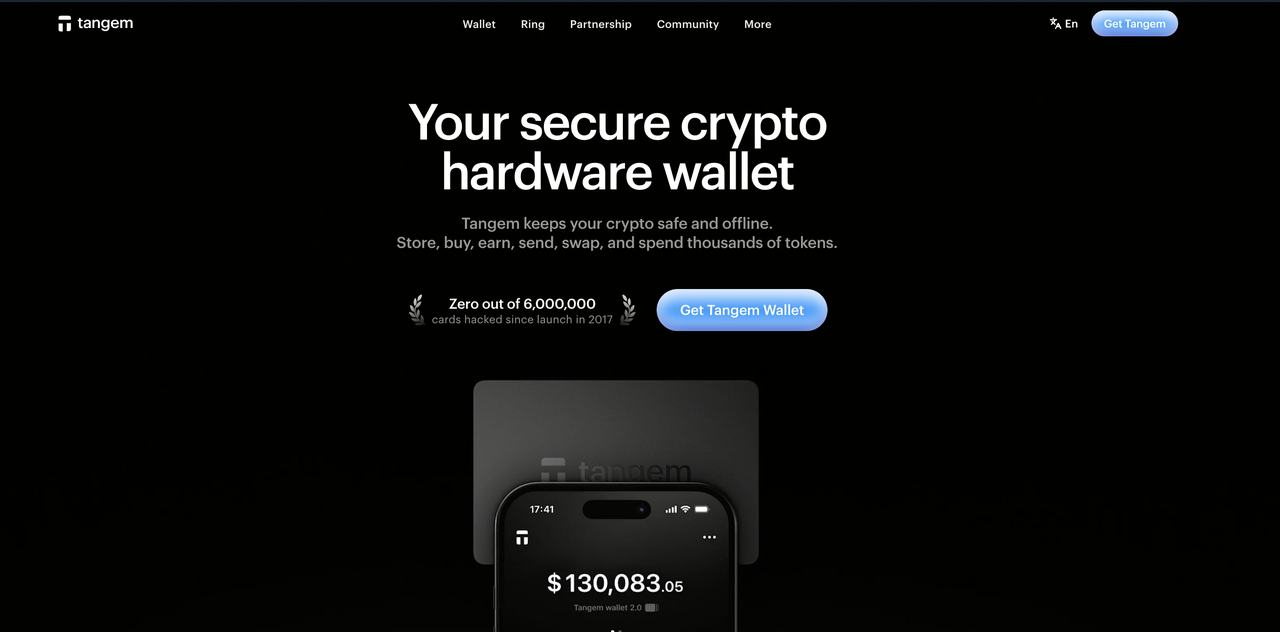
Tangem (card-type cold wallet) uses EAL6+ secure chips and seedless design, where private keys are generated and stored directly in the physical card without generating 24-word seed phrases, fundamentally eliminating the risk of seed phrase leakage or loss. Tangem uses NFC sensing for transaction signing and can be paired with Monero GUI or Feather. It's suitable for users who don't want to manage seed phrases or need highly durable cold wallets, with the lowest price among the three, approximately $55 to $90.
Monero Hardware Wallet Comparison: Ledger vs. Trezor vs. Tangem
| Brand | Representative Models | Secure Chip Level | Open Source Firmware | Compatible XMR Wallets | Price Range |
| Ledger | Nano S Plus, Nano X, Stax | CC EAL5+ | Partially Open Source | Monero GUI, Feather, Cake Wallet, Monerujo | $79–$279 |
| Trezor | Model T, Safe 3, Safe 5 | Standard Secure Chip | Fully Open Source | Monero GUI, Monero CLI, Feather | $169–$219 |
| Tangem | Card Set (2–3 cards) | EAL6+ | Partially Open Source | Monero GUI, Feather (NFC mode) | $55–$90 |
How to Choose a Wallet for Long-Term XMR Holding: Security to Usability
The secure chip specifications of the three brands are similar, and the real differences affecting long-term holding experience lie in operation difficulty, software compatibility, and migration risks. Here's a further evaluation from the perspective of long-term holders:
- Ledger Nano X: For most users, Ledger Nano X is the most balanced choice. It has the broadest compatibility with Monero, working with Monero GUI, Feather, and Cake Wallet, with some configurations directly displaying XMR's USD real-time valuation in the wallet interface. Nano X's Bluetooth connectivity allows pairing with mobile devices to check holdings, which is more convenient for long-term holders who need to regularly track USD paper value. Initial setup involves installing Ledger Live and creating the Monero application, with a moderate learning curve.
- Trezor Safe 5: For advanced users who value open-source transparency, Trezor Safe 5 is a more trustworthy choice. Fully open-source firmware gives it the highest security audit transparency. XMR holdings' USD valuation needs to be viewed through Monero GUI's fiat conversion function, which is slightly cumbersome, but security is uncompromised. Users need to understand its cross-device compatibility limitations for seed phrases before use.
- Tangem: For complete newcomers to seed phrase management who are long-term holders, Tangem's seedless design can effectively reduce operational error risks, with the simplest setup process among the three, and the most affordable price.
Best Software Wallets for Monero (XMR): Desktop and Mobile XMR Wallet Comparison
Software wallets (hot wallets) are suitable for daily small-amount transactions or users first encountering Monero. Compared to hardware wallets, software wallets offer higher convenience, but because private keys are stored on internet-connected devices, security risks are relatively higher. They are not recommended for long-term storage of large amounts of assets. The following four are currently the most mainstream XMR software wallets in 2026, all featuring USD valuation conversion functions.
1. Monero GUI: Official Full-Featured Desktop Wallet
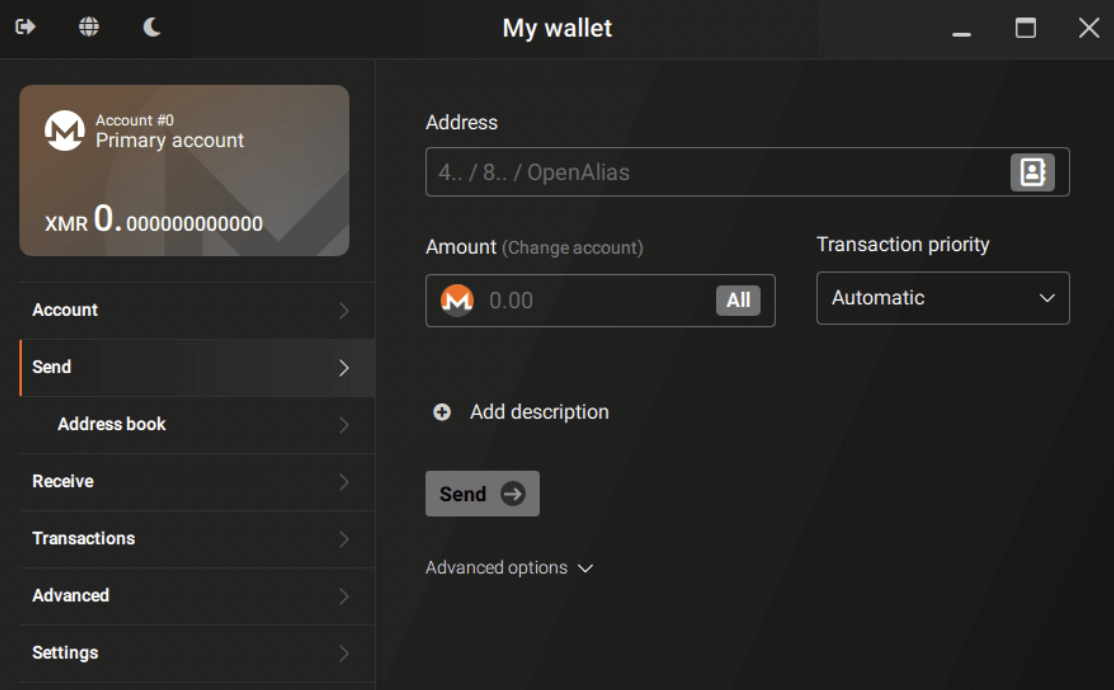
Monero GUI is the official desktop wallet developed by the Monero community, supporting Windows, macOS, and Linux, completely open source. It provides "Simple Mode" (automatically connects to remote nodes, suitable for general users) and "Advanced Mode" (supports full node operation, highest privacy protection) options. The interface includes built-in fiat conversion functionality for direct viewing of XMR USD valuation. Full node requires approximately 150 to 180 GB storage space, with lengthy initial synchronization, suitable for advanced users with high demands for autonomous control.
2. Feather Wallet: Top Lightweight Desktop Wallet
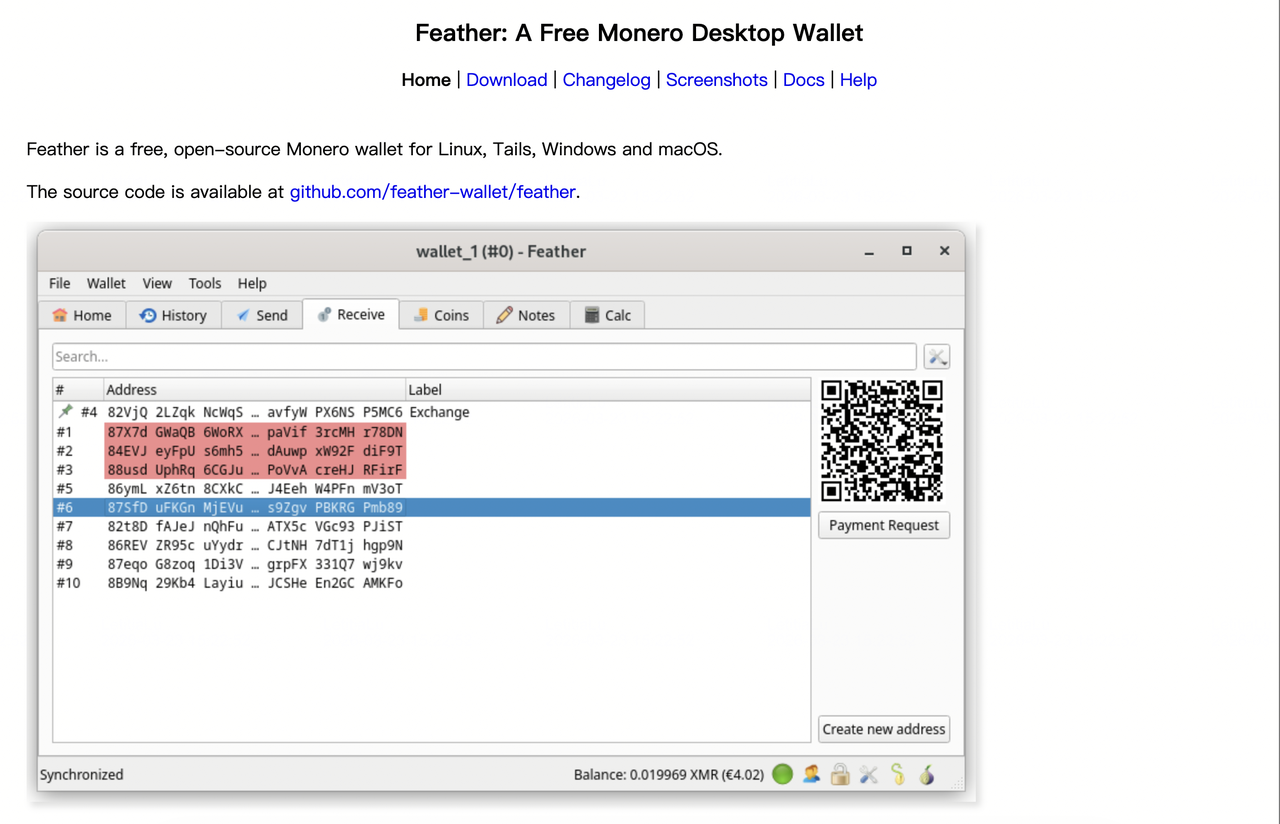
Feather is currently the highest recommended lightweight desktop wallet for advanced users, supporting Windows, macOS, and Linux, with native Tor anonymous network integration that requires no additional setup to enable. It supports Ledger and Trezor hardware wallet pairing and provides advanced features like coin control and offline signing. Fiat conversion display is a built-in feature for real-time viewing of XMR USD valuation. It doesn't provide mobile versions and doesn't support multi-currency management.
3. Cake Wallet: Best Choice for iOS Mobile Users
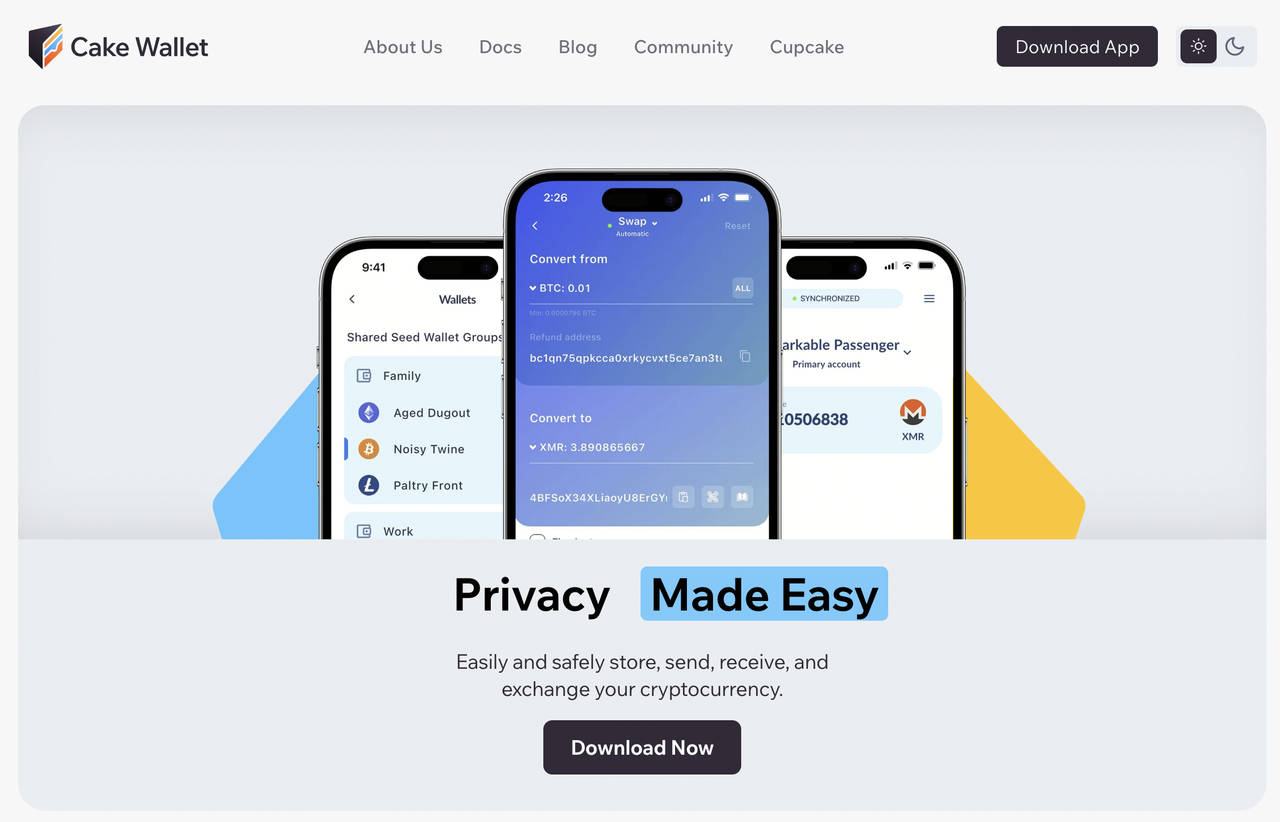
Cake Wallet is currently the best-reputation Monero mobile wallet on iOS platform, also supporting Android. The interface is clean and user-friendly, with built-in instant cryptocurrency swap functionality for direct XMR conversion to BTC, ETH, USDT, and other assets within the app, supporting real-time fiat valuation display. The Cake Pay feature allows spending at over 150,000 merchant locations, making it the XMR mobile wallet with the broadest daily use scenarios.
4. Monerujo: Privacy-First Choice for Android
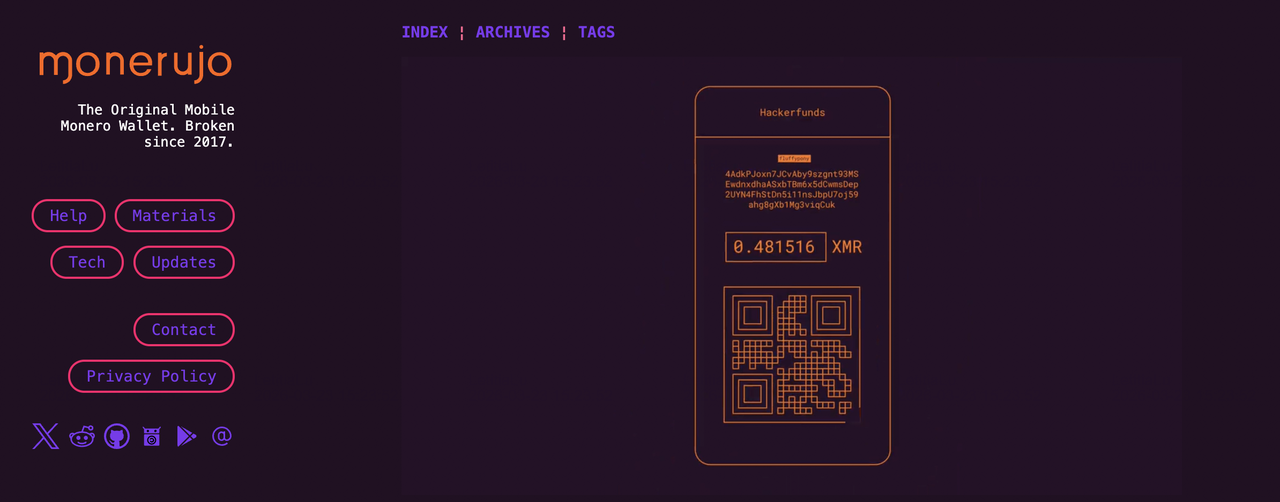
Monerujo is the most well-known Monero-dedicated mobile wallet on Android platform, designed with privacy as its core, supporting QR code scanning and hardware wallet pairing. The interface is relatively technical, more suitable for users with cryptocurrency foundations. Fiat conversion display is a built-in feature for viewing XMR USD real-time valuation on the main screen.
Monero Software Wallet Comparison: Monero GUI vs. Feather Wallet vs. Cake Wallet vs. Monerujo
| Wallet | Platform | USD Valuation Display | Built-in Exchange | Hardware Wallet Support | Best Suited For |
| Monero GUI | Desktop (Win / Mac / Linux) | Yes | No | Ledger, Trezor | Advanced users valuing complete control and privacy |
| Feather Wallet | Desktop (Win / Mac / Linux) | Yes | No | Ledger, Trezor | Desktop users wanting lightweight operation without compromising security |
| Cake Wallet | iOS, Android | Yes | Yes | Ledger (Android) | Daily mobile users valuing operational convenience |
| Monerujo | Android | Yes | Yes | Ledger, Trezor | Privacy-first users on Android platform |
Converting Monero to USD: Exchanges That Support XMR Withdrawals and Security Best Practices
Converting XMR to USD involves moving funds from cold wallets to exchanges, with potential risks at every step. Due to Monero's privacy characteristics, some mainstream exchanges (including BingX and Kraken for European Economic Area users) have restricted or delisted XMR in recent years, making platform selection and operational procedures require more careful planning than other cryptocurrencies.
Step-by-Step Guide to Safely Convert XMR to USD
Step 1: Manually input exchange website address: Enter the official website address directly in your browser, avoid entering platforms through search ads or unknown links to prevent phishing websites from stealing account information. It's recommended to bookmark the official website for future use.
Step 2: Enable authenticator app two-factor authentication (2FA): Enable Google Authenticator or Authy in exchange account settings, avoid using SMS verification as it has SIM swap attack risks.
Step 3: Send small test amount first: Before transferring XMR to an exchange for the first time, send a small amount to confirm address correctness and normal network confirmation, then proceed with large transfers. Monero transactions require approximately 10 network confirmations before funds can be used, with waiting time of about 20 minutes.
Step 4: Confirm Memo or Payment ID: Some exchanges use the same XMR deposit address for all users and identify different accounts through Memo. If the exchange displays Memo or Payment ID fields, be sure to fill them out; failure to do so may result in funds not being credited, requiring customer service contact and longer processing time.
Step 5: Complete KYC verification in advance: Mainstream compliant exchanges require identity verification (KYC) completion before allowing fiat withdrawals to bank accounts. It's recommended to handle this before withdrawal needs arise, avoiding delays from discovering unverified accounts at critical moments.
Monero's Regulatory Status: Which Platforms No Longer Support XMR?
Monero's high privacy characteristics have attracted intense attention from regulatory authorities worldwide in recent years. According to Financial Action Task Force (FATF) "travel rule" requirements, exchanges must record and transmit identity information of both transaction parties, but XMR's design makes such information untraceable, resulting in compliance difficulty far exceeding other cryptocurrencies. In 2024, Binance delisted all XMR spot trading pairs; Kraken also stopped XMR trading services for European Economic Area (EEA) users. BingX currently also does not support Monero trading and deposit/withdrawal services due to compliance considerations.
For Taiwan users, before choosing XMR trading platforms, you should confirm in advance whether the platform still opens deposit, trading, and withdrawal functions for your region, as related policies may change at any time due to regulatory environment changes. Currently available main options for reference are Kraken (US region) and Bitfinex, but it's recommended to confirm the latest platform status before use.
Which Exchanges Support Direct XMR-to-USD Sales and International Bank Withdrawals?
Kraken (Recommended First Choice) is currently the most commonly recommended XMR/USD direct trading pair platform for international users, supporting direct XMR to USD conversion in the US (except New York State) and some other regions, with withdrawal to international bank accounts via wire transfer. Buy/sell fees start at approximately 0.25% to 0.40%, with high-volume users enjoying fee discounts. Kraken's security record is among the best in the industry, with no customer fund loss incidents to date. Note that XMR deposit functionality may be suspended due to regional policy adjustments, so current status should be confirmed before operation.
Bitfinex is a long-established exchange and the parent company of stablecoin USDT issuer Tether, providing XMR trading pairs and deeper liquidity, suitable for advanced users familiar with exchange operations, but with relatively limited convenience for use in Taiwan and some Asian regions.
For Taiwan users, another common pathway is to first convert XMR to USDT through decentralized exchange services, then transfer USDT to exchanges supporting fiat withdrawals to convert to USD or TWD for withdrawal. The overall process involves multiple steps requiring advance planning and time allocation.
4 Things to Know Before Using Monero (XMR)
Under Monero's emphasis on privacy and decentralization design, users also need to bear more asset management responsibilities. Unlike general exchange accounts, once XMR is transferred out, there's almost no space for tracing or remediation. Therefore, establishing basic security habits and operational principles before actual use is an important prerequisite for avoiding asset loss.
- Seed phrases must be stored offline on paper: Seed phrases are the only credential for wallet recovery and must be handwritten on paper and properly stored in secure locations. Never screenshot, store in cloud, or preserve in any digital format. Once seed phrases are leaked, assets cannot be recovered.
- Large amounts of assets should not be kept on exchanges long-term: Large amounts of XMR for long-term holding should be transferred to self-custody hardware cold wallets first, with exchange accounts serving only as transit stations for short-term trading. Exchanges have platform risks and policy change risks, with privacy coins being particularly susceptible to compliance pressure.
- Test with small amounts before transfers: Before any transfer operation, send a small amount first to confirm address and Memo settings are correct, then proceed with large transfers. Monero's privacy mechanism makes erroneous transfers extremely difficult to recover.
- Regularly update wallet software and device firmware: Regularly check and update versions of Monero GUI, Feather, Cake Wallet and other software, as well as Ledger or Trezor device firmware, ensuring security patches take effect promptly to reduce risks of known vulnerabilities being exploited.
Related Reading
- What is Monero (XMR) Privacy Coin and How Does It Work?
- What are the Top 7 Privacy Coins to Watch in 2026?
- Zcash (ZEC) vs. Monero (XMR): Which is the Better Privacy Coin in 2026?
- Ledger vs. Trezor: Which Crypto Hardware Wallet to Choose? (2026)
- Hot vs Cold Wallets: What's the Difference? In-Depth Analysis of Cryptocurrency Wallet Selection
