What Did Alphabet, TSMC, and ASML Report in Q2 2026?
Alphabet (GOOGL), Taiwan Semiconductor Manufacturing Company (TSMC), and ASML (ASML) all delivered stronger-than-expected Q2 2026 results, providing further evidence that investment in artificial intelligence infrastructure remains elevated. Alphabet reported rapid cloud growth, TSMC benefited from strong demand for high-performance computing and advanced chips, and ASML raised its full-year outlook as semiconductor manufacturers continued investing in leading-edge production equipment.
The market reaction was less enthusiastic than the headline results suggested. Alphabet shares fell more than 2% in after-hours trading, while TSMC declined approximately 4% on its earnings day. ASML was relatively resilient but remained exposed to the wider semiconductor pullback. The concern was not whether AI demand exists. Investors were questioning how much companies must spend to capture that demand and how quickly those investments can produce sustainable earnings and free cash flow.
Q2 2026 AI Infrastructure Companies Earnings at a Glance
|
Company |
Main Q2 Highlight |
Main Concern |
Stock Reaction |
|
Alphabet |
Cloud revenue rose 82% to approximately $24.8 billion |
Higher capex, weaker free cash flow, and earnings quality |
Fell more than 2% after hours |
|
TSMC |
Revenue rose 33.7%; gross margin reached 67.7% |
Expansion costs and margin pressure from the 2nm ramp |
Fell approximately 4% |
|
ASML |
Revenue reached €9.3 billion; full-year guidance was raised |
Limited 2027 visibility and China-related restrictions |
Relatively resilient |
Read More: Top 10 AI Infrastructure Stocks to Buy in 2026: Chip Manufacturing and Design Leaders
Why Did Alphabet, TSMC, and ASML Stocks Fall After Strong Q2 2026 Earnings?
Alphabet, TSMC, and ASML all reported strong Q2 2026 results, confirming that AI infrastructure demand remains healthy across the supply chain. Alphabet and other AI hyperscalers are increasing spending on data centers, cloud computing, and AI services, which supports chip orders for companies such as Nvidia and Broadcom. Those orders flow to TSMC’s advanced manufacturing capacity and eventually increase demand for ASML’s EUV lithography equipment.
The AI infrastructure chain remains intact:
Cloud capex → AI chip orders → TSMC advanced manufacturing → ASML semiconductor equipment demand
The concern is that capital expenditure is rising almost as quickly as revenue. Alphabet raised its 2026 capex outlook to $195 billion–$205 billion, while TSMC increased its annual capital budget to $60 billion–$64 billion. These investments support future AI growth but also reduce near-term free cash flow and increase depreciation costs as new data centers, fabs, and equipment enter service.
As a result, investors are no longer asking only whether AI demand is real. The market is now focused on whether Alphabet, TSMC, and ASML can convert record AI spending into stronger margins, sustainable cash flow, and attractive returns on invested capital.
Which AI Infrastructure Company Is Best Positioned After Q2 2026 Earnings?
Alphabet, TSMC, and ASML each offer a different form of exposure to the AI infrastructure cycle. Alphabet provides the clearest signal of enterprise demand, TSMC has the most direct link to advanced chip production, and ASML holds a critical position in semiconductor equipment. The key difference is how effectively each company can convert strong AI demand into sustainable margins, cash flow, and long-term returns.
1. Alphabet (GOOGL) Q2 2026 Earnings: Google Cloud Growth Meets Rising AI Capex Risk
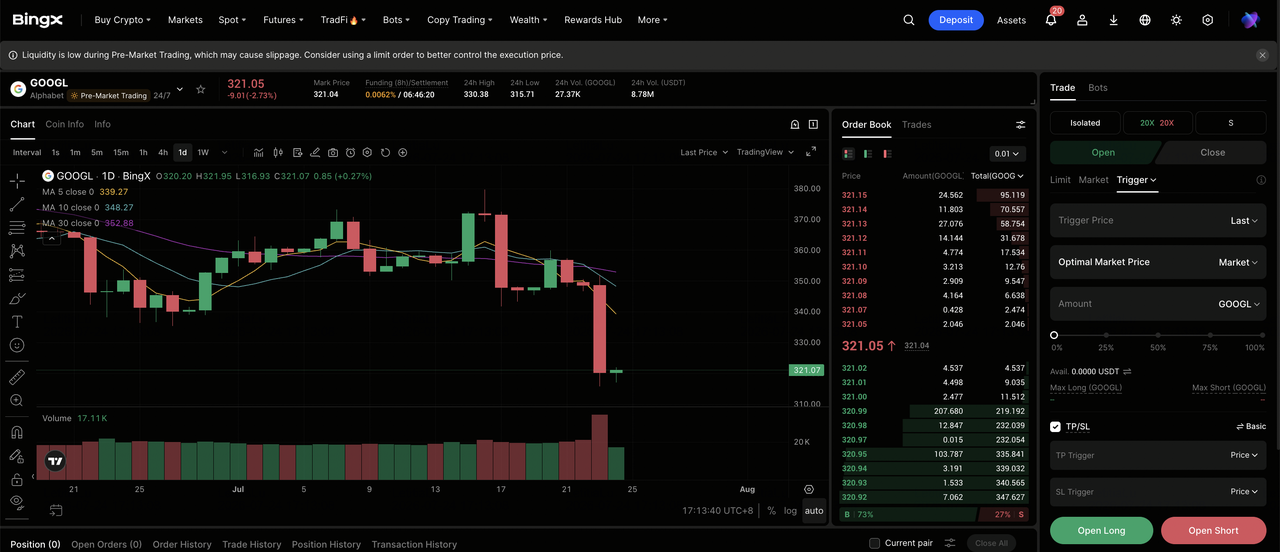
Alphabet (GOOGL) provided the clearest evidence that enterprise AI demand is accelerating. Cloud revenue rose 82% to approximately $24.8 billion, showing that customers continue increasing their spending on computing infrastructure and AI services. This gives Alphabet direct exposure to growing enterprise adoption and positions Google Cloud as an important demand driver for the broader AI hardware supply chain.
However, Alphabet also faces the greatest pressure to justify its investment. Rapidly rising capex is weighing on free cash flow, while the reported EPS figure included substantial gains from equity investments rather than income generated by its core advertising, cloud, and subscription businesses. The quarter therefore presented two competing signals: cloud demand was exceptionally strong, but the quality and sustainability of reported earnings were less clear. Alphabet must now prove that AI-related revenue can expand quickly enough to offset the rising cost of data centers, processors, and other infrastructure.
Read More: Alphabet (GOOGL) Price Prediction 2026: Can 82% Cloud Growth and AI Push GOOGL Stock to $430?
2. TSMC (TSM) Q2 2026 Earnings: Advanced Chip Demand, 2nm Growth, and Margin Pressure
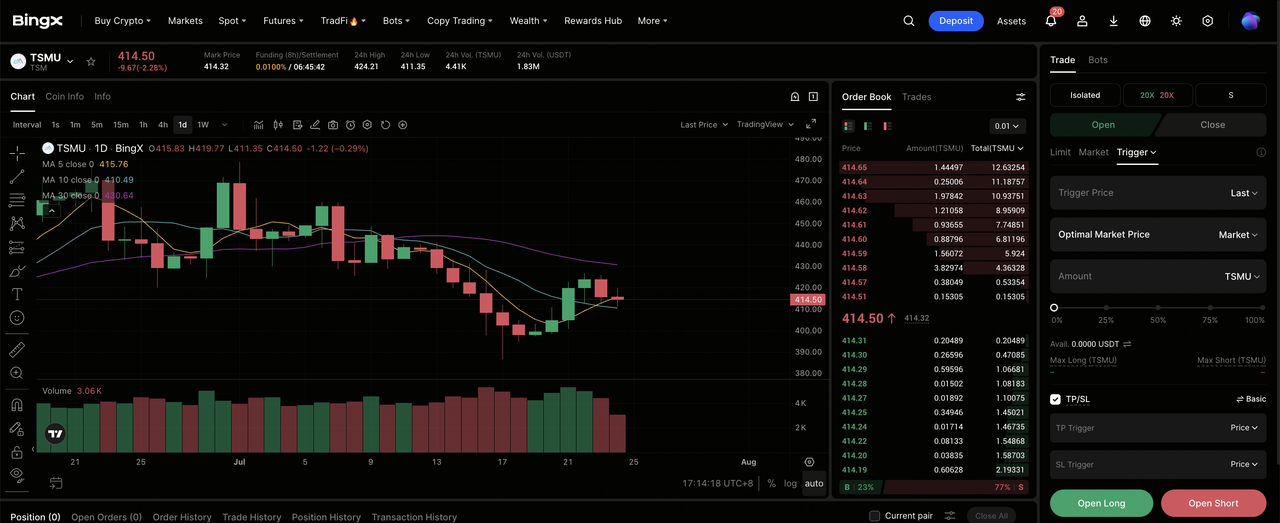
TSMC has one of the most direct positions in the AI infrastructure cycle because it manufactures advanced chips for a broad group of designers and technology companies. Revenue rose 33.7%, gross margin reached 67.7%, and management raised its full-year US-dollar revenue growth outlook to slightly above 40%. Strong demand for advanced nodes and high-performance computing indicates that AI hardware investment remains broad rather than dependent on one customer or application.
The main concern is the cost of meeting that demand. The ramp-up of TSMC’s 2nm process is expected to dilute margins during the second half of the year, while overseas manufacturing expansion may carry higher costs than production in Taiwan. Even so, TSMC offers one of the clearest links between AI demand and operating revenue because it benefits from competition among multiple cloud providers and chip designers rather than relying on the success of a single AI platform.
Read More: TSMC (TSM) Price Prediction 2026: Can Record AI Demand Lift TSM Stock to $527?
3. ASML (ASML) Q2 2026 Earnings: EUV Demand, High-NA Growth, and China Export Risks
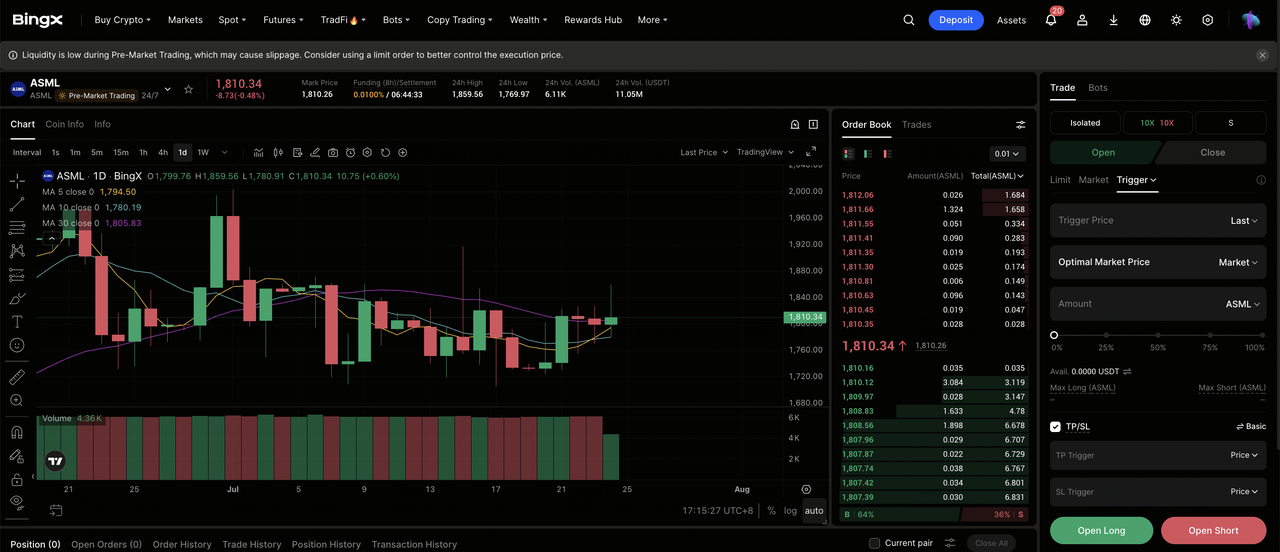
ASML occupies a difficult-to-replace position in advanced semiconductor production. Its extreme ultraviolet lithography systems are required to manufacture many of the most advanced chips used in AI accelerators and high-performance computing. Q2 revenue reached €9.3 billion, bookings remained strong, and management raised its full-year guidance. Progress in High-NA EUV also reinforces the company’s long-term technology advantage.
ASML nevertheless faces greater cyclical and regulatory uncertainty. Semiconductor manufacturers purchase expensive equipment in uneven cycles, making future order visibility less predictable than current cloud or chip demand. Export restrictions and exposure to China also remain significant risks. ASML’s results confirm that the current expansion cycle is active, but its outlook depends on whether TSMC and other manufacturers continue increasing capacity into 2027.
Read More: ASML (ASML) Price Prediction 2026: Can a Third Guidance Raise Push ASML Past $2,000?
What Are Analysts Saying About Alphabet, TSMC, and ASML After Q2 2026 Earnings?
Analysts remain broadly positive on the AI infrastructure cycle, but their confidence differs across the three companies.
-
TSMC: Analysts remain constructive because advanced-node demand comes from multiple chip designers and cloud providers, reducing dependence on a single customer.
-
ASML: Its control of critical EUV lithography technology supports a strong competitive position, although China restrictions and weaker 2027 visibility remain concerns.
-
Alphabet: Opinion is more divided. Google Cloud growth confirms strong AI demand, but record capex, rising depreciation, and weaker free cash flow raise questions about investment returns.
The main institutional debate is therefore no longer whether AI demand is real. It is which company can convert that demand into the strongest margins, cash flow, and return on invested capital.
3 Key Risks for Investors to Watch After Q2 2026 Earnings
The three companies face different risks, but all are linked to the speed and cost of the AI infrastructure buildout.
-
AI revenue may not keep pace with capex. Alphabet and other cloud providers are spending heavily on data centers, processors, and AI infrastructure. If revenue grows more slowly than investment, free cash flow and returns could remain under pressure.
-
Expansion may weaken margins. Alphabet faces rising depreciation and operating costs, while TSMC must absorb expenses from its 2nm ramp and overseas fabs. Strong demand may therefore take time to translate into stronger profitability.
-
Chip orders and export restrictions may slow growth. TSMC and ASML remain exposed to semiconductor cycles, customer spending changes, and tighter technology controls. Weaker foundry expansion or stricter China export rules could reduce equipment orders and capacity investment.
Alphabet, TSMC, and ASML Outlook: What Comes Next for the AI Infrastructure Cycle?
The next major signal will come from Microsoft, Amazon, and Meta. Their earnings and capex guidance will show whether Alphabet’s spending reflects an industry-wide acceleration or a more aggressive company-specific strategy. Nvidia’s orders and outlook will also help confirm whether demand remains strong across the cloud, chip-design, and foundry layers.
Company-specific indicators will matter as well:
-
Alphabet: AI revenue growth, free cash flow, and the pace of depreciation.
-
TSMC: 2nm ramp costs, gross margin, and advanced-node utilization.
-
ASML: New bookings, High-NA EUV demand, and 2027 guidance.
The AI infrastructure thesis remains intact, but the market is becoming more selective. TSMC currently offers the clearest connection between AI demand and operating revenue, while ASML retains the strongest equipment moat. Alphabet has the most direct access to enterprise AI customers, but it must still prove that record capex can generate durable cash flow. The next phase of the AI trade will depend less on how much companies spend and more on how efficiently they turn that spending into profit.
FAQs on Alphabet, TSMC, and ASML Q2 2026 Earnings
1. Why did the stocks fall despite strong earnings?
Investors focused on rapidly rising capital expenditure, weaker free cash flow, margin pressure, and the time required for AI investments to generate acceptable returns.
2. How are Alphabet, TSMC, and ASML connected?
Alphabet and other cloud companies purchase AI computing capacity. Chip designers place manufacturing orders with TSMC, while TSMC and other foundries purchase advanced lithography equipment from ASML.
3. Which company has the clearest exposure to AI infrastructure demand?
TSMC currently has the clearest direct exposure because it manufactures advanced chips for multiple AI customers. Alphabet has more direct access to cloud users, while ASML benefits further upstream through semiconductor equipment demand.
